Nepal Tour
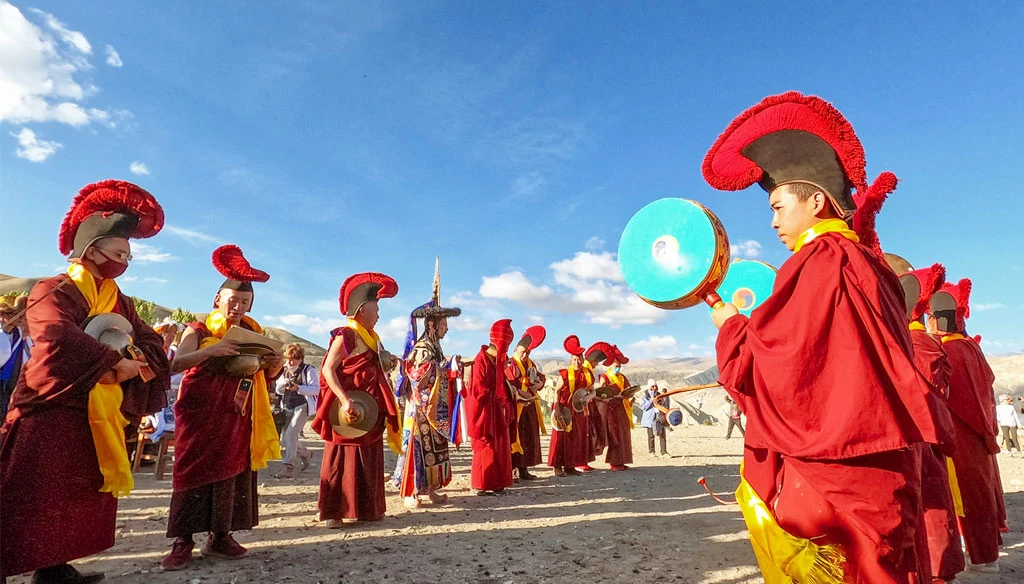
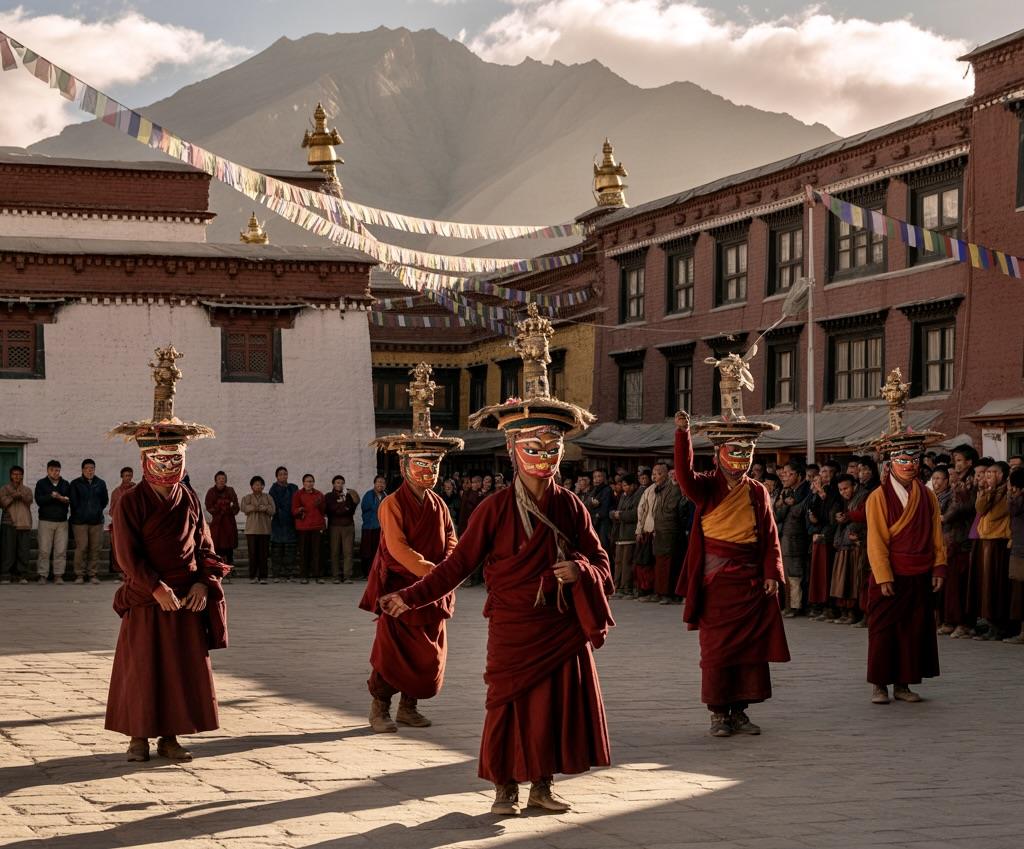
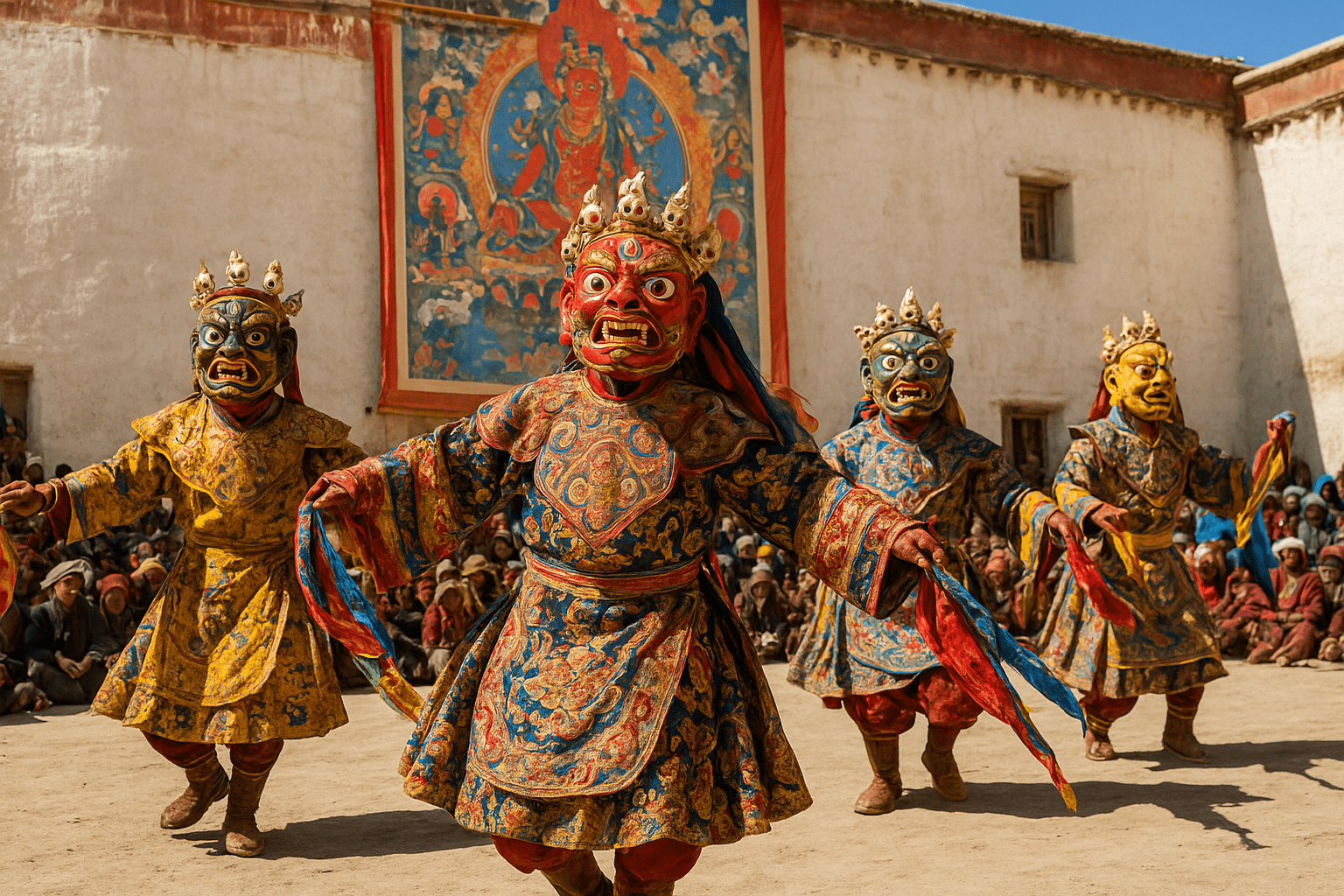
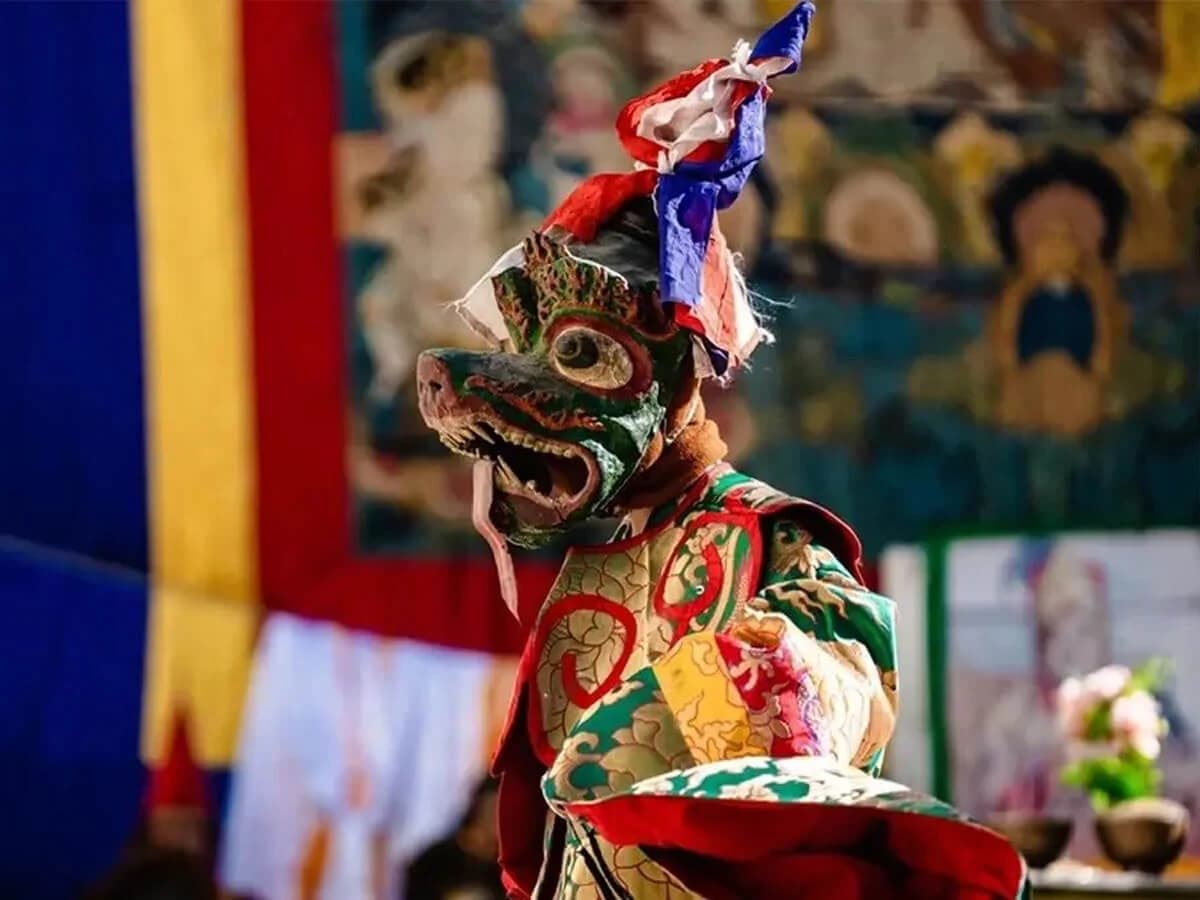
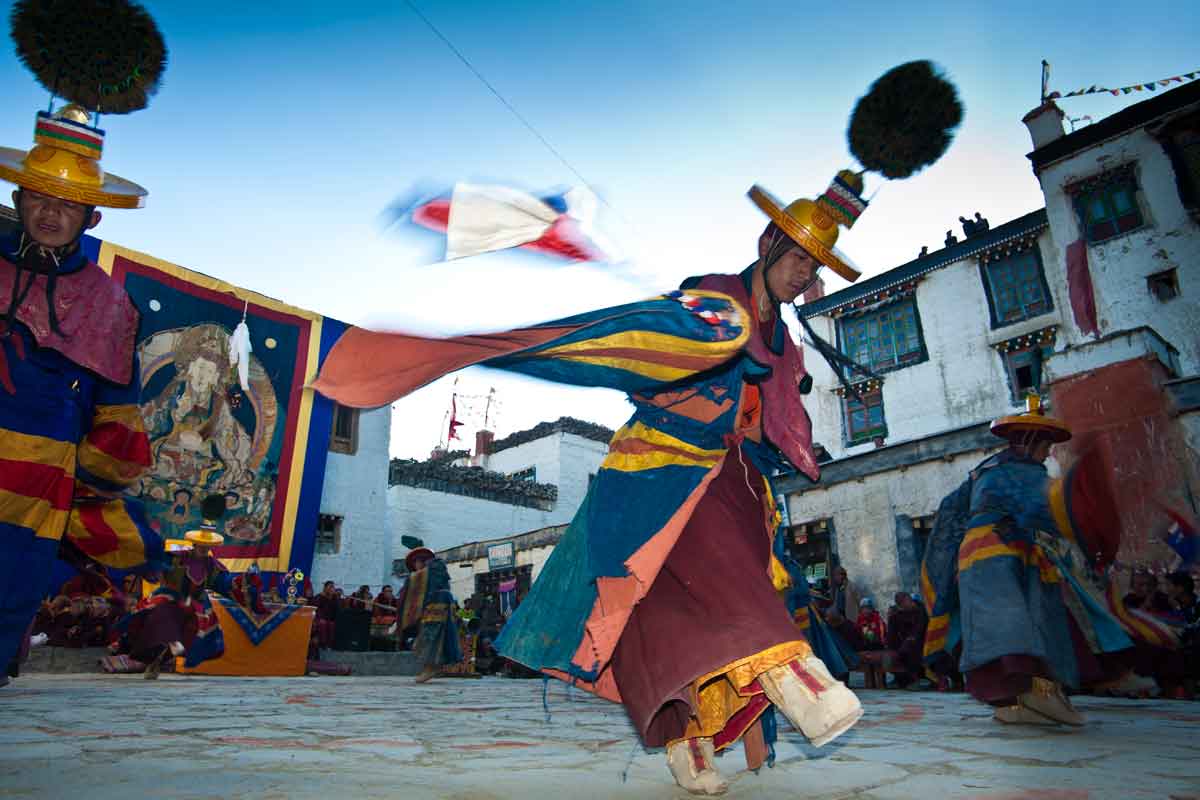
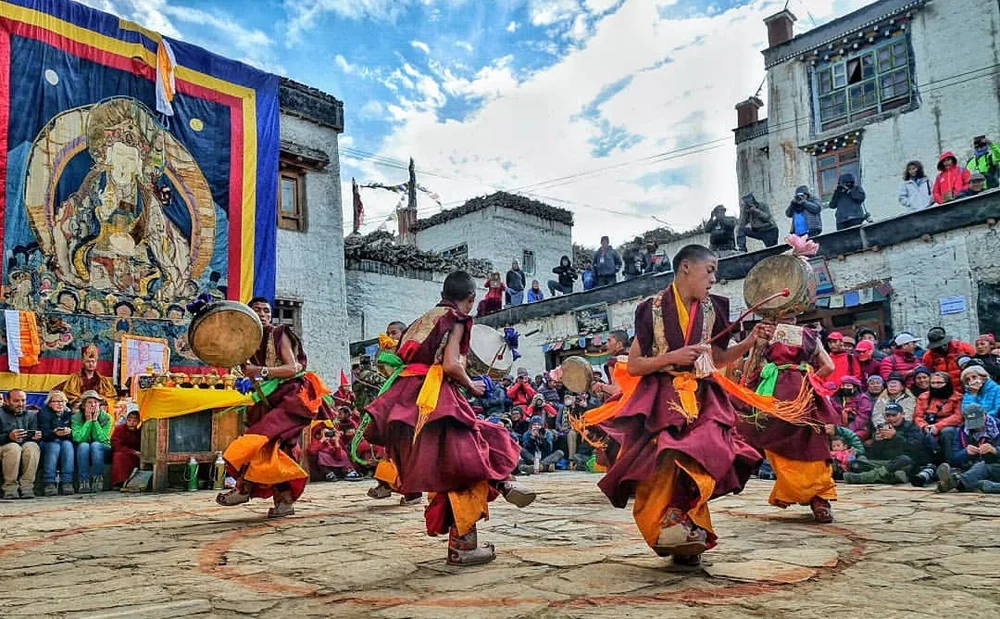
The Mustang Tiji Festival is a three-day-long ancient religious festival still practiced today in the mustang region of Nepal. During this festival, the dancers dressed in colorful clothes and masks dance around the temple. The theme of the dance is the victory of good over evil, which corresponds to the...
The Mustang Tiji Festival is a three-day-long ancient religious festival still practiced today in the mustang region of Nepal. During this festival, the dancers dressed in colorful clothes and masks dance around the temple. The theme of the dance is the victory of good over evil, which corresponds to the agricultural cycles in the region. There are multiple masks for each dance, each with a different meaning. The dances are performed by members of the Loba community and residents from surrounding villages. The festival features social dances as well as cultural dances between the dancers and other members of the community.
Mustang Tiji Festival Trekking
The Tiji festival is celebrated in the Lo Manthang, the capital of the former Kingdom of Lo (also called Mustang) in northern Nepal. Based on Tibetan Buddhism, the dance is believed to have originated during the 17th century. It is dedicated to a deity, Dorje Jono, who represents the struggle between good and evil. The festival derives its name from the word Tiji (meaning ‘prayer for world peace), though it is also known as the ‘Chasing of the Demons’ festival and takes place in May or June each year. The astrologers determine the exact dates for the Tiji festival.
Following a lengthy trek through one of Nepal’s most remote regions, you will be rewarded with a spectacular display of ritual dancing during Tiji festival trekking. The climax comes with the Dance of the Unknown Soldier performed by Lamas, who wear masks and costumes to represent demons expelled from Tibet by Guru Rinpoche. A plethora of other traditional dances will be performed over several days, during which normal village activities are suspended and women excluded from some events. After enjoying this unique cultural experience, it’s possible to travel south from Jomsom through picturesque villages before returning to Pokhara. As mentioned before, the festival is three days long, and each day has its meaning and significance.
- On the first day, various dances, including that of a demoness who danced with a goat’s head.
- On the second day, a Lama dances with a sword.
- On the third day, monks dance in prayer for rain.
Itinerary
Diary of Tiji Festival Visit
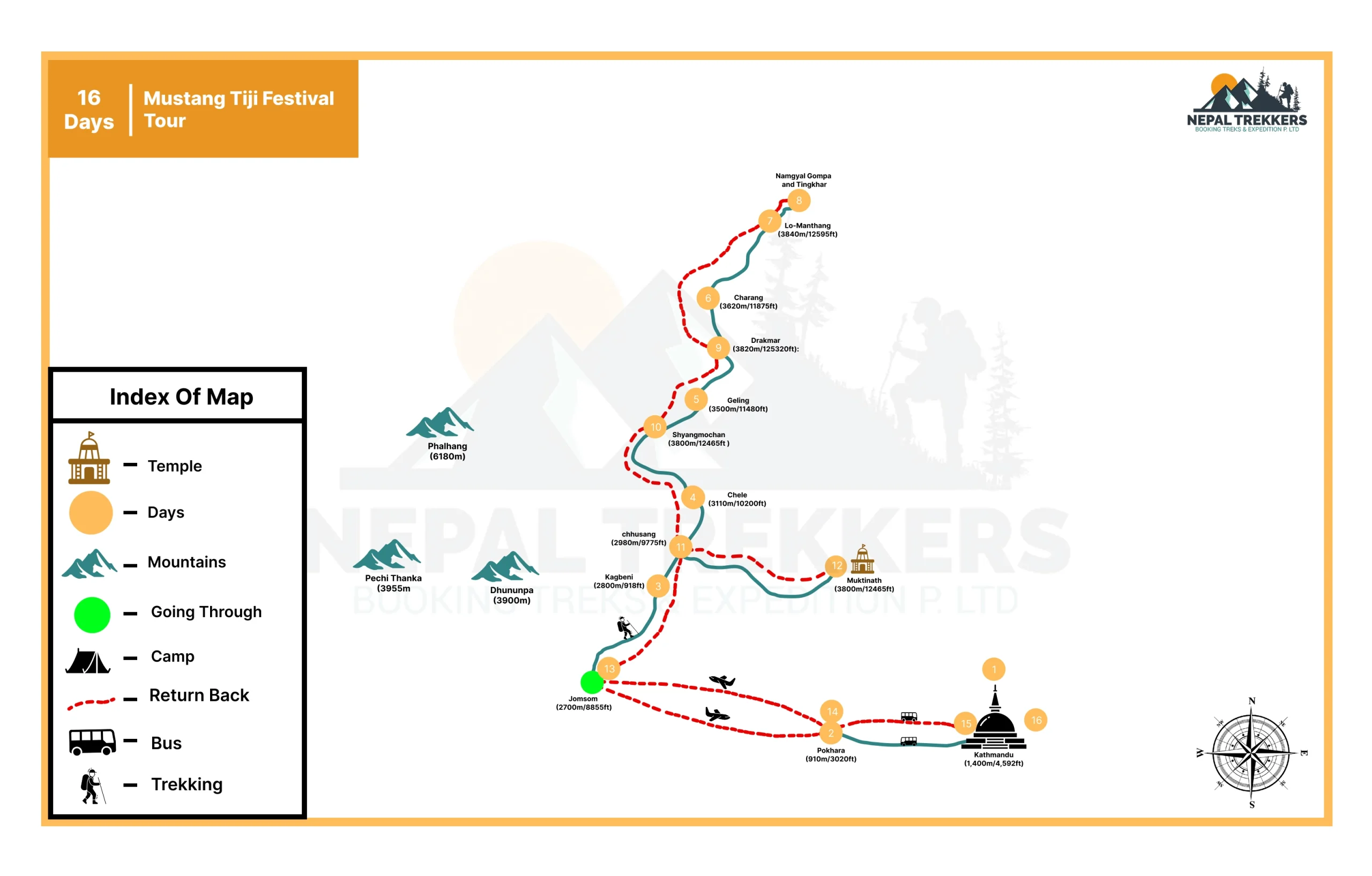
Arrival at Kathmandu International Airport (TIA)
As you step into the airport our staff will be eagerly waiting to greet and welcome you. Then you will be taken to the hotel where you can rest and relax after long hours of flight. In the evening our well-trained instructors are there to brief you for the entire upper mustang trip.
Flight to Pokhara(910m/3020ft): Time- 6 hours
It's an early morning flight to Pokhara which will take around 30 minutes. Our guide will come to pick you up as you leave Kathmandu valley you will be astounded to find scenic beauty on the way. On arrival firstly you will be taken to the hotel and then to Fewa Taal(lake) the water body which had made this place famous. You can enjoy boating if you wish, reflections of Machhapuchhre and Annapurna are clearly visible on the lake. Finally, the day ends with alacrity in heart what's waiting days ahead.
Fly to Jomsom (2700m/8855ft) & Trek to Kagbeni(2800m/918ft): Time- 3 hours
The flight takes off early in the morning with mesmerizing view of the snow-covered peaks of Annapurna and Dhaulagiri. The sight of gigantic mountains(Above 8000m) and the deepest gorge is just incredible. On reaching Jomsom we start our trek to Kagbeni time to stretch our legs. So we head on with a spectacular view accompanying us, on reaching Kagbeni the day's hike end. Since this is the main gate to Upper Mustang Trek, this place has historical significance established around the 14th century it was a check post for Nepalese traders. Still, a checkpoint exists to control groups departing to Mustang and Muktinath.
Kagbeni-Chele(3110m/10200ft): Time- 5 to 6 hours
Starting in the morning the hike takes towards the east bank of the Kaligandi river. Traveling across many ridges Tangbe village is the next place, with whitewash houses, buckwheat, barley, and wheat fields, and apple orchards within the vicinity. Nilgiri peaks stand on the south side. After hiking for almost an hour and a half at stretch we reach another village called Chhusang. Then after we cross the river and continue ascending. After a while, we leave Kaligandaki valley behind and climb up a rocky gully to Chele where we spent the night and prepare for the day next.
Chele-Geling(3500m/11480ft): Time 5-6 hours
The topography is unusual with no trees and water bodies as we climb. But a gorgeous canyon along with rock cairn at 3540m will make you spellbound and then climb downhill to Samar village. Annapurna and Nilgiri are visible on the southern side as we again ascend from Samar to a ridge and then we descend towards a large gorge. So we go through valley fields, cross a stream and again climb up the ridge(3800m). Going through another pass following the ridge and again downhill we reach Shyangmochen. So from this place, our hike gradually climbs to a pass at 3770m. Ultimately from this place, the route declines into Gelling village and time to rest.
Geling-Charang(3620m/11875ft): Time 4 hours
The day starts with the gentle climb up to NYI La pass and then declines below the cliff. Then we cross the steel bridge of the Tangmar Chu river and reach the longest Mani wall in Mustang. Then we ascend to another pass at 3600m and after that, a long gentle decline awaits till Charang village. The main attraction here is the five-storey Dzong and red Gompa, there are other things also like the collection of statues, thankas, and paintings of Buddha. The pristine nature will bring you a good sleep.
Charang to Lo-Manthang(3840m/12595ft): Time 3 hours
At this altitude, the trail begins with a steady climb to Lo-Gekar. This Lo-Gekar Gompa is considered to be one of the oldest Gompa in the region older than the Samye Gompa in Tibet. We carry on to the upper Mustang trek to Lo-Manthang after leaving Lo-Gekar. This trail has some minor climbing to be done and a bit more adventure. Passing the wall of Lo along the route we make a short decline, crossing a stream and finally climbing to the plateau of Lo-Manthang. We stop here for the night and relax
Exploring Namgyal Gompa and Tingkhar: Time 4-6 hours
The day is spent within the periphery of Lo-Manthang, firstly a two hours hike to Namgyal Gompa. It is situated on the hilltop and is an important monastery for the local community supporting the local court as well. After Namgyal Gompa, we move towards Tingkhar, the last village to the northwest of Lo Manthang. The density of houses is 40-50, so after visiting both places we return and spend the night at Lo-Manthang
Lo-Manthang to Drakmar(3820m/125320ft): Time 6-7 hours
It’s a special morning after spending two nights at Lo-Manthang, so we gradually ascent to a ridge at 4070m and continue to Chogo-La(4210m/13810ft). So far this is the highest point of the route, from here the hike declines and the trail is steep. After a while, the Charang river is crossed then uphill to Lo Gekar, then reaching Ghar Gompa(small monastery). Then we go ahead climbing a ridge, crossing a valley with alpine meadows, and again descending an eroded steep road towards Drakmar. Here we spend the night at the guest house, and as usual, all meals will be served.
Drakmar-Shyangmochan(3800m/12465ft ): Time 5-6 hours
Today's hike will begin with a descent passing the stone walls and amazing fields. After a while, we climb a ridge that further declines to the lower part of Ghami and to Jaite(3820m). Hiking downhill to Chhung-Kah our journey continues to Tama Gaon(3710m). The spectacular view and nature's beauty are enough to be blissful. Here onwards we descend at a normal pace only to have a glimpse of Shyangmochan where we rest and prepare for the day next
Shyangmochen-chhusang(2980m/9775ft): 6 hours
Stretching our legs with great zeal we start the day. We have the final glance of the guest house and continue our long hike. There is an alternative route as well which is just 30 minutes long, but it has Ranchung caves in a place called Samar. So if we follow the regular path we will walk all the way to Chhusang with the stream beside it
Chhusang-Muktinath(3800m/12465ft): 7 hours
Upper Mustang Trek: Again following the stream, making a short steep ascent towards the valley we leave the village of Chhusang. We carry on climbing until we reach a small pass from where Muktinath and the red-painted Buddhist monastery are visible. After crossing the path we decline to a stream and cross the suspension bridge. Then we ascend for some time and eventually reach the village of Muktinath. Muktinath temple is famous especially for Hindu pilgrims. This place is also popular for stone fossils that are mainly found between Tetang and Gyu La pass(4077m). From here Annapurna, Dhaulagiri, and Tukuche can be clearly seen
Muktinath-Jomsom(2700m/8855ft): 6 hours
As mentioned earlier Muktinath has a famous Hindu temple as well as an important place for the Buddhists. Morning is the period to visit the popular temple and enjoy the marvelous view of the Dhaulagiri range. There is a Buddhist monastery nearby. After visiting the temple we descend towards the village of Jharkot where a monastery is situated. This was actually an old fortress but now it serves as a Tibetan herbal Centre, and then hiking continues to Jomsom. We can have a vivid picture of Kagbeni village and Kaligandaki valley along the way. We cross Ekle Bhatti and eventually arrive at Jomsom which reveals that the wonderful hiking period is over. You can celebrate your accomplishment of completing Upper Mustang Trek and have time to rest
Jomsom-Pokhara. ( 25 minutes by flight )
Probably the fight against Pokhara is in the morning hours only. On reaching Pokhara you can go out boating in a traditional boat and sightseeing around Pokhara and the city recollect the entire trek that had refreshed you.
Pokhara-Kathmandu
After spending a night at Pokhara we return to Kathmandu. The flight from Pokhara to Kathmandu will be half an hour long. During the flight, you will be able to see many beautiful terrains and forests
Departure Day
On this day departure to the Kathmandu international airport before 3 hours from flight time, if we have late flight then on our free day time can visit around Kathmandu valley
Includes/Excludes
Cost Includes
- Kathmandu to pokhara and Pokhara to kathmndu flight
- Pokhara to jomsom and jomsom to pokhara flight
- Upper mustang Spacial permit fee
- Guide and potter service
- Two night hotel in Kathmandu 3 star deluxe hotel with breakfast and two night hotel in Pokhara 3 star deluxe hotel with breakfast
- During trekking time food ( lunch dinner and breakfast with tea or coffee and seasonal fruits after meal )
- All necessary permit
- Domestic and international airport pick up and drop service
- Private Bus, Jeep
- Two nights of basic BB lodging in Pokhara
- Return flight from Pokhara to Kathmandu
- Proper meals thrice a day
- Best lodging options
- Professional English-speaking trek guides
- Experienced trekking porters to help you carry your backpack (2 guests = 1 porter as a minimum).
- All required documentation, trekking licenses, and local fees
- Travel and rescue expenses, if necessary
Cost Excludes
- Costs of international travel to and from Kathmandu
- Nepal entry visas
- Any meals during your stay at Kathmandu
- Any personal costs for telephone calls, mineral water, bar expenses, battery replacements, additional porters & equipment expenses, etc.
- Gratitude tips for porters and guides (Tipping is expected but not mandatory)
Equipments of the tour
Misc Items
All Items
Packs & Bags
Footwear
Upper Body
Lower Body
Camera phone
Backup charger
Travel Plug ports for charges
Health kit
Daily meds
Passport photos - 3 to 4
Passport copies
Note pad
Adjustable trekking sticks
Big water bottle
Mini Water cleaning filters - tablets or safe water pens
Cold weather sleeping bag
Sunscreen and Lip balm for weather chaps
Sunglasses
Gloves
Sleeping bag
Coin and bills purse
Waist pack
Cross body sling or hip carry
Porter duffle
Small day backpack -20 Litres
Thin and thick socks - total of 6 pairs
Hiking boots
Flipflop or cozy crocs for hotel stays
Breathable shirts
Warm base wear
Fleece jacket for cold sections
Light jackets for himalayan pastures and deserts
Rain shell
Sun shirt
Innerwear
Sun hat
Headlamp
Dry trekking worthy pants
Weather Insulated pants for trekking
Cotton pants for nights
Thermal layer for keeping warm in cold sections of the trek
Good to Know
Tibet Outside Tibet
Quoted by the Dalai Lama himself, its the only location in the world that preserves the authentic Tibetan lifestyle of the pastures and himalayas outside Tibet china. You get the adventure of visiting two distinct civilizations in one trip itself. The Tiji festival tour in the depths of Upper Mustang introduces you to an interesting Tibetan lifestyle in these specific places.
Thubchen Monastery: The Thubchen monastery where Tiji festival happens preserves the authentic Tibetan monastery culture, hymns, and prayer tradition. The Thubchen monastery is 15th century monastery buddhist complex like none else in the world
Jampa Lakhang: The monastery of the laughing buddha Maitreya, believed to have been built in the 15th century, it’s a monastery of great significance in Tibetan Buddhism. The Tibetan Buddhists highly revere the pictures of Maitreya built on the walls here. The 15th century mural painted here takes travellers back in time for an experience of authentic Tibetan Buddhism.
The trails here are the home of the oldest human settlement found in the world. The high himalayan desert canyons here have human made caves of ancient humans
Chiseled: The millennial old caves seen here are chiselled by unknown equipment on the rock faces and date several millenium’s back.
Uses: The caves were used for sky burials, living purpose, military watching outposts, deep meditations, reclusion for societies, and refuge spaces during harsh time alongside enemy threats.
Monastery: The ancient mural preservation, the buddhists here preserved ancient 14/15th century teachings and depictions of gods in the walls. While some part of these mural have been eroded, the sites of three cave monasteries here are a must visit destinations in your Tiji Festival Calendar.
FAQs
Upper Mustang Tiji festival travel’s fit for any level of traveller with moderately fit bodies and absolute beginners with no travel experience of the himalayas.
Since, it happens only in may month, there is not another time period than MAY to take this festival tour.
Temperature is mostly chill throughout the travel destination. Night winds in the himalayas bring cold only some dry desert and pastureland parts are hot to put on thick clothes. The degree scale on the thermometer sees a high of 30 degree Celsius to cold of -15 degree.
Electricity has reached the remotest of place in Nepal in recent days. Hence, yes hot showers are available.