


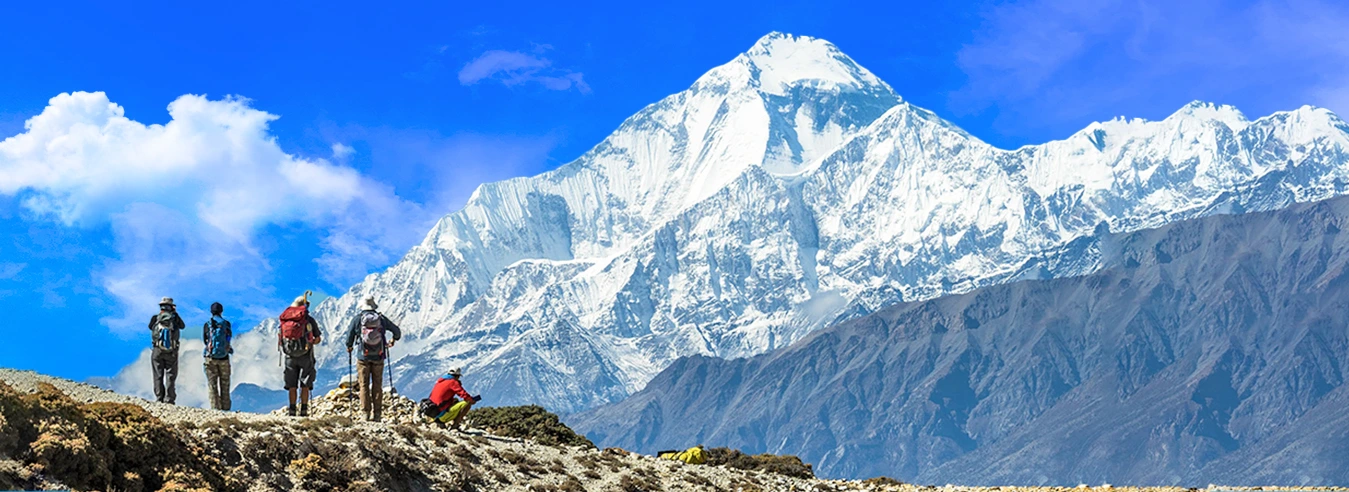
When you start researching for your next journey for the Upper Mustang trek, you will quickly end up finding two very different versions of the answer to the same question: how hard is the Upper Mustang trek? Some sources call it easy while others call it challenging. Both claims are partially right, which is exactly why an honest overview matters for travellers like you before you decide whether this trek is for you. The Upper Mustang trek is one of the most rewarding journeys in Nepal. It is also a journey where the difficulty comes from sources that most travellers do not expect. Being underprepared for those specific challenges turns this transformative experience into a difficult one for the wrong reasons.
The guide is designed to explain the difficulty of the Upper Mustang trek into its realistic outlook. You will find a trek overview, a factor-by-factor difficulty analysis, a season comparison, and honest guidance on who this trek is right for and who should think carefully before booking it.
Table: Upper Mustang Trek Overview at a Glance
| Trek Detail | Standard Route Facts |
| Official difficulty rating | Moderate to Moderately Challenging |
| Maximum altitude | 3,840 metres at Lo Manthang (standard route) |
| Alternative high point | 4,230 metres at Chogo La / Marang La Pass (extended routes) |
| Trek start point | Jomsom at 2,740 metres, reached by flight from Pokhara |
| Trek end point | Return to Jomsom after the Lo Manthang circuit |
| Daily walking hours | 5 to 7 hours per day on average |
| Daily distance covered | 15 to 20 kilometres per day |
| Daily altitude gain | 250 to 350 metres per day on ascent days |
| Total trek duration | 12 to 17 days depending on itinerary |
| Prior experience required | Not mandatory but highly beneficial. Good fitness essential |
| Permit required | Restricted area permit at USD 50 per person per day (2025 rules) |
| Solo trekking | Not permitted. Licensed guide mandatory at all times |
Upper Mustang Trek Difficulty Level Explained Factor by Factor
The Upper Mustang trek difficulty is rated moderate to moderately challenging. The standard route reaches a maximum altitude of 3,840 metres at Lo Manthang, which is significantly lower than Everest Base Camp at 5,364 metres but still a low oxygen zone. You’ll walk 5 to 7 hours per day across 12 to 17 days, covering 15 to 20 kilometres daily through arid, high-desert terrain on the routes of Upper Mustang. The real challenges in this trekking zone are not extreme altitude but persistent afternoon winds averaging 50 km/h. The long consecutive trekking days on rough and sandy trail surfaces, and dry conditions exhaust the body steadily on this route. For trekking in this region you do not need prior mountaineering experience, but you’ll definitely need good cardiovascular fitness. True difficulty and the factors responsible for overall moderate level of difficulty on Upper Mustang Trek is listed in the table below:
Table: Upper Mustang Trek Difficulty
| Difficulty Factor | Relative difficulty | Reason for Difficulty |
| Altitude Demand | Moderate | Max 3,840m. Below Everest Base Camp (5,364m) threshold |
| Daily Walking Hours | Moderate | 5 to 7 hours per day average across 12 to 17 days |
| Terrain Roughness | High | Sandy, rocky, steep cliff sections with few flat stretches |
| Wind and Weather | Moderate | Afternoon winds average 50 km/h. Cold mornings year round |
| Remoteness | High | No medical facility north of Jomsom. Limited mobile signal |
Altitude and Acclimatization
The maximum elevation on the standard Upper Mustang trek itinerary is 3,840 metres at the ancient king of Lo Manthang. The elevation is meaningfully lower than Everest Base Camp at 5,364 metres and lower than the high passes on the Annapurna Circuit or Langtang routes. However, at an elevation over 3,000 metres, your body begins to feel the effects of reduced oxygen, and acute mountain sickness (AMS) can affect even physically fit trekkers who ascend too quickly. However, the AMS can be tackled easily on this journey because the route from Jomsom gains altitude gradually. The itineraries are often designed to limit your daily travel elevation gain to sit between ranges of 250 and 350 metres. You reach Lo Manthang after five to seven days of progressively higher camp stays allowing your body adequate time to adapt. Acute mountain sickness at 3,840 metres is not common but it can happen in worst cases, in such cases descent is always the right response to prevent any worsening symptoms.
Daily Walking Distance and Duration
Walking 5 to 7 hours per day sounds manageable in isolation. Across 12 to 17 consecutive days in a high-altitude desert environment with no rest days built in by default, it accumulates into a serious physical demand. You cover 15 to 20 kilometres daily on a mix of sandy tracks, rocky switchbacks, jeep-road stretches, and cliff-edge paths. The trail through Upper Mustang has very few flat sections. You gain and lose altitude repeatedly throughout each day even when the elevation change is miniscule. Your legs will be tired by day four and by day ten, the cumulative fatigue is real and manageable only if your baseline cardiovascular fitness was solid before you started.
Terrain and Trail Conditions
The terrain in Upper Mustang is unlike anything you encounter on Nepal’s more forested trekking routes. The landscape north of Kagbeni is a high-altitude desert of sandy trails, loose rock switchbacks, eroded canyon paths, and stretches of jeep road where the construction has replaced the original walking trail. Some sections require crossing wooden bridges above streams and navigating narrow cliff-edge paths above deep drops. The ancient salt trading route that forms the backbone of the Upper Mustang trek was walked by traders on horses and mules for centuries, which means the paths are well-established but rarely gentle. Your trekking boots need proper grip and ankle support throughout. Trekking poles in Nepal are essential for descent stability on rocky, uneven ground.
The Wind: The Biggest Surprise on the Upper Mustang Trek
Experienced trekkers who have done the Upper Mustang trek consistently name the wind as the most underestimated physical challenge on the route. The Kali Gandaki valley is known for afternoon winds that average 50 kilometres per hour and regularly gusts higher on exposed sections above 3,000 metres. You feel the wind building from around midday and it peaks between 2 pm and 5 pm. The period is exactly the time frame when many trekkers are completing their final hours of the day’s walking. The combination of cold wind, dusty desert air, and sustained effort against resistance exhausts the body faster than altitude. The experienced trekker on the Upper Mustang trek starts walking by 6 am or 7 am at the latest to reach camp before the afternoon gusts arrive. Your expert guide will account for this into your daily schedule.
Remoteness and Medical Access
The Upper Mustang trek is a restricted area trek Nepal, and the restriction exists partly because the region is genuinely remote. There is no hospital between Jomsom and the Tibetan border. Mobile phone signals disappear in most of Upper Mustang north of Kagbeni. If a trekker experiences a serious medical emergency beyond basic altitude sickness, helicopter evacuation from the nearest landing zone is the only option. This means that comprehensive travel insurance covering helicopter rescue is not optional for the Upper Mustang trek. It is also why your licensed guide’s experience in managing health situations on the trail matters as much as their knowledge of the route.
Best Time and Season for the Upper Mustang Trek with Honest Challenges
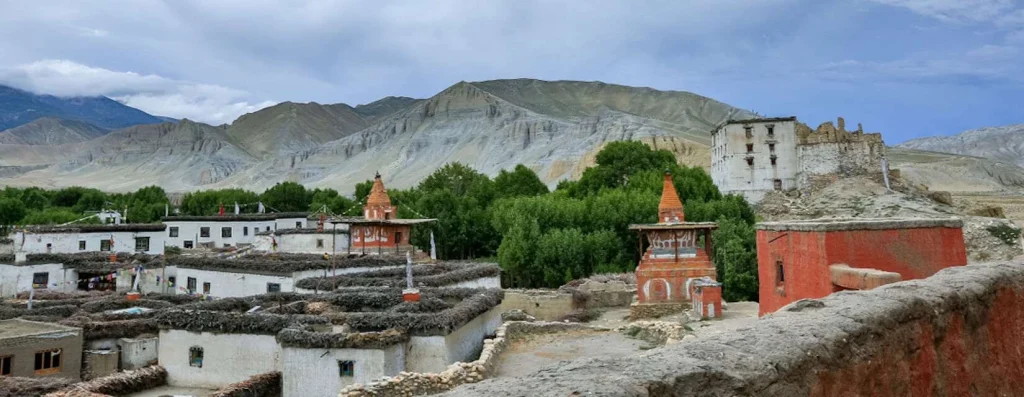
Upper Mustang sits in the rain shadow of the Annapurna and Dhaulagiri ranges, which protects the region from monsoon rainfall that makes most Nepal treks difficult from June to August. This geography makes the Upper Mustang trek only region in Nepal with one of the widely viable trekking windows.
Table: Upper Mustang Seasons Overview
| Season | Months | Conditions | Challenges | Verdict |
| Spring | March to May | Warming days, clear skies, Tiji Festival in May | Strong afternoon winds peak in March and April. Dusty trail surfaces. | Best overall. Book early for May. |
| Summer / Monsoon | June to August | Dry in Upper Mustang due to rain shadow. Warm, Quiet trails. | Heavy rain on approach roads south of Kagbeni. Possible flight delays to Jomsom. | A good alternative for those who cannot travel in spring or autumn. |
| Autumn | Sept to November | Post-monsoon clarity. Sharpest mountain views of the year. Stable weather. | October is the busiest month. Book teahouses and flights well in advance. | Best for views. October is the peak month. |
| Winter | Dec to February | Very cold. Few crowds. Some roads are accessible by jeep. | Temperatures at Lo Manthang drop below minus 15 Celsius at night. Many teahouses close. | Not recommended for most trekkers. |
Is the Upper Mustang Trek Right for You?
The Upper Mustang trek is not a beginner trek in the way that the Ghorepani Poon Hill route or Annapurna Base Camp’s lower sections are. But it is a beginner trek for healthy and fit young adults. Here is an honest picture if this trek is for you.
- You are physically active and can walk for five or more hours on consecutive days without significant strain: the Upper Mustang trek is doable for you.
- You have never trekked at altitude before but are in good cardiovascular health, you can attempt this trek with careful acclimatization, a licensed guide, and Diamox on standby as recommended by your doctor.
- You have a pre-existing heart, lung, or blood pressure condition, consult a specialist before booking and be prepared for the possibility that your doctor may advise against altitude above 3,000 metres.
- You dislike sustained wind, dusty dry conditions, or very long walking days with few rest breaks: the Upper Mustang trek will challenge your patience and your body more than you expect.
- You have completed the Everest Base Camp trek, the Annapurna Circuit, or another multi-day high-altitude route: the Upper Mustang trek will feel very manageable, and you will focus entirely on the extraordinary cultural and historical experience.
Conclusion
Upper Mustang Trek is difficult but you can achieve it even if you’ve never been to the high Himalayan deserts. However, the moderately difficult trek requires you to possess excellent health and a strong cardio regimen prior to deciding to take this journey. If you are ready to plan your Upper Mustang trek with honest guidance on difficulty, permits, and a custom itinerary built around your fitness level and schedule? Contact Trekkers Nepal at trekkersnepal.com today.
Frequently Asked Questions About Upper Mustang Trek Difficulty
i. Is the Upper Mustang trek hard for beginners?
The Upper Mustang trek is manageable for beginners who have good baseline cardiovascular fitness, but it is not the easiest starting point for first-time Himalayan trekkers.
ii. What is the best time of year to trek Upper Mustang for the easiest conditions?
October is the best single month for the Upper Mustang trek if your priority is the most stable weather and the clearest mountain views while Spring from March to May is the second-best window, with May being especially recommended for the Tiji Festival in Lo Manthang.
ii. Does the Upper Mustang trek require altitude sickness medication?
Altitude sickness on the Upper Mustang trek is less common than on higher routes like Everest Base Camp because the maximum standard altitude of 3,840 metres at Lo Manthang is below the threshold where severe altitude sickness typically strikes.
Feels like sharing this blog to your circles?


Comments 0