


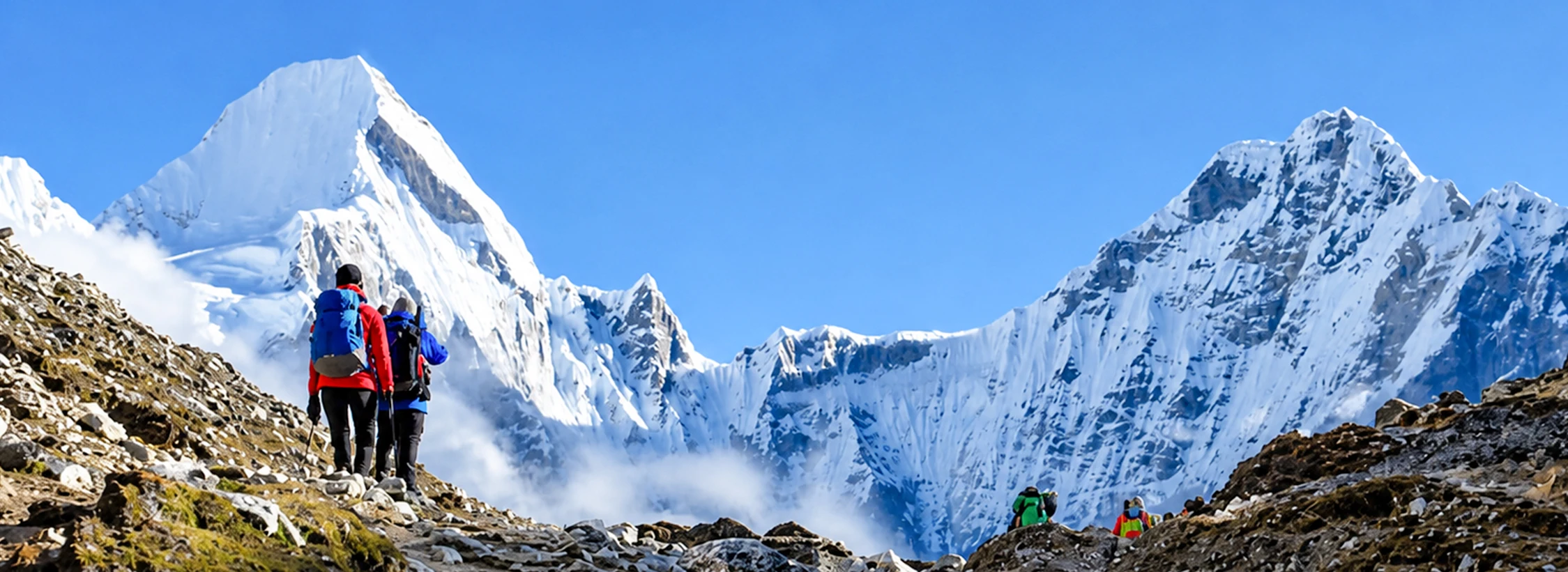
Most travellers who start researching the Everest region go straight to the Everest Base Camp trek, which sees several hundred trekkers per day during peak season. Very few of them hear about Pikey Peak. The name itself comes from the Sherpa word for Deity of the sky, a title that tells you exactly how the Sherpa people have regarded this place for generations. The view from the summit has been called the finest panoramic viewpoint in the lower Everest region by guides who have spent decades working in Solukhumbu District. You earn that view in five to seven days without flying to Lukla and without crossing 4,500 metres.
The trail sits in the lower Khumbu Nepal area, south of the main Everest trekking corridor, which is exactly why it stays quiet. Trekkers heading to Everest Base Camp pass through Lukla and move north. The Pikey Peak trek takes you through a different slice of Solukhumbu District entirely, one where Sherpa culture continues at its own pace, rhododendron forests cover entire hillsides, and the teahouses are run by families who rarely see more than a handful of trekkers per week.
Pikey Peak Trek: Key Facts
| Detail | Fact |
| Summit altitude | 4,065 metres (13,336 feet) |
| District | Solukhumbu District, Koshi Province, eastern Nepal |
| Trek duration | 5 to 7 days depending on itinerary |
| Total walking distance | Approximately 55 kilometres |
| Daily walking | 4 to 6 hours per day |
| Difficulty rating | Easy to moderate. Suitable for beginners with basic fitness. |
| Starting point | Dhap (7 to 8 hour drive from Kathmandu) or Phaplu airport (30 min flight from Kathmandu) |
| Permit required | None for the standard route. Gaurishankar Conservation Area Permit required if starting from Shivalaya. |
| 8,000m peaks visible | 7 peaks : Everest, Lhotse, Makalu, Cho Oyu, Manaslu, Dhaulagiri, Kanchenjunga |
| Best seasons | Spring (March to May) and Autumn (September to November) |
What Makes the Pikey Peak Trek Different from Other Everest Region Treks
Seven 8,000-Metre Peaks from One Summit
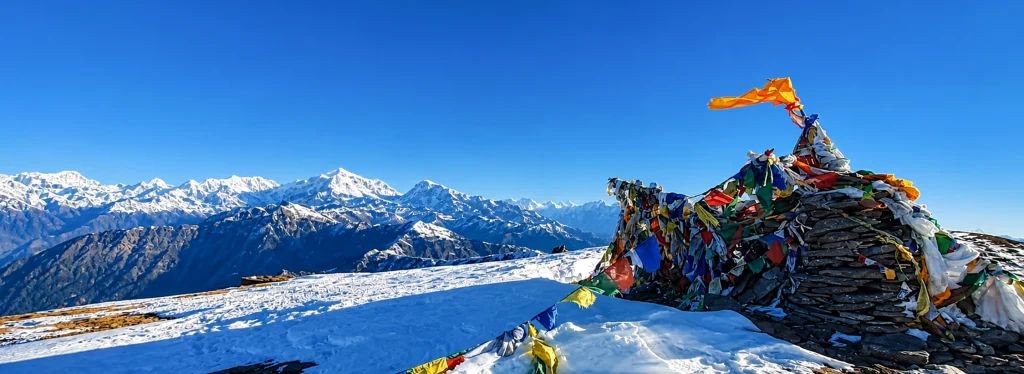
From the Pikey Peak summit at 4,065 metres, you see seven of Nepal’s eight 8,000-metre giants in a single arc: Mount Everest at 8,848 metres, Kanchenjunga at 8,586 metres, Lhotse at 8,516 metres, Makalu at 8,481 metres, Dhaulagiri at 8,167 metres, Cho Oyu at 8,188 metres, and Manaslu at 8,163 metres. Below those peaks, the view extends to Thamserku at 6,608 metres, Kangtega at 6,685 metres, Numbur Himal at 6,958 metres, and Gaurishankar at 7,134 metres. The sunrise from the summit lights up this entire arc in sequence, east to west, over roughly twenty minutes.
Sir Edmund Hillary, who explored the Solukhumbu region extensively after the 1953 Everest summit, declared Pikey Peak to be among the finest viewpoints in Nepal for looking at Everest. That assessment from the person who knew the Everest landscape better than almost any other person in the 20th century carries weight. The view from Pikey Peak places you far enough from Everest to see the full pyramid of the mountain above the surrounding ridgelines, which the closer routes like Kala Patthar do not always deliver.
No Lukla Flight and No Restricted Permit
One of the most practical reasons the Pikey Peak trek appeals to travellers is the access. You reach the trailhead at Dhap by road from Kathmandu in seven to eight hours. If you prefer to fly, Phaplu airport is a 30-minute domestic flight from Kathmandu, and you drive the remaining section to the trailhead from there. Neither option involves Lukla airport, which is expensive, frequently cancelled due to weather, and a source of genuine anxiety for many first-time Nepal visitors. The trek also requires no restricted area permit on the standard route, which means your overall permit costs consist only of the standard TIMS card.
Authentic Sherpa Culture Without the Commercial Corridor
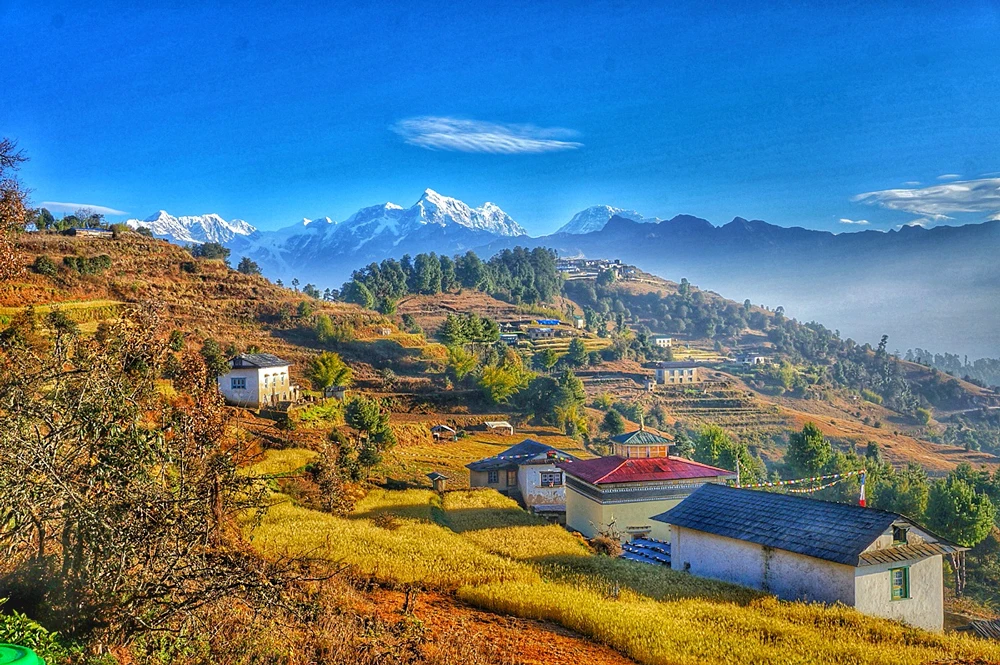
The Sherpa villages along the Pikey Peak route, including Jhapre, Loding, and the trail toward Junbesi village, operate entirely outside the commercial trekking economy that has built up around the Everest Base Camp corridor. You stop in teahouses where the family who runs them also farms the land outside. You walk past active mani walls and chortens that no one has placed there for tourist appeal. At the upper sections of the trail, yak herders still use traditional grazing grounds that a yak cheese factory, originally established by Swiss development workers several decades ago, supplies from the surrounding pastures. The cultural atmosphere on this trek is genuine.
Junbesi village at 2,675 metres is one of the finest Sherpa settlements in the lower Khumbu Nepal area. A short walk from Junbesi brings you to Thupten Chhoeling Monastery, a functioning Tibetan Buddhist monastery established after the 1959 Tibetan exodus. The monastery is home to hundreds of monks and nuns and was restored after the 2015 Nepal earthquake. Visiting it adds a full cultural dimension to the Pikey Peak trek that most Everest region itineraries overlook.
Who Should Trek Pikey Peak?
The Pikey Peak trek is suited to a wider range of people than almost any other trail in the Everest region Nepal. Because the maximum altitude is 4,065 metres and the daily walking sits at four to six hours, the risk of serious altitude sickness is meaningfully lower than on routes crossing 5,000 metres. Families have successfully completed the trek with children as young as seven. Trekkers with no prior Himalayan experience choose it as their first Nepal journey. Experienced trekkers who want a shorter, quieter route after completing Everest Base Camp or Annapurna Base Camp use it as a contrast experience.
• You want to see Mount Everest and the full high Himalayan panorama without a two-week commitment
• You are a first-time Nepal trekker looking for a manageable altitude and a beginner-friendly trail
• You are trekking with children or family members who need an accessible daily walking distance
• You want Sherpa culture and rhododendron forests without the crowded Everest Base Camp corridor
• You want to avoid the Lukla flight and reach your trailhead by road from Kathmandu
Best Time for the Pikey Peak Trek
Spring trekking Nepal from March to May fills the rhododendron forests of the lower trail sections with red and pink bloom. The views from the summit are sharp in the early morning before afternoon clouds develop. Autumn trekking Nepal from September to November delivers the most stable weather and the clearest long-distance visibility across the seven 8,000-metre peaks. October produces the sharpest morning light on the Pikey Peak summit.
Winter from December to February is possible but temperatures at Pikey Peak base camp drop below minus five degrees Celsius at night and the summit trail can carry snow. Monsoon from June to August brings heavy rain to the lower trail sections and restricts summit views. Spring and autumn remain the most reliable and popular choices for the majority of trekkers.
Why Pikey Peak Stays Quiet When the Rest of Khumbu Nepal Does Not
The Everest Base Camp trek sees approximately 40,000 trekkers per year on the main trail. The Pikey Peak trek by comparison sees a fraction of that number, largely because it does not appear in the first page of most travel blog searches and is absent from most major trekking agency front pages. The agencies that do offer it have added it relatively recently as a recognised packaged route. For the traveller who finds the route before the crowds do, the experience is exactly what most people imagine all of Nepal trekking once was: a quiet trail, a genuine teahouse, and a view at the end that most people who pass through Nepal never see.
Want to experience Pikey Peak with a team that knows the lower Khumbu Nepal trail from trailhead to summit? Contact Trekkers Nepal at trekkersnepal.com today and we will build your perfect 5 to 7 day Pikey Peak itinerary with a licensed guide, teahouse bookings, and all logistics sorted.
Feels like sharing this blog to your circles?


Comments 0