


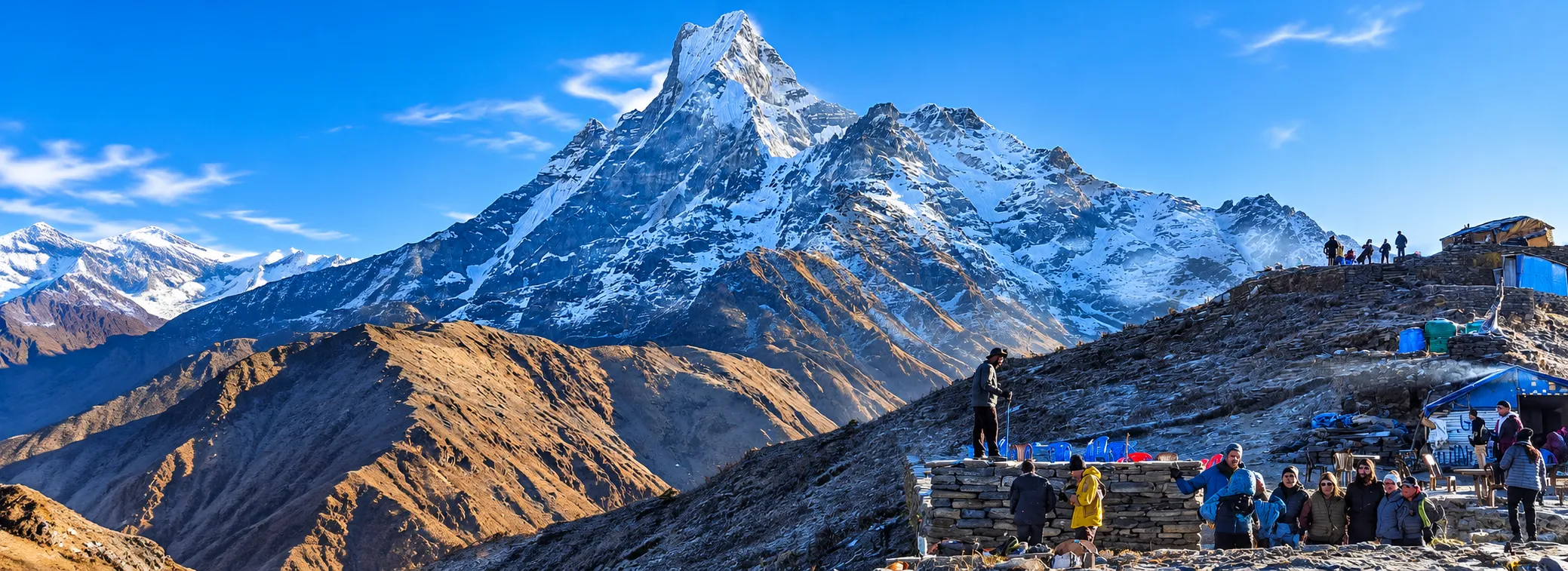
The Mardi Himal Trek is one of the popular short treks in the Annapurna region of Nepal that takes you to the Mardi Himal Base Camp (4500 m). You begin your journey from Kande or Kalimati and walk via lush rhododendron and oak forests, crossing stone-built traditional villages, to reach the base of Mardi Himal (5,587 m). Unlike other trekking routes in the Annapurna region, the Mardi Himal trek is quieter and less commercialised, giving you a peaceful trekking experience.
Regarded as a moderately difficult trekking route, this trek rewards you with a close view of Machhapuchhre, Annapurna South, Hiunchuli, and Mardi Himal. Trekking in the appropriate season or time further enhances your trek experiences with clear weather, a vibrant atmosphere, crystal-clear visibility, and experiences. But when is the best time for the Mardi Himal Trek?
This blog provides information about the best time to visit the Mardi Himal Trek for the best experience. The details about seasonal differences, month-by-month weather comparisons, the effect of weather or season on trek experiences, and tips for trekking in Mardi Himal Base Camp are also provided.
Mardi Himal Trek Overview
| Particulars | Details |
| Trekking Region | Annapurna Region, Nepal |
| Starting Point | Kande, Kalimati, Dhampus |
| Trek Duration | 7 to 10 days |
| Maximum Altitude | Mardi Himal Base Camp (4,500 m) |
| Trek Difficulty | Moderate |
| Best Seasons | Spring and Autumn |
| Best Months | March, April, October, and November |
| Accommodation | Teahouses and lodges |
| Major Attractions | Machhapuchhre, Annapurna South, Hiunchuli, rhododendron forests, mountain ridges |
Mardi Himal Trek in Different Seasons
The Mardi Himal Trek experience differs in various seasons, as the weather and climate influence the trail conditions and views.
| Season | Months | Weather Conditions | Trekking Suitability |
| Spring | March to May | Mild temperatures and a vibrant atmosphere, with clear weather and a low chance of rain | Best experience |
| Autumn | September to November | Cool and crisp weather with dry trails, crystal-clear visibility, and a low chance of rain | Ideal experiences |
| Winter | December to February | Cold temperatures with a chance of snowfall at high altitude; snowy and icy trails | Challenging |
| Monsoon | June to August | Slippery trails with leech infestation, heavy rain, and high humidity | Less suitable |
Spring Season (March to May)
The spring from March to May is the best time to visit the Mardi Himal Trek, as this season offers pleasant daytime temperatures, clear visibility, and predictable weather. Trekkers are rewarded with a vibrant atmosphere from wildflowers blooming, the pink and red hue of rhododendron blossoms, and green vegetation throughout the trail. The clear visibility allows the trekker to enjoy a close view of snow-capped peaks like Machhapuchhre, Annapurna South, and Hiunchuli. The season is also one of the best for photography and beginner trekkers who want to capture the vibrant beauty of the region.
Autumn Season (September to November)
Autumn from September to November is considered the ideal time for the Mardi Himal Trek, as this season offers clear skies, crystal-clear mountain views, and the best trail conditions for walking. The weather is stable and cool, and trails are dry, which makes the route easy for trekkers. Autumn also provides trekkers with an opportunity to witness vibrant Nepali cultures and festivals throughout the trails. You can witness the vibrant Dashain and Tihar festivals in the region, making your journey even more memorable.
Winter Season (December to February)
The winter from December to February is a challenging season to trek in the Mardi Himal Base Camp. As winter brings extreme cold, icy trails, and occasional snowfall in higher regions, navigating the trail can be slippery and complicated. Regardless of the cold and difficulty, winter manages to give a clear view of the Himalayas. Trails are less crowded, giving you a solitary trekking experience. If you are trekking to Mardi Himal during winter, we recommend trekking with a licensed and knowledgeable guide, proper trekking gear, and weather monitoring.
Monsoon Season (June to August)
If you are planning to trek to Mardi Himal during the monsoon season from June to August, you must prepare for the challenges the season presents. Being a less suitable season for trekking, the monsoon presents heavy rain, high humidity, and a risk of landslides and floods in the riverside areas. The slippery and muddy trails with leech infestations, limited mountain visibility, and poor visibility due to fog may decrease your excitement. However, if the weather is clear, you can witness clear Himalayan views and lush green landscapes during monsoon.
Mardi Himal Weather Month by Month
For trekkers planning for the Mardi Himal Trek, we provide the month-by-month weather and trail conditions to help choose the best month for trekking in the table below:
| Month | Weather and Trail Conditions | Trekking Suitability |
| January | Cold weather with snow and icy trails at higher altitudes | Cold and challenging weather |
| February | Cold weather with snow and ice on the trails | Challenging |
| March | Improving weather with wildflowers and rhododendrons beginning to bloom. | Good |
| April | Pleasant and clear weather with wildflowers and rhododendron blooms | Excellent |
| May | Warmer weather with increasing clouds and occasional rain | Good |
| June | Humid, rainy, and foggy weather with slippery trails | Less suitable |
| July | Heavy rainfall causing limited visibility | Not recommended |
| August | Rainy, cloudy, and slippery conditions | Not recommended |
| September | Improving conditions as the monsoon withdraws | Trekking suitability varies. |
| October | Clear skies with an excellent view of mountain landscapes | Excellent |
| November | Clear mountain views and colder nights | Excellent |
| December | Cold conditions and possible snowfall | Conditional |
Which Month Is Best for Your Mardi Himal Trek?
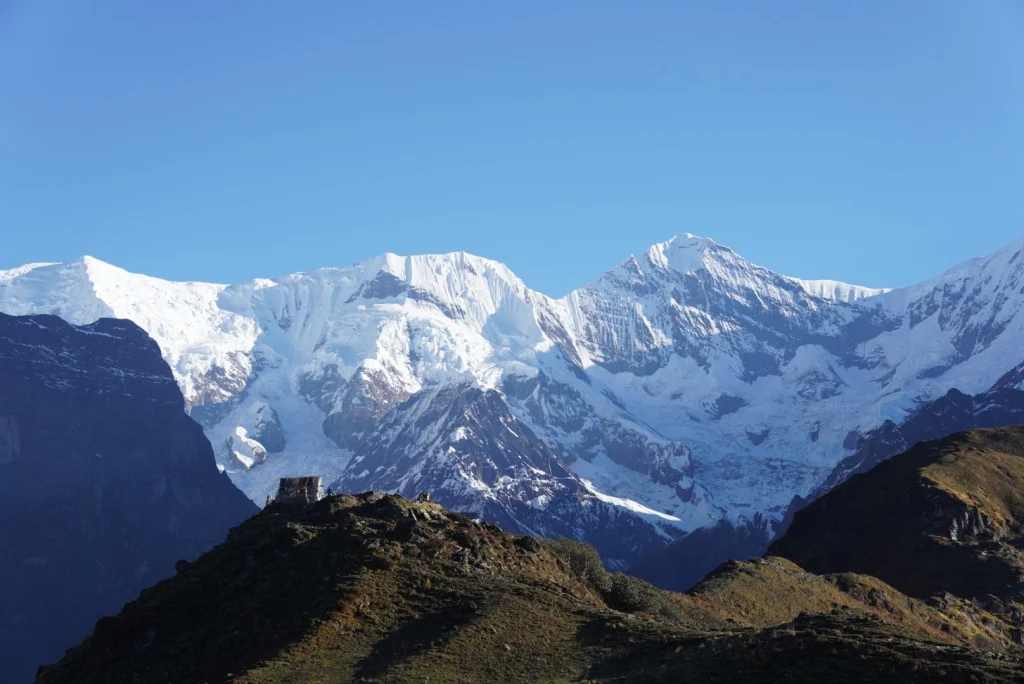
The best month for the Mardi Himal Trek depends on the preferences, interests, and requirements of the trekker. If you prefer clear mountain views with clear trails and cool weather, October and November can be the best months. For experiencing a vibrant atmosphere with blooming vegetation and surroundings, March and April can be the best months. If you want a winter challenge and to explore the region crossing snow and icy sections, you can trek during December, January, or February.
For beginners and trekkers who want a comfortable trekking experience, March to May and September to November can be the best months.
How Does Weather Affect the Mardi Himal Trek?
Trail difficulty, mountain visibility and trekking safety are all influenced by weather. The trek goes through Forest Camp (2600 m), Low Camp (2990 m), High Camp (3580 m) and finally Mardi Himal Base Camp.
As trekkers ascend to higher altitudes, the weather gets cooler and more challenging. At higher altitudes, snow and ice may make navigating risky and difficult. Meanwhile, during a monsoon, rainfall in lower regions will make trails slippery, with a risk of landslides. These events impact the overall trekking experience of trekkers. Hence, trekkers are recommended to trek during spring and autumn for the best experience.
Tips for Trekking Mardi Himal in Different Seasons
When trekking to Mardi Himal, following the tips below can be helpful:
- Check the weather forecast: Review the trail conditions and weather forecast before proceeding to the trailhead. Avoid trekking if the weather conditions are unsafe or if authorities recommend trek cancellations
- Seasonal clothing: Pack clothing according to the season you are trekking in for the best experience and comfort.
- Book accommodation: If you are trekking during peak season for spring and autumn, book accommodation in advance.
- Trek with a guide: Trek to Mardi Himal with a licensed and experienced guide for safety, proper information, and experience.
- Extra days: Allow extra days in the itinerary to accommodate acclimatisation, rest days, or unexpected delays due to poor weather or any unforeseen circumstance.
Conclusion
The spring and autumn months are the best time for the Mardi Himal trek due to the best experience, comfort, and views it provides to trekkers. These seasons provide predictable weather, clear skies, clean visibility, and less chance of rain. The vibrant atmosphere and cultural interaction during these seasons further enhance your trekking experience.
If you are planning for the Mardi Himal trek during spring and autumn or any other season, Contact Trekkers Nepal. Trekkers Nepal provides tailored trek packages along with licensed local guides, accommodation and transportation arrangements, and porter and logistics support to make your trek to Mardi Himal memorable.
Feels like sharing this blog to your circles?


Comments 0