
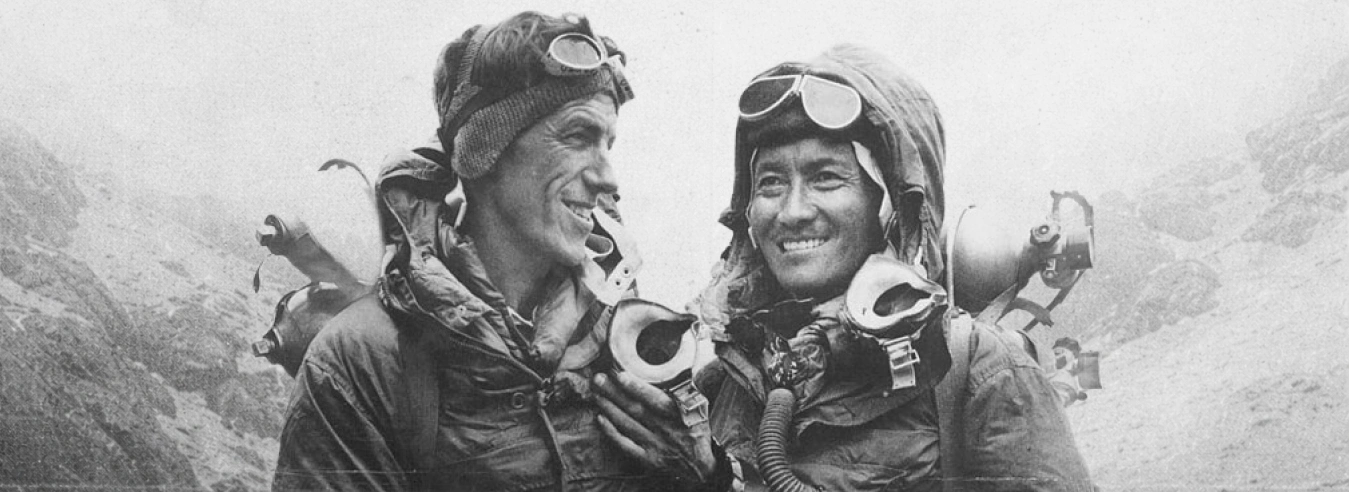
Sir Edmund Hillary and Tenzing Norgay Sherpa are the two names that can never be missed when describing Everest expedition and summit. They are the first to summit Mount Everest (Sagarmatha, Chomolungma), the world’s highest peak, standing tall at a height of 8848.86 meters above sea level. The summit during the British Expedition in Everest in 1953 AD not just made history but also set a legacy by inspiring new generation climbers and mountaineers to go beyond human boundaries. The achievement by Hillary and Sherpa showed how human can use their mental and physical strength and cross-cultural cooperation to overcome challenging landscapes. Overall, the Everest expedition has reshaped the future of Everest and Himalayan mountaineering adventures.
The Challenge of Mount Everest Before 1953
Mount Everest was known as ‘Peak 15’ before its actual height was measured in the 1850s. Later, it was renamed Mount Everest after Sir George Everest. Before the first successful summit of Everest by Tenzing Norgay Sherpa and Sir Edmund Hillary, many attempts and expeditions were carried out. But unfortunately, they all failed due to extreme weather conditions, limited climbing technology, and lack of oxygen systems. Everest was considered an unconquerable mountain that was beyond human limits.
Sir Edmund Hillary-Background and Early Life
Sir Edmund Hillary was born in 1919 AD in Auckland, New Zealand. He was fond of adventure and hiking in the Southern Alps from a young age. Sir Edmund Hillary was a beekeeper who was known for physical strength, resilience, and calm decision-making. Due to his mountaineering skills, strength, and passion for mountaineering, he was selected on the British Everest Expedition in 1953. Hillary achieves success by summiting the world’s highest mountain because of his strong determination and adaptability in the final ascent to Everest.
Tenzing Norgay Sherpa-The Man of the Himalayas
Tenzing Norgay Sherpa was born in Khumbu region of Nepal. He was the man of the Himalayas as he had good knowledge of mountain climate, conditions, and high-altitude terrains. He was selected for the British Everest Expedition as he had already participated in many Everest expeditions. His experience, strength, endurance, and leadership have led other mountaineers to navigate safely through dangerous sections. Tenzing Norgay Sherpa represented the roles of Sherpas in Everest expeditions and exploration of the mighty Himalayas.
The 1953 British Everest Expedition
The 1953 British Everest Expedition was the 9th expedition led by Colonel John Hunt which included experienced mountaineers and Sherpas like Sir Edmund Hillary and Tenzing Norgay Sherpa. In this expedition, Mount Everest was approached from its south face, from Nepal. This expedition to Everest became successful due to improved climbing technology, oxygen supplements, and better strategies. The experience of skilled Sherpa and mountaineers also played an important role in the success of the expedition.
The Day of Historic Everest Summit – 29 May 1953
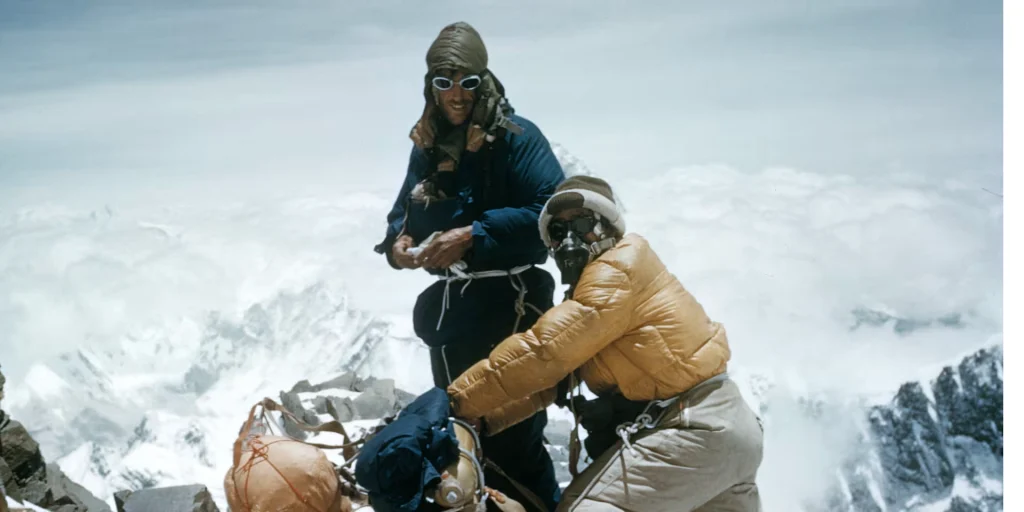
29 May 1953 was a historic day when Sir Edmund Hillary and Tenzing Norgay Sherpa successfully conquered Everest for the first time. They began their ascent to the summit through the South Col, the most challenging section with steep rock face. The South Col was later named Hillary Step to honor Edmund Hillary and Tenzing Norgay Sherpa. With careful and strategic ascent from Hillary step, the two mountaineers reached the peak at 11:30 am. It was a moment of victory, and they spent around 15 minutes at the top by taking photographs, planting flags, and making offerings.
Global Reaction and Recognition
The news of a successful summit by Sir Edmund Hillary and Tenzing Norgay Sherpa was spread rapidly during the coronation of Queen Elizabeth II. Sir Edmund Hillary was knighted for the glorious achievement, while Tenzing Norgay was honored and respected worldwide. The success and glorious victory of Edmund Hillary and Tenzing Norgay Sherpa inspired global mountaineers, adventurers, and explorers.
Legacy of Edmund Hillary and Tenzing Norgay
The impact of Hillary and Tenzing has been enormous; it not only covers the time of their climbing to the top. Hillary spent a big part of his life after retirement on helping Nepal via The Himalayan Trust, which granted him the chance to support the construction of schools, hospitals, and raise the level of infrastructure. Tenzing became the pride of Sherpas as he played a major role in getting high-altitude workers recognized. The presence of Hillary and Sherpa opened the doors for the modern Everest expeditions and the adventure tourism of Nepal.
Conclusion
The historic summit of Mount Everest by Sir Edmund Hillary and Tenzing Norgay Sherpa is not just a victory over Everest but also a representation of humans’ courage, dedication, and cross-cultural communication. The success of the summit has motivated global mountaineers and local Sherpas to take part in challenges and contribute to tourism in the Himalayas. If you are also a passionate mountaineer or adventure seeker inspired by mountaineering legends like Edmund Hillary and Tenzing Norgay Sherpa, visit Trekkers Nepal. Trekker Nepal helps you to explore the legendary Himalaya by providing expert guidance, adventure packages, and local insights about the places.
Feels like sharing this blog to your circles?


Comments 0