


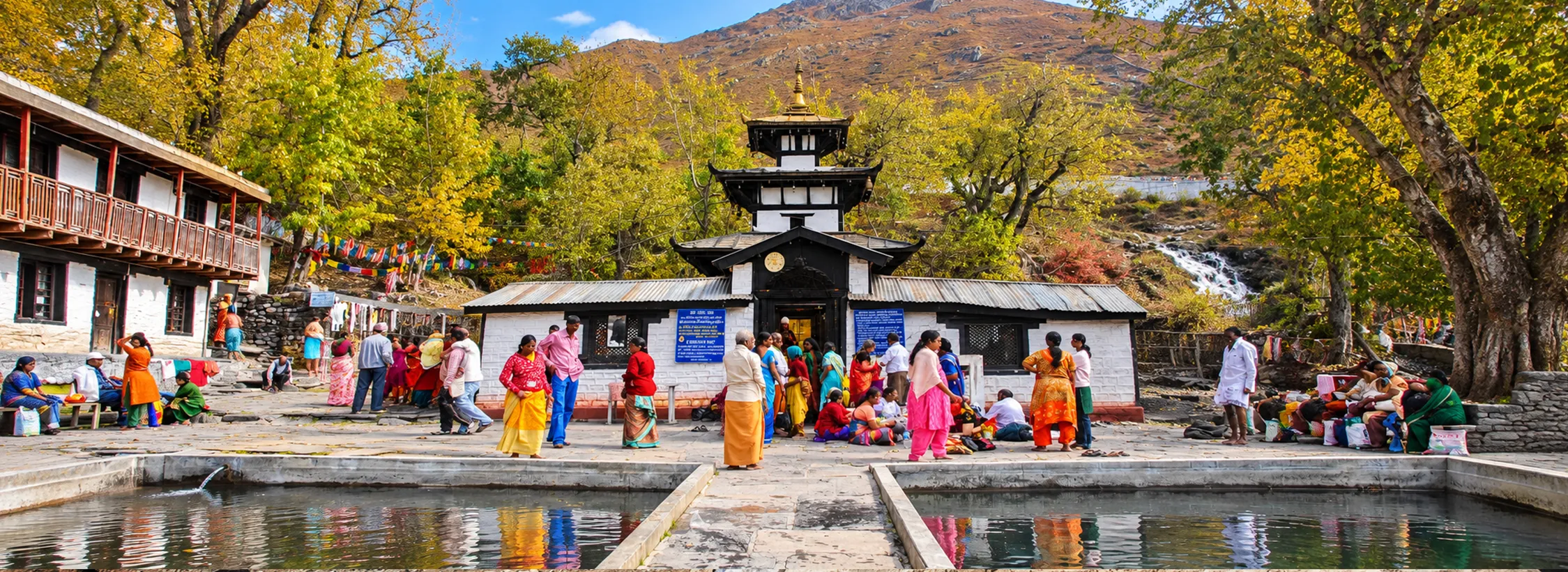
Muktinath Darshan is a popular pilgrimage journey in Nepal, especially among Hindu and Buddhist devotees. Located in the Mustang region at around 3,800 metres, Muktinath Temple is surrounded by the beautiful landscapes of the Himalayas and the Kali Gandaki Valley. You can experience raw Himalayan wilderness with sacred elements.
You can reach Muktinath by road, flight and road, or helicopter, depending on your budget, time, and preferred level of comfort. The most common route from Kathmandu takes you through Pokhara, Jomsom, and finally to Muktinath. Along the way, you can see mountain scenery, changing landscapes, traditional settlements, and the distinctive landscape of Mustang.
In this blog, you will learn about the Muktinath Darshan route, travel cost, best time to visit, and essential travel tips.
Muktinath Darshan Route
There are several ways to reach Muktinath from Kathmandu. The route you choose mainly depends on whether you prefer a scenic road journey, a quicker flight option, or a helicopter tour.
Route 1: Kathmandu to Muktinath by Road
The overland journey generally follows the route:
Kathmandu → Pokhara → Beni → Tatopani → Ghasa → Marpha → Jomsom → Kagbeni → Muktinath
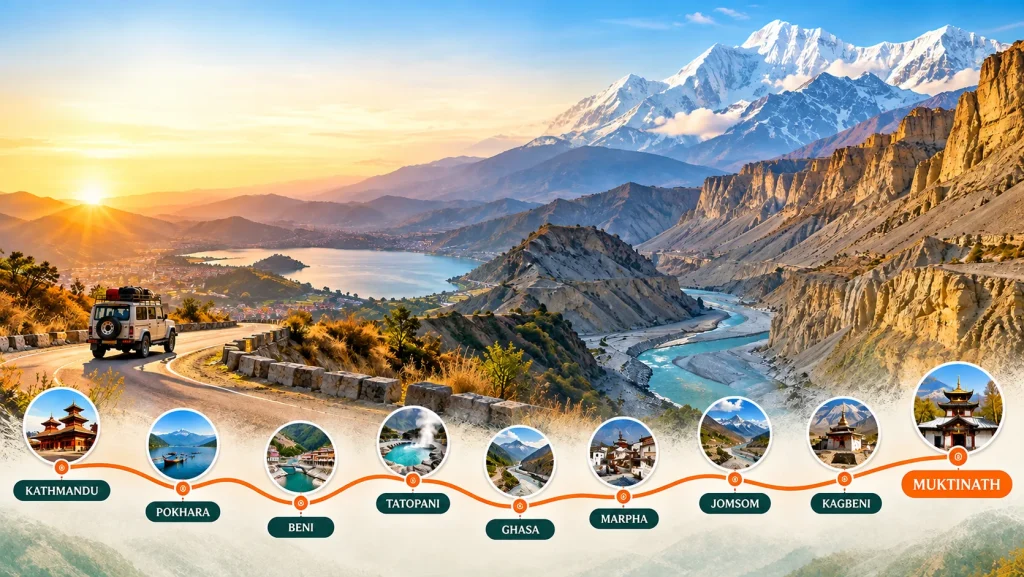
The road journey takes you through the hills of central Nepal to Kali Gandaki Valley and finally to the drier landscapes of Mustang. The route passes through places such as Marpha, known for its apple garden and traditional stone houses, and Jomsom, the district headquarters of Mustang. From Jomsom, you continue by road towards Muktinath.
The total road distance from Kathmandu to Muktinath is roughly 370-400 km, depending on the route used. Travel time is 2 to 3 days. You can plan your travel days as per your comfort.
Route 2: Kathmandu to Muktinath by Flight and Road
If you want to take a shorter road journey, you can travel from Kathmandu to Pokhara by flight and then take a connecting flight from Pokhara to Jomsom. Both flights take around 20-25 minutes. From Jomsom, you will continue your journey by jeep to Muktinath. It takes around 1.5 to 3 hours.
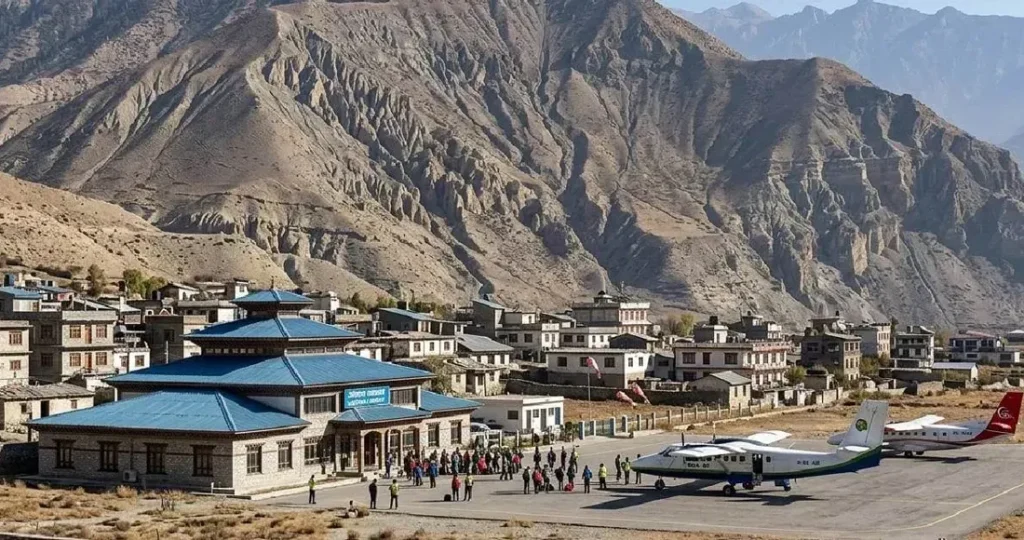
Jomsom flights are generally operated in the morning because strong winds can affect flights later in the day. This option is suitable for travellers who want to save time and avoid the long road journey.
Route 3: Muktinath by Helicopter
A helicopter is the fastest and most comfortable option for travellers with limited time. Helicopter tours can take you from Kathmandu directly to the Muktinath area. You can reach there within 1 hour from Kathmandu.
Helicopter flights are considerably more expensive than 3 to 4 day road trip options or regular flights. Current 2026 shared-seat prices can vary widely depending on the operator, group size, season, and availability.
Estimated Cost
Your cost depends on your expenses and travel days. Estimated cost for your Muktinath Darshan Trip is given as follows;
| Mode of Travel | Cost per Person (approx.) | Duration (Round Trip) | Key Details |
| By Road (Jeep/Bus) | NPR 8,000 – NPR 50,000+ (USD 60 – 380) | 4 to 7 days | Involves long drives via Pokhara and Jomsom; extra cost for private jeep and public bus, plus food/lodging. |
| By Flight (Flight+Jeep) | NPR 25,000 – NPR 50,000+ (USD 200 – 400) | 3 to 4 days | Domestic flight to Pokhara, connecting flight or local jeep/flight to Jomsom, then short road/walk. |
| Helicopter (Shared Group) | USD 1,100 – USD 1,300 (~NPR 145,000-170,000) | 3 to 4 hours | Direct or via Pokhara; includes ground time/darshan and basic insurance. |
| Helicopter (Private Charter) | USD 4,800 -USD 5,500 total (~NPR 630,000-720,000) | 3 to 4 hours | Split across up to 4-5 passengers; direct charter from Kathmandu. |
Best Time to Visit Muktinath
The best time for Muktinath Darshan is generally spring and autumn. March to May and September to November usually offer favourable weather, comfortable daytime conditions, and good mountain visibility.
Spring: March to May
Spring brings warmer weather and clearer views in the Mustang region. The lower parts of the route appear greener, while the mountain views can be beautiful on clear days. It is suitable for travellers who love warmer temperatures.
Autumn: September to November
Autumn is one of the most popular periods for visiting Muktinath. After the monsoon, the skies generally become clearer, and the surrounding mountains are more visible. October and November are particularly popular months for pilgrimage and travel to the region.
Winter: December to February
Winter can be very cold around Muktinath, with freezing temperatures and possible snowfall. Strong winds can also affect transportation, particularly flights to Jomsom. However, travellers who are prepared for cold conditions love to visit during this time and visit the temple.
Monsoon: June to August
Mustang lies in the rain-shadow area of the Himalayas, so it generally receives less rainfall than many other parts of Nepal. However, the road journey from Pokhara towards Mustang can still be affected by monsoon conditions, particularly on lower sections of the route.
If you are travelling during this period, it is important to check road and weather conditions before starting the journey.
Important Tips for Muktinath Darshan
Muktinath is located at a high altitude, so proper preparation can make your pilgrimage more comfortable.
- Prepare for the altitude: Muktinath is around 3,800 metres above sea level. Walk slowly and give your body time to adjust and acclimatize.
- Carry warm clothes: Even during warmer months, mornings and evenings can be cold.
- Carry comfortable footwear: You may need to walk around the temple area and nearby attractions.
- Keep drinking water: Staying hydrated is particularly important at higher elevations.
- Carry cash: ATMs and banking facilities are limited in some areas of Mustang.
- Check transportation conditions: Flights to Jomsom are weather- dependent, while road conditions can change quickly with the weather.
- Protect yourself from the sun: The high-altitude sun can be strong, so carry sunglasses, sunscreen, and a hat.
- Carry essential medicines: Bring your regular medicines and basic travel supplies.
- Respect the religious site: Dress appropriately and follow the rules and customs around the temple.
- Keep some flexibility in your itinerary: Delays are possible because of mountain weather, particularly when travelling by air.
What Can You See at Muktinath?
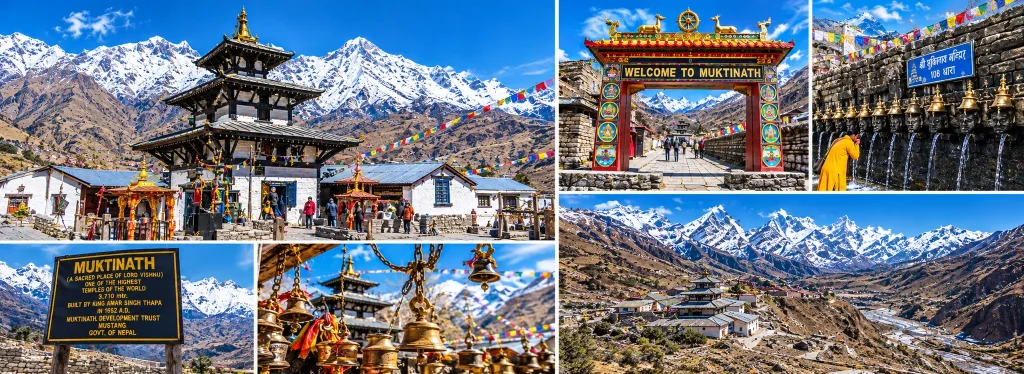
Muktinath is not only a religious destination but also a place of cultural and natural significance. The temple complex includes the famous 108 water spouts and the Jwala Mai Temple, known for its natural flame. The site is sacred to both Hindus and Buddhists.
The surrounding area offers views of the Himalayan landscape, dry Mustang hills, and the Kali Gandaki Valley. You can explore nearby places such as Jomsom, Kagbeni, and Marpha if you have enough time.
Plan Your Muktinath Darshan with Mountain Delights
Ready to visit the sacred Muktinath Temple and experience the beautiful landscapes of Mustang? Trekkers Nepal can help you plan your Muktinath Darshan with suitable transportation, accommodation, and a comfortable itinerary. Whether you prefer a scenic road journey, a faster flight option, or a helicopter experience, we can help arrange your journey according to your needs. Contact Trekkers Nepal today and start planning your Muktinath pilgrimage.
Feels like sharing this blog to your circles?


Comments 0