

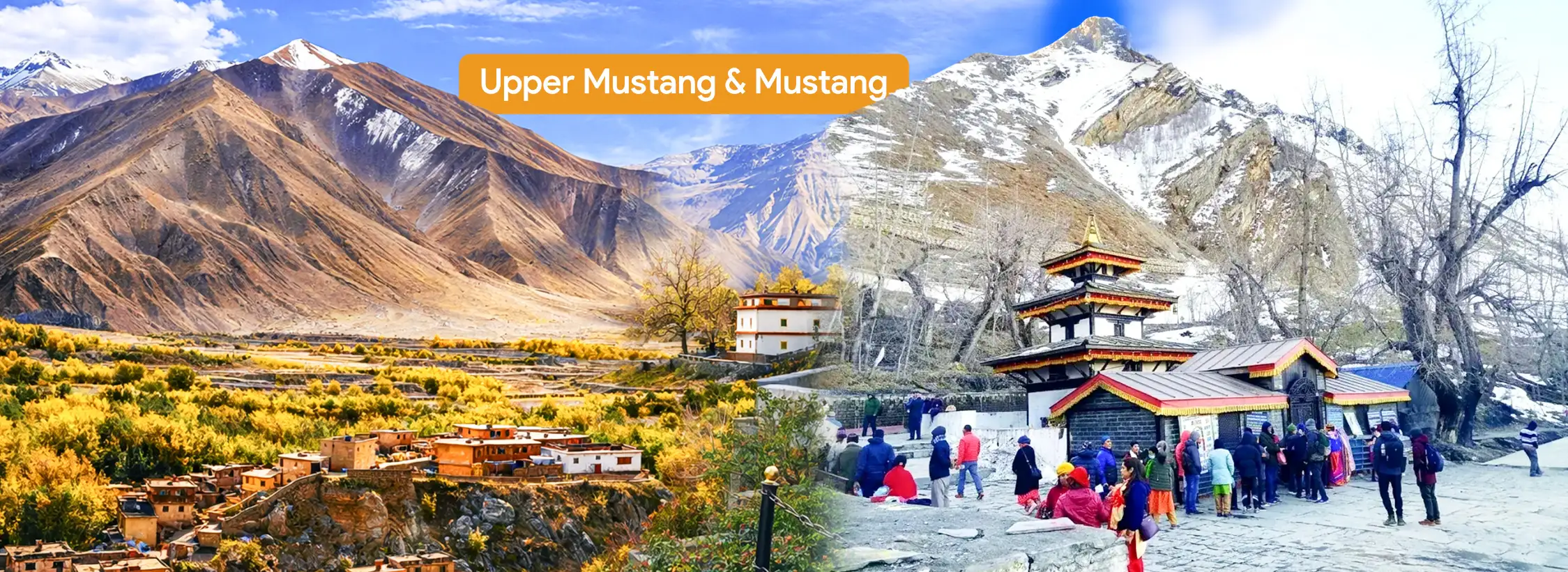
If you are planning a trip to the part of northern Nepal over and above the Himalayas, then you have almost wondered about one or more versions of the question “Is Upper Mustang the same as Mustang“. The confusion is understandable as travel blogs, trekking agencies, and tour packages use both terms freely, often interchangeably, and rarely explain the difference. The result is that you, the traveller, end up unsure about what you are actually booking, which permits you need, and what kind of experience is waiting for you at the end of a very long road trip from Jomsom.
The blog is written to give you a clear, factual breakdown of the difference between Upper Mustang and Lower Mustang, what Mustang District covers, and exactly what each zone looks like in terms of landscape. Additionally, the blog also explains culture, permits, and trail conditions to solve your confusion. We promise you by the time you finish reading this blog. You will know exactly what you are signing up for when you travel to upper mustang or lower mustang in your next trip to Nepal.
Overview of Mustang District Nepal
Mustang District is a single administrative district in Gandaki Province of northern Nepal. It’s a district which shares its whole northern border with the Tibet Autonomous Region of China. The name Mustang comes from the Tibetan word “Montag”, meaning fertile plain, and it has no connection to the American horse or the car popular world over. This district covers 3,573 square kilometres and had a registered population of just 14,452 people in the 2021 census. The district is among the most sparsely populated districts in entire Nepal. The elevation ranges from 1,372 metres in the south and over 8000 metres near the summit of Dhaulagiri in the west.
The entire Mustang District sits inside the Annapurna Conservation Area, Nepal’s largest protected area. The Kali Gandaki River flows through the heart of this district from north to south, carving the world’s deepest river gorge between Dhaulagiri and Annapurna. Jomsom, sitting at 2,740 metres, is the heart or district headquarters and the only town in Mustang with a functioning airport at Jomsom. Most travellers flying from Pokhara land at Jomsom first and then continue north by jeep or on foot. Jomsom is the point where you start to understand that Mustang is not one single experience but two very different ones depending on which direction you take to trek.
Table: Mustang District at a Glance
| Particular | Data |
| Province | Gandaki Province, northern Nepal |
| Total area | 3,573 square kilometres |
| Population (2021 census) | 14,452 people |
| Elevation range | 1,372m in the south to 8,167m at Dhaulagiri summit |
| District headquarters | Jomsom at 2,740 metres |
| Protected area | Annapurna Conservation Area (entire district) |
| Border to the north | Tibet Autonomous Region, China (Korala Border) |
| Major river | Kali Gandaki River |
Kagbeni: The Village That Divides Everything
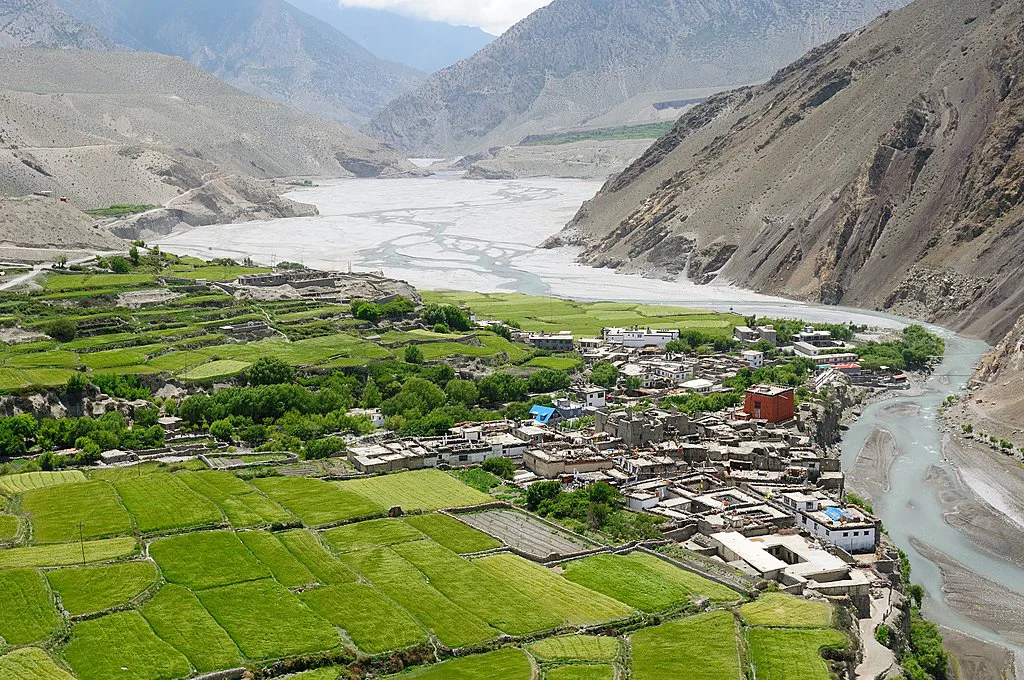
Kagbeni sits at an elevation of 2,800 metres in the confluence of the Jhong River and the Kali Gandaki. The geographic nature of these rivers makes it the natural and legal dividing point between Lower Mustang and Upper Mustang. As you walk north through the Kagbeni checkpoint and show your restricted area permit, you cross from one world into a completely different one. South of Kagbeni village, the landscape has belts of Himalayan vegetation, and this trail sees Annapurna Circuit trekkers passing through daily from its open atmosphere. On the other side in the North of Kagbeni, the terrain turns into an arid high-desert plateau, the villages thin out, the cliffs turn vivid red to ochre landscape, and the cultural atmosphere feels remarkably Tibetan. Your permit is checked at the Kagbeni checkpoint and at multiple police posts along the route north in Upper Mustang. In fact, you cannot cross into Upper Mustang without the correct documents in hand from Kagbeni.
Upper Mustang vs Mustang (Lower Mustang): Key Differences Explained
The table below gives you a clear, side-by-side comparison of every factor that matters for your travel to Upper Mustang or Lower Mustang. Read it carefully before you book anything.
| Category | Lower Mustang (Mustang south of Kagbeni) | Upper Mustang (Former Kingdom of Lo) |
| Geographic zone | Southern Mustang District including Jomsom, Marpha, Kagbeni | Northern two-thirds of Mustang District, north of Kagbeni |
| Altitude range | 1,372m to 2,800m in settled areas | 2,800m to 3,840m at Lo Manthang and beyond |
| District capital | Jomsom at 2,740m with the district airport | Lo Manthang at 3,840m, historic capital of Kingdom of Lo |
| Landscape | Dramatic river gorge, apple orchards in Marpha, some vegetation | High-altitude desert, red and ochre eroded cliffs, dry plateaus |
| Permit required | Standard ACAP permit (NPR 3,000) and TIMS card only | Restricted Area Permit at USD 50 per person per day (2025 rules) plus ACAP and TIMS |
| Solo trekking allowed | Yes, no restrictions on solo travel | No, minimum group of two and a licensed guide mandatory |
| Open to foreigners since | Always open. Heavily trekked as part of the Annapurna Circuit | Opened in 1992 after decades as a restricted demilitarised zone |
| Primary culture | Thakali people around Jomsom and Marpha, mixed Hindu and Buddhist | Loba people, deeply Tibetan Buddhist, closer to pre-modern Tibet than Nepal |
| Main attractions | Muktinath temple, Marpha apple brandy, Kali Gandaki gorge views | Lo Manthang walled city, sky caves, Tiji Festival, ancient monasteries |
| Trekking season | Year round with peak in spring and autumn | March to November. Monsoon viable due to rain shadow geography |
| Rainfall | Some monsoon rain reaches lower valley areas | Rain shadow effect keeps Upper Mustang dry even during monsoon months |
| Crowd level | High. Lower Mustang is among Nepal’s most trekked routes | Low. Restricted permit controls visitor numbers |
| Sky caves | Not present in accessible numbers | 10,000 estimated man-made caves, oldest dating to 1000 BC |
| Typical trek duration | 4 to 7 days for Jomsom Muktinath route | 12 to 16 days for a complete Upper Mustang trek |
What You Actually Experience on your Trek to Lower Mustang
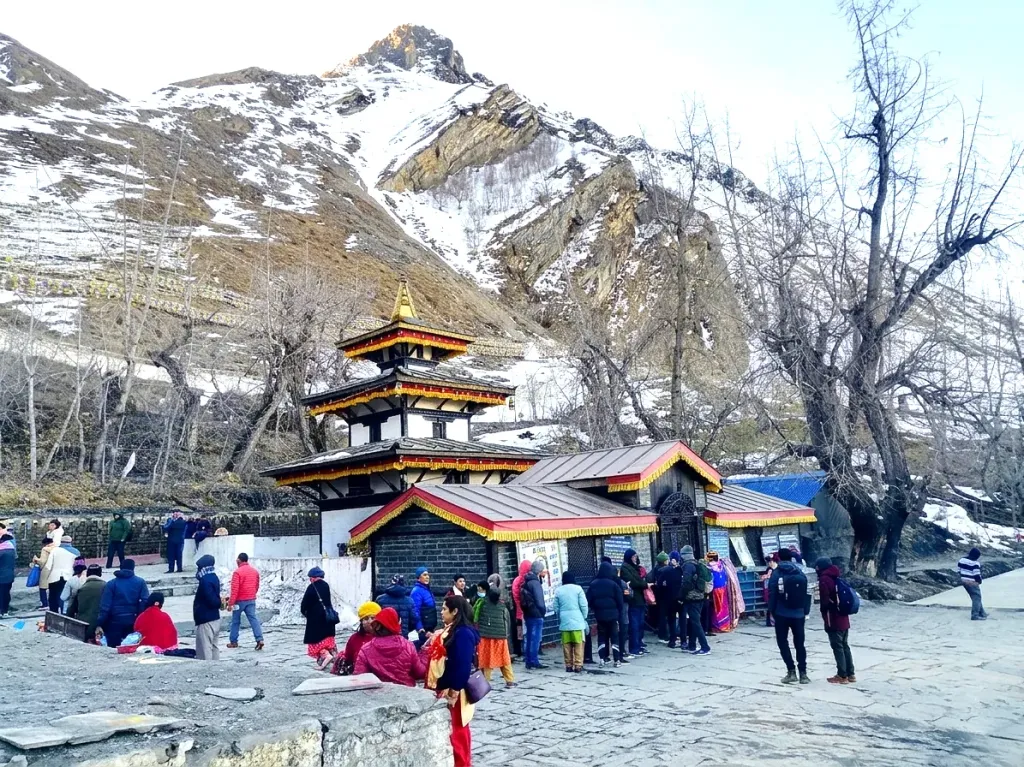
When you Trek to Lower Mustang you instantly experience it as an area which has been open to trekkers for decades and shows it. The route from Jomsom to Muktinath temple, which is one of the most sacred sites in both Hinduism and Tibetan Buddhism, is well-marked, well-served, and well-walked. You will find hot showers, reliable Wi-Fi in most teahouses, and a menu that extends beyond Dal Bhat to include apple pie, fresh coffee, and imported snacks in the region. The Apple orchards of Marpha village easily allow it to offer continental western dishes. Just like the food, the landscape of Lower Mustang is equally dramatic, the Kali Gandaki gorge is genuine world-class natural scenery, and the culture of the Thakali people is warm and hospitable. Additionally, you do not need a restricted area permit to trek here and you can also travel solo.
What You Actually Experience on your Trek to Upper Mustang
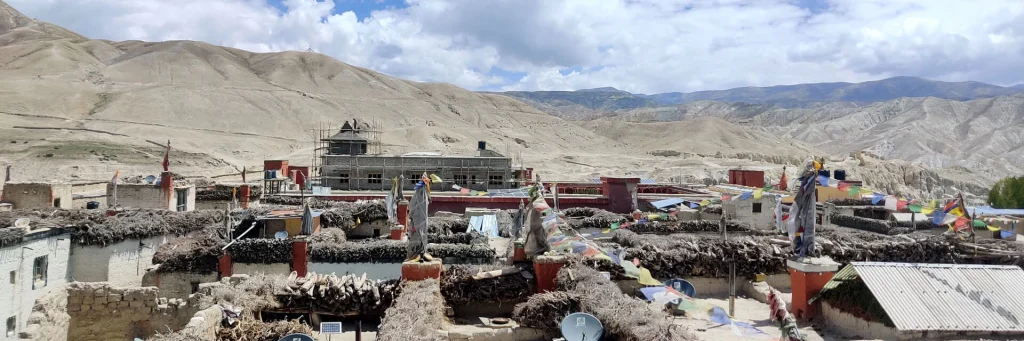
Completely in contrast to Lower Mustang the Trek To Upper Mustang you enter a dramatically different landscape. You visit the former Kingdom of Lo, a place that was sealed from outside influence until 1992 when you enter into Upper Mustang. The village and geology here still carry the atmosphere of a world which never caught up with the rest of Nepal. The landscape turns into a high-altitude desert of deep red cliffs, eroded canyons, and wide-open sky here. The Lo Manthang, which is the walled capital, is the centre of attraction. The kingdom was founded in 1380 by King Ame Pal, contains four major monasteries, a Royal Palace, and a wall which has stood the test of time for the last 600 years. Equally amazing are the sky caves of Upper Mustang, estimated at 10,000 in total. You will find caves carved into cliff faces across the entire region dating millennia ago. The Loba people, who speak traditional Tibetan dialects and practice the Sakya school of Tibetan Buddhism, live in communities here.
Quick Summary: Which Zone Should You Choose?
- If you want to trek the Annapurna Circuit or visit Muktinath without special permits: choose Lower Mustang and travel with a standard ACAP permit and TIMS.
- If you are looking for and experience of the last living Tibetan kingdom in Nepal, see Lo Manthang, explore sky caves, and attend the Tiji Festival: choose Upper Mustang and arrange your restricted area permit in advance
- If you are a first-time Nepal trekker looking for a well-serviced, accessible route then Lower Mustang is your natural starting point for experiencing the mountains of Nepal.
- If you have trekked Nepal before and want something genuinely remote, culturally rare, and historically extraordinary then Upper Mustang is the right natural step.
- For those visiting during June, July, or August when most Nepal trekking regions are monsoon-soaked then Upper Mustang is one of the few viable destinations because of its rain shadow geography.
Planning your first or next Upper Mustang trek and want all permits, a licensed guide, and a custom itinerary handled by people who know the ins and outs of the region? Contact Trekkers Nepal at trekkersnepal.com today and let our team take care of every detail from Jomsom to Lo Manthang and back.
Frequently Asked Questions About Upper Mustang and Mustang
1. Is Upper Mustang the same as Mustang Nepal?
No. Mustang Nepal refers to Mustang District as a whole, which covers 3,573 square kilometres in Gandaki Province. Upper Mustang is the northern two-thirds of the district, north of Kagbeni at 2,800 metres, and is the former Kingdom of Lo.
2. What permit do you need for Upper Mustang in 2026?
As of mid 2026, the Upper Mustang restricted area permit costs USD 50 per person per day under the new government fee structure, replacing the previous flat-rate USD 500 for 10 days. You also need a standard Annapurna Conservation Area Permit (ACAP) at NPR 3,000 and a TIMS card.
3. How do I get the permits to Visit Upper Mustang?
All three permits for Upper Mustang Trek must be arranged through a government-registered Nepal trekking agency before you reach the Kagbeni checkpoint. You cannot obtain restricted area permits at the checkpoint itself. A licensed local guide and a minimum group size of two trekkers are mandatory requirements that remain unchanged under the new rules.
4. What is the best time to visit Upper Mustang compared to Lower Mustang?
The best time to visit Upper Mustang is from March to November. Upper Mustang sits in the rain shadow of the Annapurna and Dhaulagiri ranges, meaning the monsoon from June to August brings very little rainfall to the region. This makes Upper Mustang one of the few places in Nepal where trekking during summer is genuinely viable and enjoyable.
5. What’s the second-best season to visit the Upper Mustang?
May is the cultural peak because of the Tiji Festival held inside Lo Manthang. Another peak season to travel is October, it delivers the clearest mountain views and the best trail conditions of the year.
6. When should I visit Lower Mustang and the Annapurna trek route?
For Lower Mustang, the route is trekked year-round, with spring from March to May and autumn from September to November being the peak seasons. The Annapurna Circuit which passes through Lower Mustang is one of Nepal’s most popular trekking routes in those months.
Feels like sharing this blog to your circles?


Comments 0