

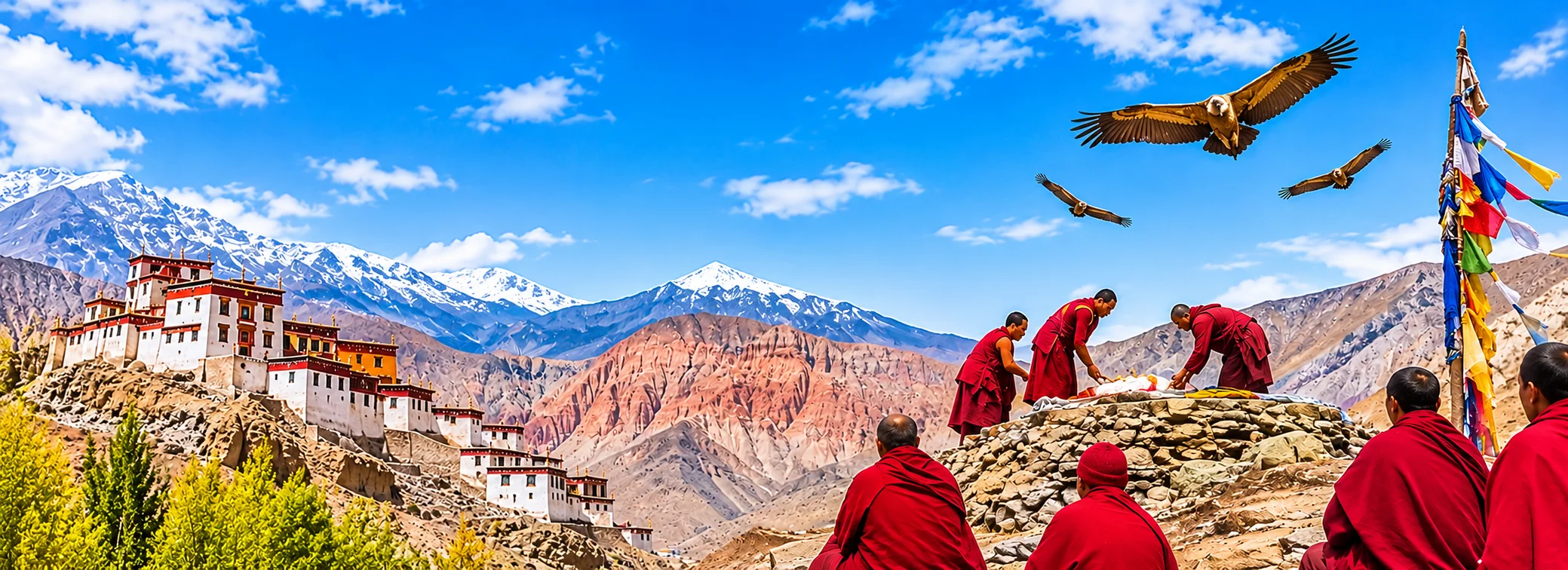
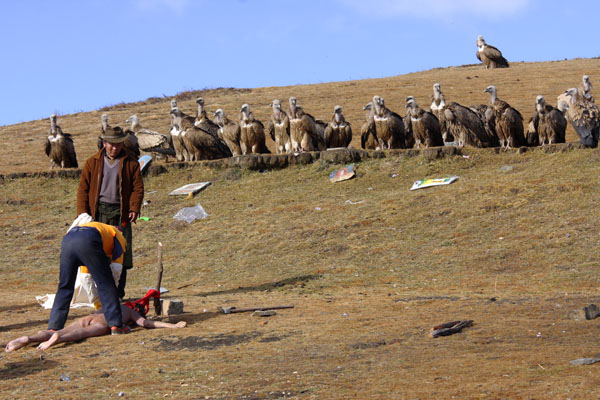
The sky burial ritual is a traditional funeral practice where a deceased person’s physical body is offered to vultures and natural elements. It is a Tibetan Buddhist funeral practice in Upper Mustang, Nepal, and is known locally as Jhator, meaning “giving alms to the birds“.
The ritual views the physical body as an empty vessel or temporary shell once consciousness has departed. Offering the remains to scavenging wildlife is considered a final, supreme act of charity and compassion, nourishing other living creatures. It directly reflects the Buddhist teachings of anicca (impermanence) and the interconnectedness of all life.
The geography and natural environment of Upper Mustang may also have influenced the practice of sky burial. The region’s high-altitude, rocky terrain makes digging traditional underground graves difficult. Trees and firewood are rare in the high Himalayan region, making traditional large-scale cremations difficult. Sky burial offers an alternative that allows the deceased person’s body to return to nature.
In this blog, you will learn more about how the sky burial ritual is conducted, its historical connection, and ways travellers can explore the sky burial ritual.
How Is Sky Burial Ritual Conducted?
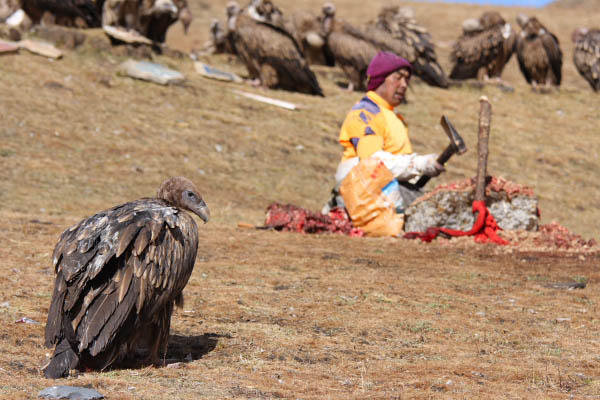
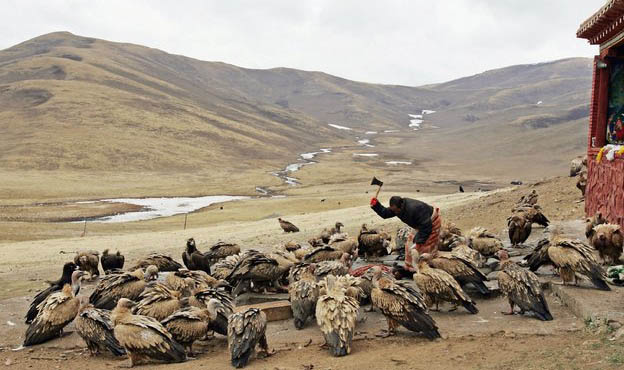
The funeral ritual begins with monastic rites, where lamas and religious specialists lead prayers and chants to guide the transition of the soul. The ceremony takes place at designated highland or sacred charnel grounds. Here, trained specialists ritually prepare and dismember the remains so that scavenging birds can fully consume the offering.
Historical Connections: Mustang’s Ancient Cave Burials
Upper Mustang has a long history of distinctive funeral practices, some of which date back thousands of years. Archaeological discoveries in the region have revealed ancient burial chambers hidden inside caves and cliffs, showing how earlier communities treated their deceased.
In places such as Samdzong and Mebrak, researchers have discovered human remains, bones, wooden structures and other burial materials inside ancient caves. Some of the remains show evidence of defleshing, suggesting that flesh was removed from the bodies before the bones were placed in burial chambers.
These discoveries are particularly interesting because they involve the preparation of human remains, similar in some respects to the practices associated with sky burial. However, ancient cave burials and Tibetan Buddhist sky burial are two distinct funeral traditions. While cave burials involved placing the remains inside tombs or chambers, sky burial involves ritually offering the deceased person’s body to vultures.
Although researchers have explored possible connections between ancient mortuary practices and later funeral traditions, a direct historical link has not been established. Nevertheless, these archaeological findings highlight Upper Mustang’s rich cultural history and the different ways communities have understood and approached death over generations.
How Can Travellers Explore Sky Burial Traditions in Upper Mustang?
Tourists can explore the archaeological remains, ancient burial caves, and Buddhist teachings behind Mustang’s funeral traditions at five specific museums and protected cliff sites, though live sky burial ceremonies remain strictly closed to outsiders.
Because Upper Mustang sits in an arid Himalayan rain shadow and stayed closed to foreigners until 1992, these sites remain remarkably well-preserved. Here is where you can visit and explore them:
1. Museums with Burial Artifacts & Cultural Exhibits
• Mustang Eco Museum (Jomsom): Located near Jomsom Airport, the main gateway to Upper Mustang, this is the most accessible place to see actual archaeological finds recovered from ancient burial caves. Displays include 2,000-year-old human skeletal remains, ceramic vessels, copper bangles, and beads, alongside traditional Loba clothing and Buddhist ritual instruments.
• Mustang Cultural Museum (Muktinath): Situated near the sacred Muktinath temple on the border of Lower and Upper Mustang, this local museum preserves regional artifacts, monastic history, and items illustrating Mustang’s ancient funerary and spiritual customs.
• National Museum of Nepal (Kathmandu): Located in Chhauni, Kathmandu, this national institution houses conserved Tibetan-Buddhist manuscripts, thangkas, and archaeological objects excavated from Mustang’s cliff caves.
2. Ancient Cliff Caves & Monasteries You Can Enter
• Jhong Cave (Chhoser, Upper Mustang): Located north of Lo Manthang, this five-story, 44-room cliff complex is open to visitors with a guide. Originally carved thousands of years ago for shelter and ancient funerary rites, it allows you to climb ladders through narrow tunnels to see how cliff chambers were constructed.
• Luri Gompa (near Yara, Upper Mustang): Accessible via a steep hike from Yara village, this 13th-century cave monastery sits high in a sandstone cliff. Inside, visitors can view preserved Vajrayana Buddhist murals and a central chorten reflecting the philosophy of impermanence (anicca) that is the root of Tibetan sky burials.
• Lo Manthang Monasteries (Thubchen & Jampa Gompas): Within the walled capital of Upper Mustang, visitors can tour active 15th-century monasteries where resident monks preserve the sacred texts (Bardo Thodol or Tibetan Book of the Dead) and rituals guiding the soul after death.
Important Access Rules
• Permits Required: To visit Jhong Cave, Luri Gompa, or Lo Manthang, foreign tourists must obtain an Upper Mustang Restricted Area Permit (RAP) through a registered Nepali trekking agency and travel with a licensed guide. Jomsom and Muktinath only require the standard Annapurna Conservation Area Permit (ACAP).
• No Live Ceremonies: While you can explore these ancient caves and museum collections freely, active jhator (sky burial) sites used by local families today are off-limits and strictly unadvertised to protect family privacy.
Explore Upper Mustang with Trekkers Nepal
Discover Upper Mustang’s cultural and historical treasures with Trekkers Nepal. From exploring the ancient caves of Chhoser and the monasteries of Lo Manthang to walking through traditional Tibetan-influenced villages, every stop offers a glimpse into the region’s unique heritage. Our experienced local guides help you understand the history, traditions, and Buddhist culture that make this remote Himalayan destination special.
Plan your Upper Mustang adventure with Trekkers Nepal and experience the region’s landscapes, ancient heritage, and living culture. Contact us today to start planning your journey!
Feels like sharing this blog to your circles?


Comments 0