

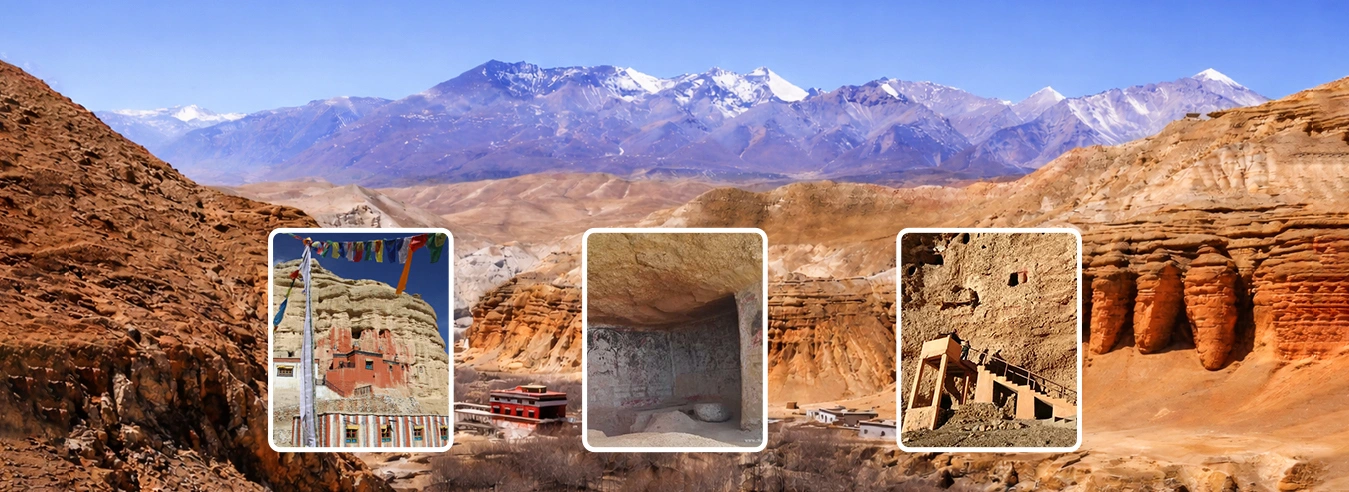
Upper Mustang was sealed to foreign visitors until 1992, which is exactly why the ancient caves Nepal holds in this region have survived so intact. Upper Mustang is a high-desert landscape lying north of the Annapurna and Dhaulagiri ranges. Additionally, the region it sits in is the only rain shadow of the Himalayas which has allowed it to preserve everything it touches. The mud walls, painted murals, carved stone, mummified remains, and centuries-old manuscripts have all endured the test of time inside these cliffs because almost no outside influence reached them. What you find when you finally arrive inside is not a reconstruction or a museum piece but history. It is the real thing, exactly where it was left.
1. Jhong Cave / Chhoser Cave
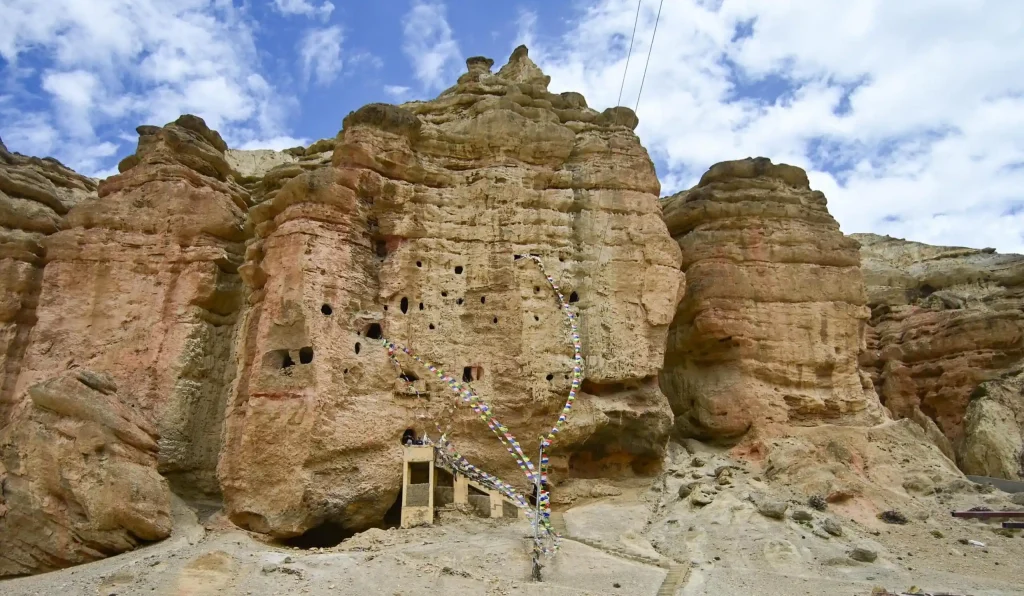
The Jhong Cave Mustang complex, also known as the Chhoser cave Nepal or Shija Jhong, sits at 4,000 metres above sea level near the village of Chhoser. It is two hours far from the foothills of Lo Manthang. The cave has five storeys and approximately 40 rooms connected by narrow wooden ladders, carved entirely by human hands into the ochre cliff face. It was used as a fortified hideout during the conflict-prone 10th century, a meditation space in later centuries, and a pilgrimage point by the Loba people in modern times. It is a must visit cave because the top floor view looking across the Chhoser valley to the Tibetan border is one of the most dramatic viewing opportunities available in all of Upper Mustang.
2. Luri Gompa Cave Monastery
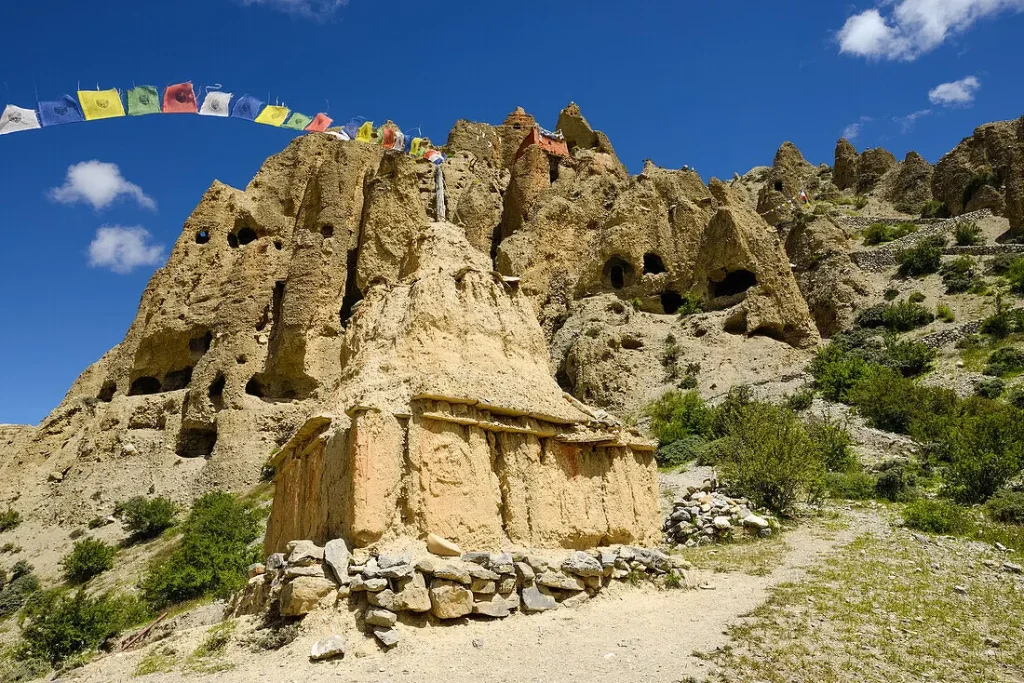
Luri Gompa cave sits on a ledge more than 100 metres above the valley floor and is set into one of the natural sandstone pillars that dot the landscape north of Lo Manthang. It is one of the oldest cave monasteries Nepal has on record. In fact, its murals dated to the 14th century depicting the life of the Buddha in mineral pigments have stayed in their original colour for the last 700 years. The cave starts with a winding footpath climbing from the valley bottom to a single wooden door. Behind the doors are two interconnected chambers which hold a stone chorten, painted ceiling mandalas, and an inner sanctum used for meditation. Prepare early in the itinerary because reaching Luri Gompa Mustang requires a full day.
3. Chungsi Rangchung / Ranchung Cave
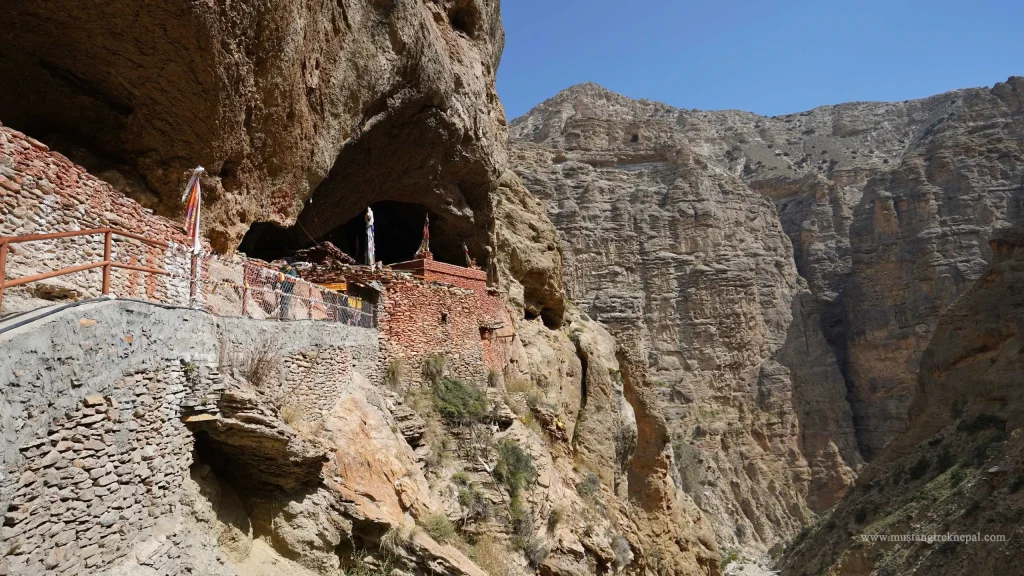
The Chungsi Rangchung cave is considered among the most sacred caves Mustang holds. Connected by local tradition and to the religious texts of Padmasambhava, the 8th-century Buddhist master who brought Vajrayana teachings from India to Tibet, it makes the cave especially important. According to folklore, this cave is described as self-arisen in Tibetan Buddhist teaching. It means the cave was formed by the mountain itself rather than carved by human hands. Inside the Chungsi cave, natural rock formations are identified by monks as sacred symbols, including a self-arising conch shell in the ceiling that pilgrims travel specifically to see. The atmosphere inside is unusually still as it carries the calmness of centuries of prayer. In order to reach the cave, you approach Chusang village through a dry canyon adding a layer of mysticism to the trip.
4. Konchhokling / Konchok Ling Cave
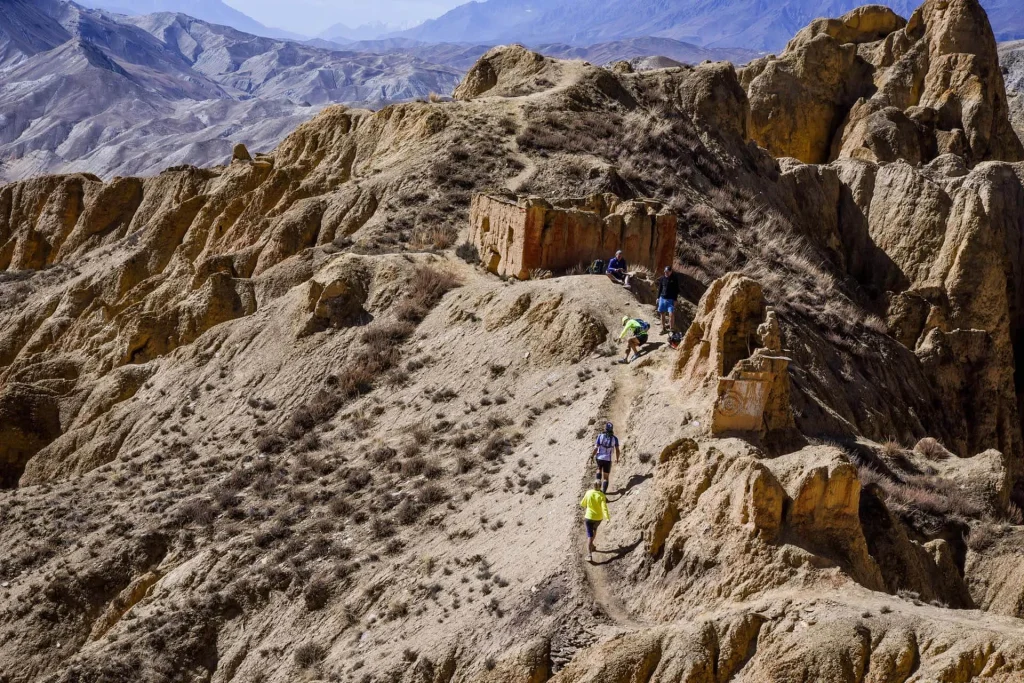
The Konchhokling cave Mustang, also referred to as the Konchok ling cave, rewards the trekkers who take the steeper and less-travelled trail that climbs above the standard Upper Mustang route. This cave sits at a higher elevation than most sites on this list, and the view from its entrance across the valley to the snowfields of the Annapurna range is a genuinely unexpected reward. Because very few visitors make the detour, the Konchhokling cave delivers the solitude that the more famous sites no longer can provide. Evidence of active use by monks, including carved mani stones and freshly placed prayer flags, shows the site remains a living part of the spiritual landscape in this region.
5. Nyphu / Nifu Gompa Cave
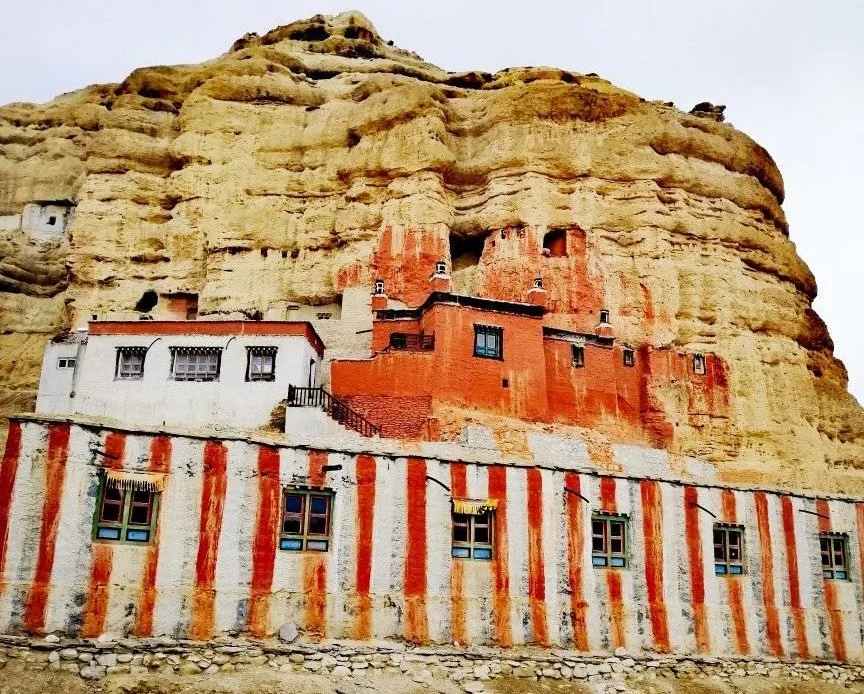
Nyphu Gompa cave rises above Ghami village on the main trekking route between Kagbeni and Lo Manthang. The cave built into the cliff face in the characteristic style of the Ghami Mustang caves tradition brings about a unique experience to travellers. The monastery combines a natural cave interior with stone-built outer chambers anchored to the rock. Inside the cave, ancient clay statues, ritual butter lamp holders, and cloth-wrapped religious texts are stored in alcoves lining the walls creating a monumental vista. Most trekkers on the main trail pass Nyphu Gompa cave without stopping because it requires a short, steep scramble from the path. The scramble path to the cave takes thirty minutes and delivers you an experience of a five-century-old meditation space with an open valley view of the entire Kali Gandaki corridor.
6. Samdzong Cave
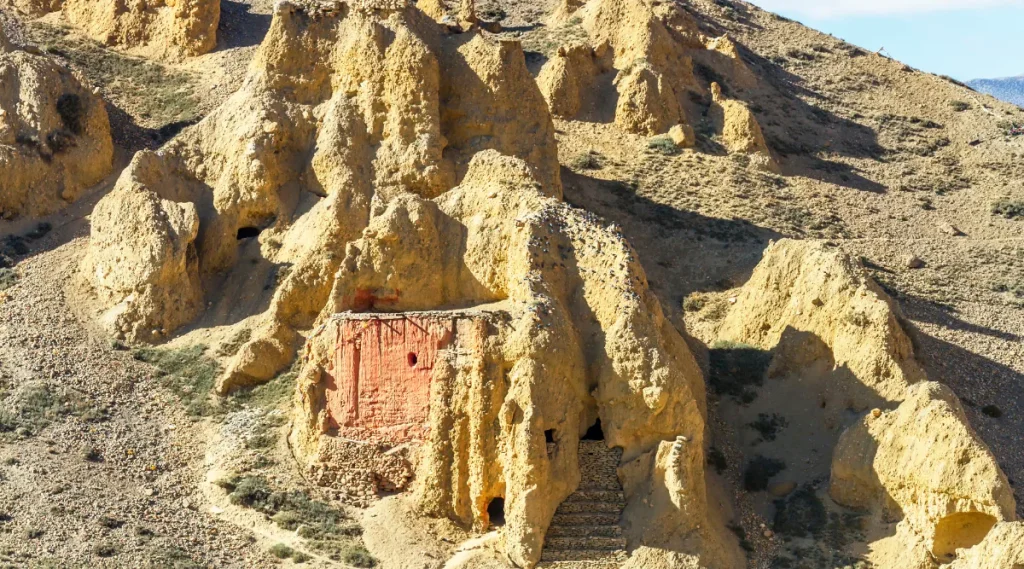
The Samdzong cave Mustang is the most archaeologically significant site on this entire list. In 2010, a National Geographic team excavating the Samdzong Upper Mustang site uncovered 27 human remains dating to the 3rd and 8th centuries. Alongside weapons, silk textiles, jewellery, and wooden artefacts from a community that vanished when its water source disappeared was uncovered making it a must visit place for those interested in human civilization. The skeletal remains here in the cave show cut marks consistent with sky burial preparation, providing direct evidence of pre-Buddhist mortuary practices in the Himalayan region. Samdzong is not on the standard Upper Mustang trekking route and reaching the lost village Nepal site requires a guided detour through unmarked side-valley terrain.
7. Tashi Kabung / Kabum Caves
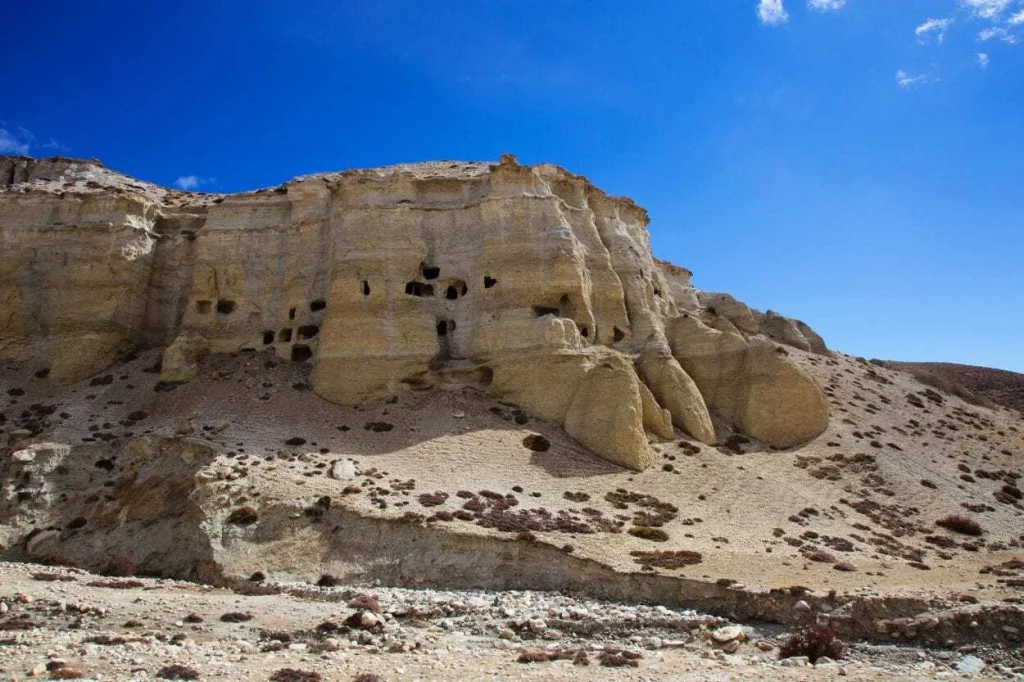
The Tashi Kabung caves Mustang sit well off the main Upper Mustang route and require advance planning with your trekking agency to include in any itinerary. It is located high above the Puyon Khola gorge and is often visited with the nearby Luri Gompa as a prime example of the region’s ancient, sacred “sky caves.” The Tashi Kabung caves were used for meditation retreats and for agricultural rituals tied to the planting and harvest seasons. Caves here are highly valued because they connect the spiritual practice of the Loba people to the rhythms of the land. Ceremonial pottery fragments and carved stone ritual objects found at the site by local researchers confirm its religious use over many generations. Because these caves see almost no visitors outside of pilgrimage periods, the Tashi Kabung caves are one of the few places in Upper Mustang where you’ll experience complete and true silence.
Important Tips for Visiting Upper Mustang Caves
Visiting the mysterious caves Upper Mustang holds requires more preparation than a standard Nepal trek. Here is what you need to know before you book.
| What You Need | Details |
| Mustang restricted area permit | USD 500 for the first 10 days. Extension costs USD 50 per person per day. Arranged only through a registered Nepal trekking agency. |
| Annapurna Conservation Area permit | NPR 3,000 per foreign national. Required for all trekkers passing through the conservation zone. |
| Licensed local guide | Legally mandatory throughout Upper Mustang. Essential for locating remote cave sites not marked on standard trail maps. |
| Best time to visit | March to November. Tiji Festival in May is the single best cultural window for visiting Lo Manthang and the surrounding caves. |
| Physical fitness | Jhong Cave requires ladder climbing. Luri Gompa, Konchhokling, and Tashi Kabung involve steep off-trail terrain. Good balance is essential. |
| Headlamp with spare batteries | Non-negotiable. Interior chambers at every cave on this list have no artificial lighting. |
- Carry your restricted area permit at all times. Police checkpoints between Kagbeni and Lo Manthang inspect documents at multiple posts along the route.
- Remove footwear and ask permission before entering any prayer chamber inside a cave monastery. Many sites are still actively used by monks and local pilgrims.
- Walk clockwise around every chorten and mani wall you pass on approach trails to cave sites.
- Carry at least three litres of water on any day you plan to visit a cave site away from the jeep road as there are no shops or teahouses at most of these locations.
Is the Upper Mustang Worth Visiting for Its Caves?
The Upper Mustang caves are not just a side attraction. They are the main event. Nowhere else in Nepal, and very few places on earth, do you find this concentration of living archaeology. The intact Buddhist art, and genuine historical mystery in a landscape here adds a sense of awe unavailable anywhere. When you visit the sky caves of Nepal as a traveller, you’ll leave as someone who has seen something the modern world has barely touched. Plan your visit carefully, respect the places and the people who have kept them alive.
Ready to explore the ancient caves of Upper Mustang with a team that knows every trail and every site? Contact Trekkers Nepal at trekkersnepal.com today and let us build your complete Upper Mustang cave trek with all permits, a licensed local guide, and an itinerary designed around the seven caves that matter most.
Frequently Asked Questions About Upper Mustang Caves
1. Do I need a permit to visit Upper Mustang caves?
Yes. All foreign nationals require a Mustang restricted area permit costing USD 500 for the first 10 days, along with an Annapurna Conservation Area Permit (NPR 3,000) and a TIMS card. These must be arranged through a government-registered Nepal trekking agency before you reach Kagbeni. There is no permit office at the trailhead or beyond Upper Mustang restricted area.
2. What is the best time to explore Upper Mustang caves?
The best time to visit Mustang is between March and November. May is the single most culturally rich month because of the Tiji Festival held inside Lo Manthang, a three-day masked dance ceremony that transforms the walled city into a living ceremonial space. October delivers the clearest mountain views and the firmest trail conditions. You should avoid December through February because temperatures at cave sites above Lo Manthang regularly fall below minus 20 degrees Celsius at night and many teahouses close entirely during the period.
3. Are Upper Mustang caves difficult to access?
Yes, most caves require good physical fitness and comfort with heights. The Jhong Cave Mustang complex involves climbing narrow wooden ladders to reach upper storeys. Luri Gompa cave requires a steep winding trail to a ledge 100 metres above the valley floor. Samdzong and Tashi Kabung require off-trail navigation through unmarked side valleys. None of the sites require technical climbing equipment, but they are not suitable for trekkers who are not physically prepared for steep, exposed terrain. Additionally, you need experience of a local person or guide to reach these off track locations.
Feels like sharing this blog to your circles?


Comments 0