


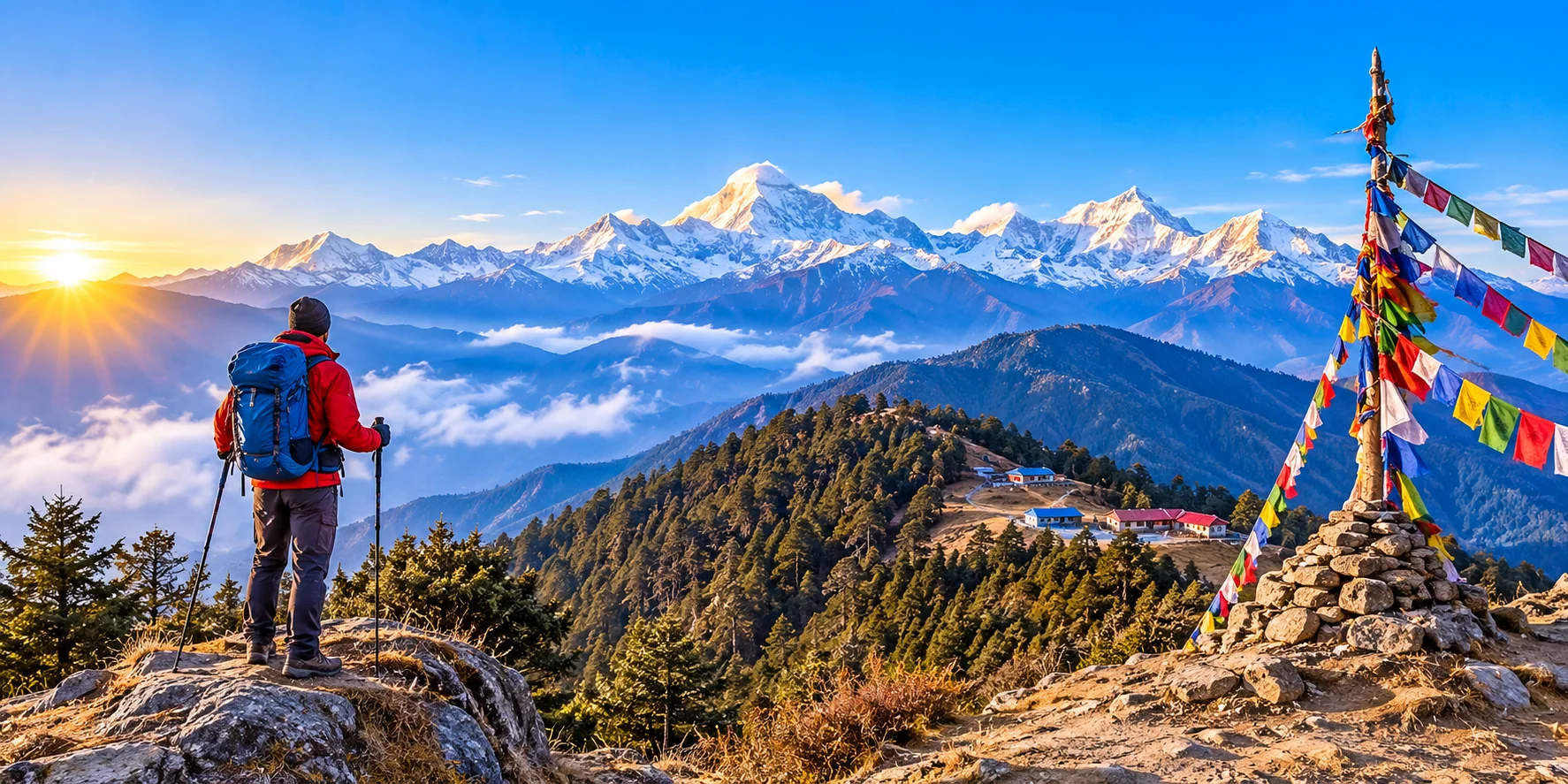
Not every Himalayan adventure requires weeks of walking or mountaineering experience. The Pikey Peak Trek is a good example of a shorter trekking journey with a wonderful mountain experience. Located in the lower Everest region, this trek takes you to the viewpoint (4,065 m) from where you can see some of the world’s highest mountains. You can enjoy views of six of the world’s highest mountains: Mount Everest, Kanchenjunga, Lhotse, Makalu, Cho Oyu, and Manaslu. On clear days, you may also catch distant views of the Annapurna and Dhaulagiri ranges. Other beautiful mountains, including Numbur Himal, Gaurishankar, Ama Dablam, Mera Peak, and Thamserku, add to the stunning Himalayan scenery.
But how challenging is the journey?
The Pikey Peak Trek is 7 to 10 days trek graded as easy to moderate and involves approximately five to six hours of walking on most days. The route does not involve technical climbing, but the uphill sections, altitude, and consecutive walking days require a reasonable level of physical fitness. If you are considering this trek, here is what you should know about its physical demands before starting your trip.
Factors That Affect the Difficulty of the Pikey Peak Trek
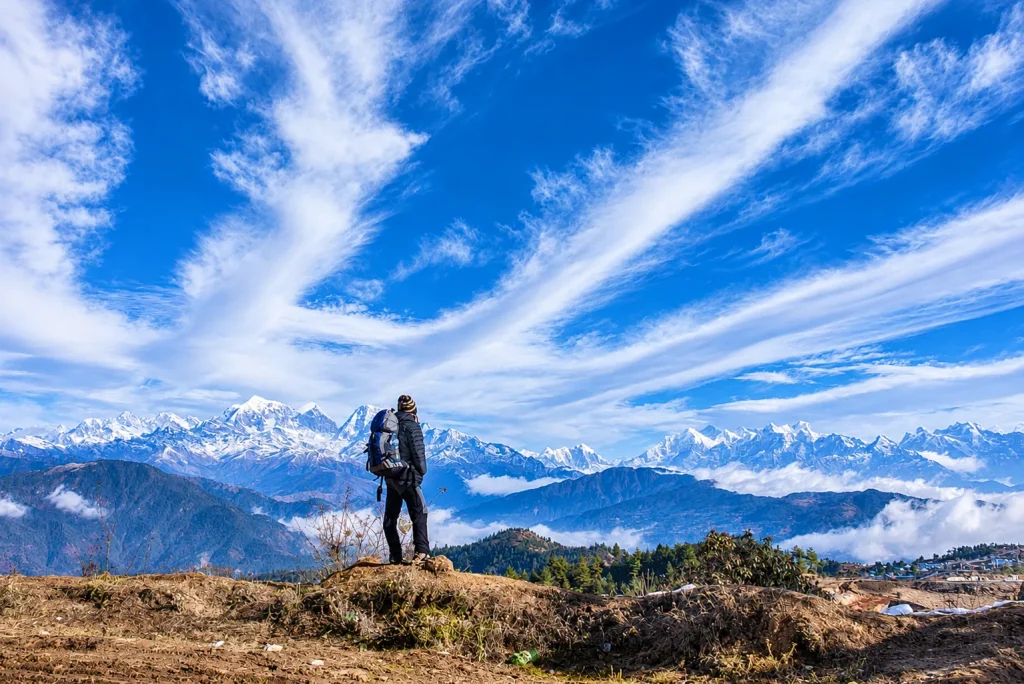
The challenge comes from combining several days of walking with changing elevations and mountain conditions. These are the main aspects you should consider.
1. Uphill Terrain And Altitude Challenges
The Pikey Peak Trek has a mix of gentle walking paths, forest trails, grassy ridgelines, and steep uphill sections. The beginning of the trek is relatively easy. After a scenic 7-8-hour drive from Kathmandu to Dhap, you start walking towards the Sherpa village of Jhapre. The trail is mostly gentle, passing through quiet forests, green hills, and open ridgelines. This section gives you time to get comfortable with walking at altitude.
The middle section involves more uphill walking. From Jhapre, the trail gradually climbs through thick rhododendron and pine forests as you make your way towards Pikey Peak Base Camp at 3,640 meters. The paths become steeper as you gain elevation, and you require more effort and regular breaks.
The final climb to Pikey Peak is the most challenging part. From the base camp, you need to walk uphill for around two hours to reach the summit at 4,065 meters. This section has a steep and continuous ascent. As you climb higher, the air gets thinner. As the air gets thinner, you might breathe faster, feel tired more quickly, and some trekkers might experience headaches, dizziness, and shortness of breath, especially while walking. You might also have difficulty sleeping as your body adjusts to lower oxygen levels. To reduce these effects, walk at a steady pace, take regular breaks, drink enough water, and give your body time to adjust to the altitude. If you develop symptoms of altitude sickness, inform your guide and do not ascend further. Severe symptoms require immediate descent and medical attention.
2. Long Walking Days
You should be comfortable spending several hours on the trail each day. Most days involve approximately five to six hours of trekking. Some sections are relatively easy, while others require more energy because of uphill climbs and downhill stretches.
Here is an example of how walking time is distributed along a typical route:
| Route | Approximate Duration |
| Dhap – Jhapre | 5-6 hours |
| Jhapre – Pikey Peak -Junbesi | 4-5 hours |
| Junbesi -Taksindu | 4-5 hours |
| Taksindu – Phaplu | 4-5 hours |
These are approximate walking times. Your actual duration may change depending on your fitness, walking speed, weather, and rest breaks.
3. Uneven Trails and Descents
In terms of trail surfaces, you will walk on different types of paths throughout the journey. These include natural dirt trails, grassy ridgelines, winding forest tracks, and stone steps near villages and steeper slopes. However, the route does not have endless stone staircases like some sections of the Annapurna or Ghorepani trekking routes. Most paths are well-maintained and do not require technical mountaineering skills. Certain sections can be rocky, uneven, or muddy depending on the season and weather.
The descent can be just as tiring as the ascent. Walking downhill for extended periods puts pressure on your knees and leg muscles, especially while you are carrying a heavy backpack. Trekking poles can be useful for maintaining balance and reducing pressure on your knees during these sections.
4. Seasonal Weather Conditions
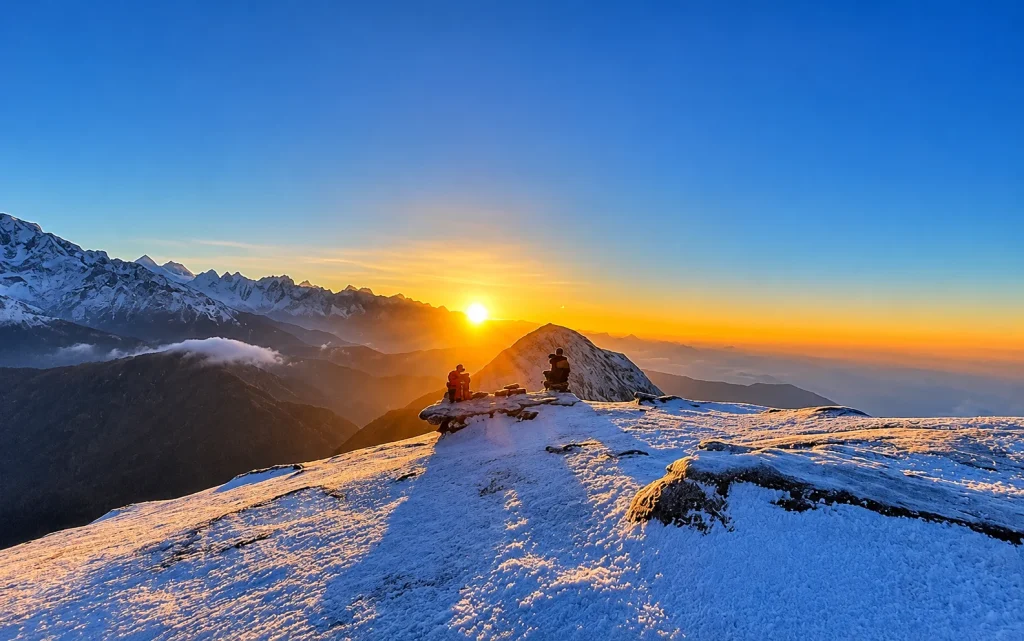
Weather can change the difficulty of the trek considerably.
- Spring (March-May): Favourable conditions with pleasant daytime temperatures, blooming rhododendron forests, and good mountain views.
- Autumn (September-November): One of the most popular trekking seasons, with stable weather and clear mountain visibility.
- Winter (December-February): Colder temperatures and possible snowfall can make trails more challenging, particularly around higher elevations.
- Monsoon (June-August): Rain, muddy trails, slippery paths, and cloud cover can affect walking conditions and visibility.
Choosing a suitable trekking season can make the overall experience more comfortable.
Can You Complete Pikey Peak Without Previous Trekking Experience?
Yes. Previous trekking experience is helpful but not essential for the Pikey Peak Trek. If you regularly walk, enjoy outdoor activities, or participate in moderate physical exercise, you may already have a good foundation for this journey. The important thing is being able to maintain a comfortable walking pace for several hours without becoming excessively exhausted.
However, if you spend most of your time sitting or have little experience with uphill walking, you should prepare before the trek. A simple fitness routine can make a difference:
- Start with daily walks: Walk for 30-60 minutes and gradually increase your distance.
- Build leg strength: Include squats, lunges, and step-ups in your exercise routine.
- Practise on hills: Walk on uphill trails or climb stairs to develop endurance.
- Try longer weekend hikes: Practise walking for several hours to understand how your body responds to extended activity.
So, Should You Choose the Pikey Peak Trek?
If you want to experience Himalayan landscapes, local mountain culture, and impressive mountain views without taking on a highly demanding trek, Pikey Peak is worth considering.
The journey has its challenges, particularly during the summit ascent and longer walking days. However, with reasonable fitness, suitable equipment, and proper preparation, it is achievable for many first-time trekkers.
At Trekkers Nepal, we can help you plan your Pikey Peak adventure with a suitable itinerary and trekking arrangements. Whether you are a first-time trekker or someone looking for a shorter Himalayan getaway, our team can help you prepare for the journey.
Ready to take on Pikey Peak? Get in touch with Trekkers Nepal and start planning your Himalayan adventure.
Feels like sharing this blog to your circles?


Comments 0