

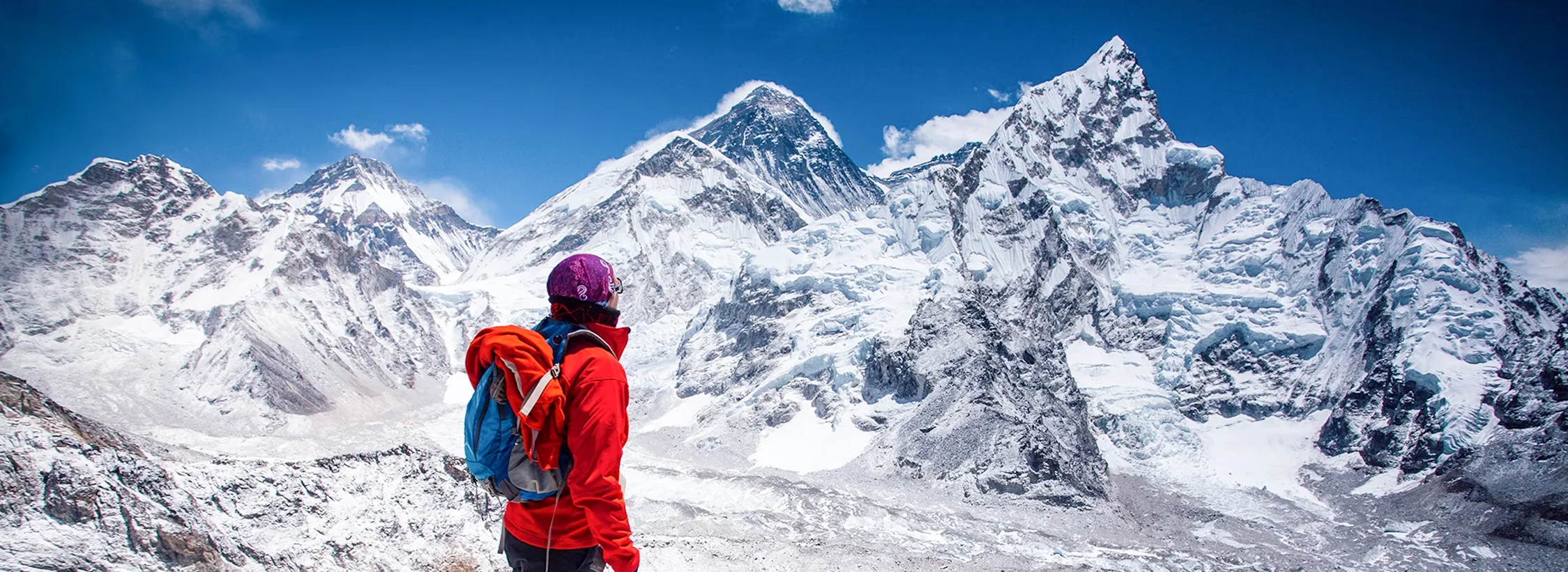
Nepal has always been one of the world’s top destinations for high-altitude adventures, as the country is home to the Himalayas, unique geography, and rich culture. From iconic destinations like Everest Base Camp and the Annapurna region to isolated regions like Manaslu, Dolpo, and Mustang, Nepal attracts thousands of independent trekkers every year.
But in recent days travelers, especially solo trekkers, are confused with the new trekking regulations imposed by Nepal. As Nepal disallowed solo trekking and the mandatory guide rule in 2023, many trekkers have a common question : is a solo trek actually banned in Nepal? The answer is no, as in March 2026, the country announced another update in trekking rules, allowing solo trekkers in restricted areas. But the catch in the new rule is one can trek solo in Nepal but not completely independently, as one requires a licensed guide.
In this guide we provide details about the solo trekking rules in Nepal in 2026 that everyone must know. The information about newly opened restricted areas’ rules for solo trekkers, permit requirements, processes to get permits, and tips for solo trekkers in Nepal is also provided.
Is Solo Trekking in Nepal Actually Banned in 2026?
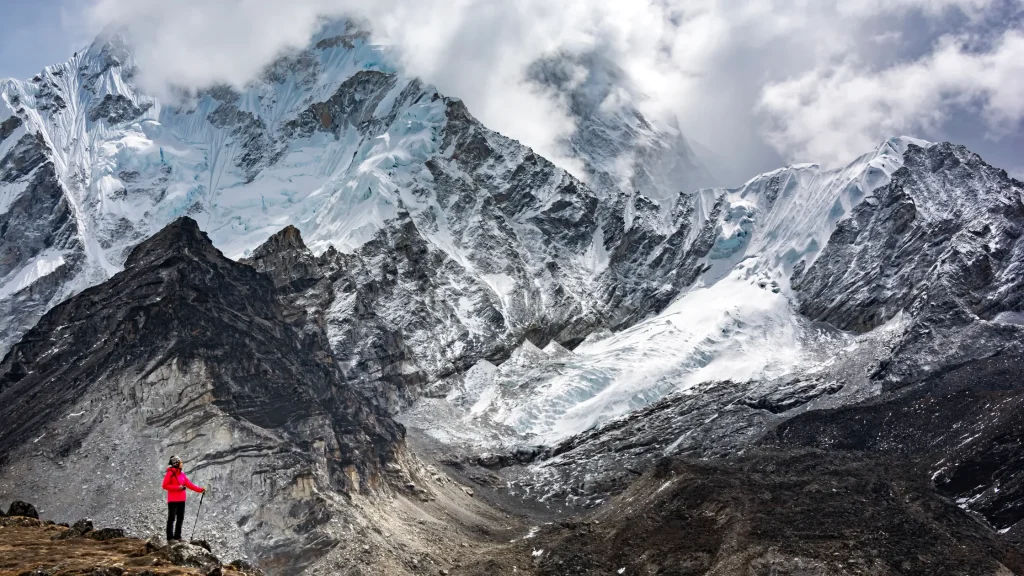
Most of the travelers or solo trekkers planning to visit Nepal have confusion and the same question; is solo trekking banned in Nepal? The answer is no. The common reason for misconception is the inability to distinguish between solo trekking and unguided trekking.
Solo trekking means travelling without joining a trekking group, and unguided trekking means travelling without a licensed guide. In Nepal’s case, the new trekking rule imposed on 22 March 2026 (2082 Chaitra 8 BS) restricts unguided trekking. This means you do not require two people for trekking in Nepal. You can visit alone and trek singly without joining multiple teams. But this does not mean you do not need a guide; a trekking guide is mandatory if you are trekking solo or going with a group, especially in restricted areas of Nepal.
The rule about a mandatory guide exists for the safety and security of trekkers. A licensed guide also supports rescue coordination, helps to track trekkers more efficiently, and even regulates tourism activities in high-altitude regions. It also opens local employment opportunities, and it can benefit travelers by giving detailed insights about the region.
New Rule: What Changed in 2026?
As mentioned above, the new trekking permit policy implemented on 22 March 2026 lifts the restriction of requiring more than 2 members, excluding the guide, during trekking. Before the new policy, most trekking regions required at least 2 trekkers and a guide to issue trekking permits. The old policy created difficulties, especially for solo trekkers who want to trek independently in remote locations of Himalayas.
But the new policy lifts the restriction, which allows trekkers to trek alone but with a guide. Trekkers are now not required to join other groups of trekkers for issuing permits. This allows trekkers to plan flexible trekking itineraries and trek safely. We provide a difference in the new rule imposed in March 2026 and the old rule implemented from 1 April 2023.
| Category | Old Rule (April, 2023) | New Rule (March, 2026) |
| Trekkers count | Minimum two trekkers along with licensed guide | Solo trekker are allowed with licensed guide |
| Restricted area permit application | Only group application are allowed | Individual application are allowed |
| Need to join random groups | Required to meet the trekker count requirement | Not required, as one can trek solo with a guide. |
| Guide requirement | Mandatory | Mandatory |
| Permit processing | Permits are required to process with TAAN registered agency | Processing from TAAN registered agency |
| Independent itinerary planning | Limited flexibility | More flexible |
| Solo access to restricted regions | Not officially allowed | Officially permitted |
Which Restricted Area Is Opened For Solo Trekking?
Nepal officially opened several trekking regions for solo trekking that were restricted before. While trekkers require a mandatory guide and require processing through registered trekking agencies, one can plan a flexible itinerary and get personalized experiences. The areas where trekkers can trek solo from March 2026 are provided below:
| Region / Trek | District | Solo Trekking Status | Descriptions |
| Upper Mustang / Lo Manthang | Mustang | Solo permit allowed | Licensed guide mandatory through local agency |
| Upper Dolpo Circuit and Shey Phoksundo | Dolpa | Solo permit allowed | Restricted permit and guide required |
| Manaslu Circuit and Larkya La Pass | Gorkha | Solo permit allowed | Licensed guide required |
| Kanchenjunga Base Camps | Taplejung | Solo permit allowed | Licensed guide mandatory |
| Tsum Valley | Gorkha | Solo permit allowed | Required with mandatory guide |
| Simikot, Limi Valley and Kailash Route | Humla | Solo permit allowed | Must trek with registered guide |
| Nar Phu Valley | Manang | Solo permit allowed | Local registered agency required |
| Upper Mugu | Mugu | Solo permit allowed | Guide mandatory |
| Northern Langtang | Rasuwa | Solo permit allowed | Permit processing via agency |
| Makalu Base Camp (remote sections) | Sankhuwasabha | Solo permit allowed | Restricted sections require a guide. |
| Northern Solukhumbu (remote sections) | Solukhumbu | Solo permit allowed | Agency support required |
| Gaurishankar Conservation Area | Dolakha | Solo permit allowed | Guide mandatory |
| Saipal Region | Bajhang | Solo permit allowed | Restricted area regulations apply |
| Northwestern Region | Bajura | Solo permit allowed | Registered agency required |
| Far Western Region | Darchula | Solo permit allowed | Guide and agency compulsory |
Note: A licensed guide is mandatory for solo and group trekkers along with a permit obtained via TAAN registered agencies.
What Permits Do Solo Trekkers Need in Nepal?
Whether you are traveling solo or in a group, trekking in most destinations in Nepal requires mandatory permits. The required permits depend upon factors like conservation areas, national parks, and restricted areas.
National Park and Conservation Permits
National Park and conservation permits are required as trekkers travel through its boundary or area. These permits are issued with the aim to protect himalayan ecosystem, support conservation efforts, maintain trekking infrastructures, and regulate tourism activities for sustainability. Annapurna Conservation Area Permit (ACAP), Sagarmatha National Park Permit, Langtang National Park Permit, and Manaslu Conservation Area Permit (MCAP) are some examples of permits you require when trekking for specific reasons.
TIMS Card
TIMS refers to the Trekker’s Information Management System and is a mandatory permit required in most trekking regions of Nepal. The TIMS card’s main objective is to track trekkers for improved rescue operations during emergencies. Its main objective is to provide safety and security to trekkers in Nepal. Both solo and group travelers are required to have a TIMS Card in most trekking destinations in Nepal.
Restricted Area Permits (RAP)
The Restricted Area Permit (RAP) is a mandatory permit for trekkers traveling in restricted regions of Nepal, like the Manaslu circuit trek, Tsum valley trek, Nar Phu Valley trek, and Upper Mustang trek. Both solo and group trekkers are required to obtain a RAP permit from registered trekking agencies of Nepal. The fee of the RAP depends on region, season, and number of trekking days.
Besides these permits, trekkers are also required to get local permits, such as rural municipality permits, for entry in specified regions.
Can Experienced Trekkers Ignore the Guide Rule?
Whether you are a beginner trekker who wants to explore Nepal or an experienced trekker with knowledge of local routes, climate, and risks, compliance with mandatory rules is mandatory. While your experience can be beneficial during a trek, ignoring the rule and trekking without a guide leads to the following:
- Denial of entry at checkpoints of routes where guides are mandatory
- Cancellation of trekking permits
- Fines and penalties
- Difficulty during rescue situation
- Forced return from trekking routes
Tips for Solo Trekkers Visiting Nepal in 2026
If you are planning a solo trek in Nepal’s major destinations in 2026, we provide the useful tips below to enhance your trekking experience:
- Prefer trekking during spring (March to May) and autumn (September to November), as it provides the best experience, with a vibrant atmosphere, comfortable temperature, pleasant weather, and clear skies.
- Hire licensed guide and process for permits via TAAN associated agency for solo trekking
- Travel with insurance for covering experiences during high-altitude rescue.
- Prepare for unpredictable weather in the Himalayas
- Respect local culture, law, and environment
Conclusion
The latest updates of government policy in March 2026 lift the solo trekking ban in Nepal, allowing travelers to trek in various regions alone with a licensed guide. Licensed guides are mandatory for most restricted areas for safety, security, and regulated tourism activities in most locations in Nepal. These recent changes have somehow made the trekking flexible and accessible for those who want independent exploration of the Himalayas. Along with guides, trekkers also require mandatory permits like RAP permits, Conservation Area Permits, National Park Permits, and local Rural Municipality permits, depending upon the area.
If you are also planning for a solo trek or trek with a group in various regions of Nepal, contact Trekkers Nepal. Trekkers Nepal provides complete assistance in acquiring permits and, through personalized itineraries and licensed guides, makes your trek safe, informative, and memorable.
Feels like sharing this blog to your circles?


Comments 0