


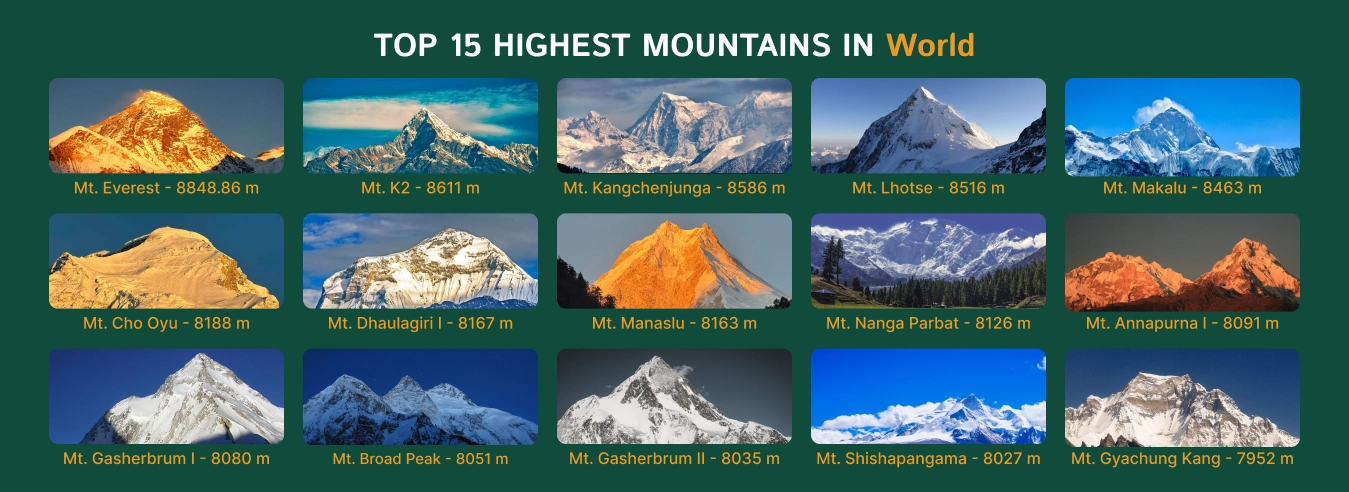
In a conversation of climbers, mountain enthusiasts, trekkers or travellers, the highest mountains in the world often refers to the club or group of 14 high peaks that tower over a height of 8,000 meters. Whenever, number crosses 15, the travellers and enthusiasts include another high mountain peak Gyanchung Kang barely missing the mark at an elevation of 7,952 metres. The marvelous 14 mountains crossing the mark are collectively called eight thousanders across the whole globe. These highest 15 mountains located in the Great Himalayan Trail (GHT) and Karkoram are the pinnacle of land mass and nature’s toughest vertical ascent.
1. Mount Everest – Crowned Roof of the world
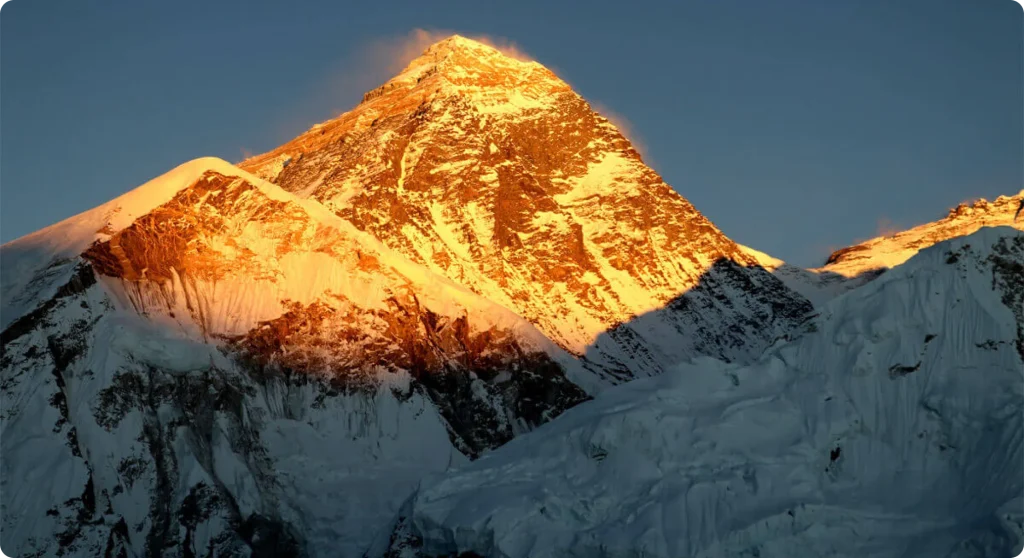
Marking the sky with its massive presence at 8848.86 meters height, Mount Everest is the tallest peak on the planet. Often called Mother Goddess of Earth in Sherpa and Tibetan dialect, it rests in the Himalayas Mahalangur Range in the Nepal – China border. Claimed to be first attempted by George Mallory in the 1920s, the first successful attempt of the peak was completed by the duo of Edmund Hillary and Tenzing Norgay on May 29, 1953. Their successful attempt brought about a wave of summiting and trekking in Nepal.
| Feature | Details |
| Height | 8,848.86 meters (29,031.7 feet) |
| Country | Nepal – China |
| Location | Mahalangur Himal sub-range |
| Global ranking | Highest Mountain in the World |
| Also known as | Sagarmatha (In Nepal)Chomolungma (In China) |
| First Ascent | May 29, 1953 AD (Edmung Hillary and Tenzing Norgay Sherpa) |
2. K2 – Beholding The Savage Mountain Title
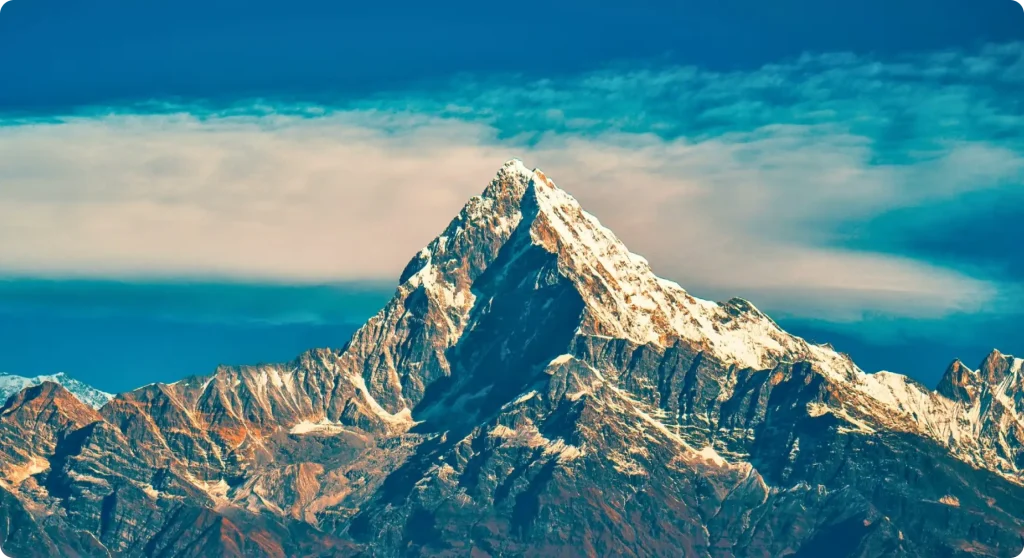
Chhogori/Qogir officially used by the Chinese Authority and locally used by Pakistan’s Balti people, K2 is the second highest peak. Rising at the height of 8,611 meters, K2 lies quaintly in the remote location of Karkoram Range between the Pakistan and China border. It’s titled, ‘The Savage Mountain because of a staggering 22 percent fatality rate in every 100 climbing expedition. It was first summited by Italian Climbers in 1954 and its winter climb was completed by Nepali team of Nimesh Purja (Nims Dai).
| Feature | Details |
| Height | 8,611 meters (28,251 feet) |
| Country | Pakistan- China |
| Location | Karakoram Range (Pakistan and China Border) |
| Global ranking | 2nd highest mountain |
| Also known as | Chhogori/Qogir |
| First Ascent | July 31, 1954(Achille Compagnoni and Lino Lacedelli) |
3. Kanchenjunga – Blessed Five Treasures of Snow
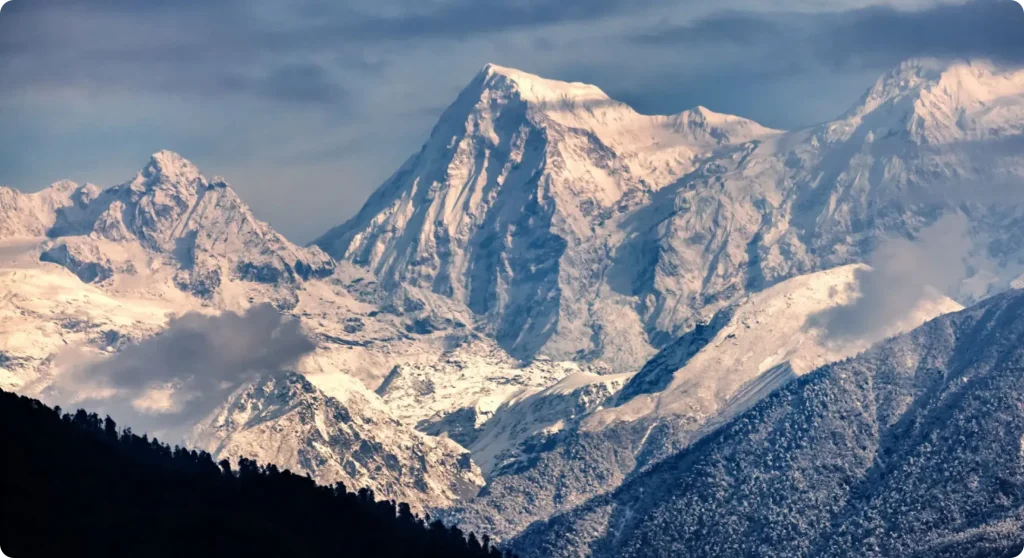
Kanchenjunga is a mountain in the Great Himalayan Trail, shared by India and Nepal. Interestingly, similar to Mount Everest, the peak of Kanchenjunga lies inside Nepal. Kanchenjunga is the local name of the peak in Himalayan and Tibetan Languages meaning ‘Five Treasures of Snow’. The 8568 metre high mountain was climbed in 1955 by mountaineers.
| Feature | Details |
| Height | 8,586 meters (28,169 feet) |
| Country | Nepal (Indo-Nepal border) |
| Location | Kanchenjunga Himal sub-range |
| Global ranking | 3rd highest mountain |
| Also known as | Kangchenjunga |
| First Ascent | May 25, 1955 (Joe Brown and George Band) |
4. Lhotse – Everest’s Neighbour
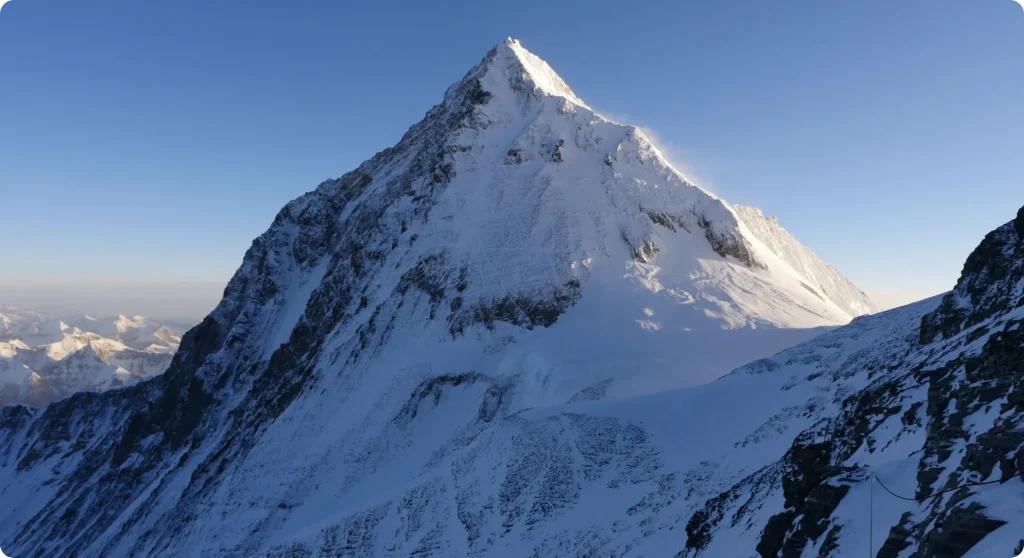
The closest neighbour of Mt. Everest, the world’s highest mountain, Lhotse stands at a height of 8,516 metres. The mountain lies in the Khumbu region of GHT just like its neighbour. Its name comes from the Tibetan Language and it means South Peak. It was first summited by Fritz Luchsinger and Ernst Reiss of Switzerland in 1956. However, its dangerous south face with 3,300 metre vertical wall was completed only in 1990.
| Feature | Details |
| Height | 8,516 meters (27,940feet) |
| Country | Nepal-China |
| Location | Mahalangur Himal sub-range |
| Global ranking | 4th highest mountain |
| Also known as | South Peak |
| First Ascent | May 18, 1956 AD (Ernest Reiss and Fritz Luchsinger) |
5. Makalu – Titled Pyramid Mountain
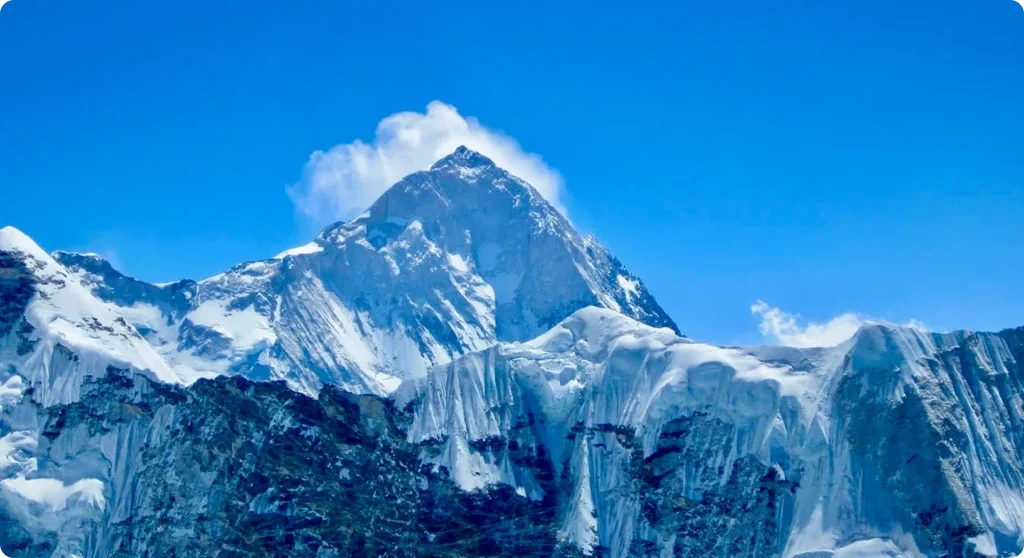
Makalu, often called Pyramid Mountain due to its pyramid-like shape by English speakers, stands at a staggering height of 8,463 metres. Makalu, like the two previous mountains in the top 5, lies between the China – Nepal border in the GHT. The climb of sharp knife edged pyramid shape Makaly was completed by the French Team on 15th of May 1955.
| Feature | Details |
| Height | 8,463 meters (27,838 feet) |
| Country | Nepal-China |
| Location | Mahalangur Himal sub-range |
| Global ranking | 5th highest mountain |
| Also known as | Great Black Mountain / Pyramid Mountain |
| First Ascent | May 15, 1955 AD (Jean Couzy and Lionel Terray) |
6. Cho Oyu – Blissful Turquoise Goddess
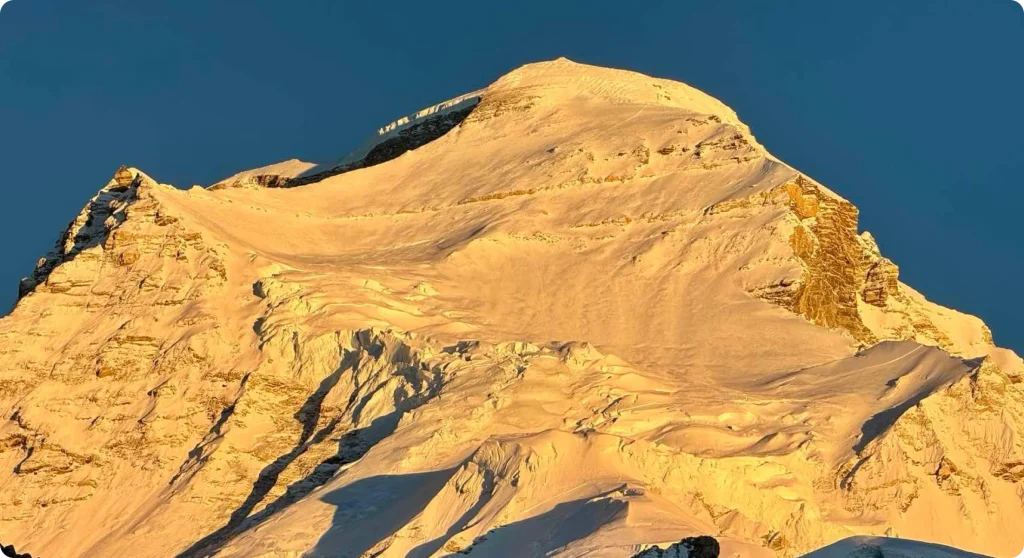
Cho Oyu towers over the Nepal – China border at a height of 8,188 meters. It was first climbed successfully in 1954 and is widely touted as the technically easiest of the eight thousanders. The expedition here has the lowest fatality rate of 1 percent making it popular for climbers attempting their first 8,000-meter peak. It is named Cho Oyu in local language because its ice reflects a colour similar to Tibetan Goddesses turquoise.
| Feature | Details |
| Height | 8,188 meters (26,864 feet) |
| Country | Nepal-China |
| Location | Mahalangur Himal sub-range |
| Global ranking | 6th highest mountain |
| Also known as | Chomo Yu/ Turquoise Goddess |
| First Ascent | October 19, 1954 AD (Herbert Tichy, Joseph Jöchler, and Pasang Dawa Lama) |
7. Dhaulagiri I – Fair Mountain
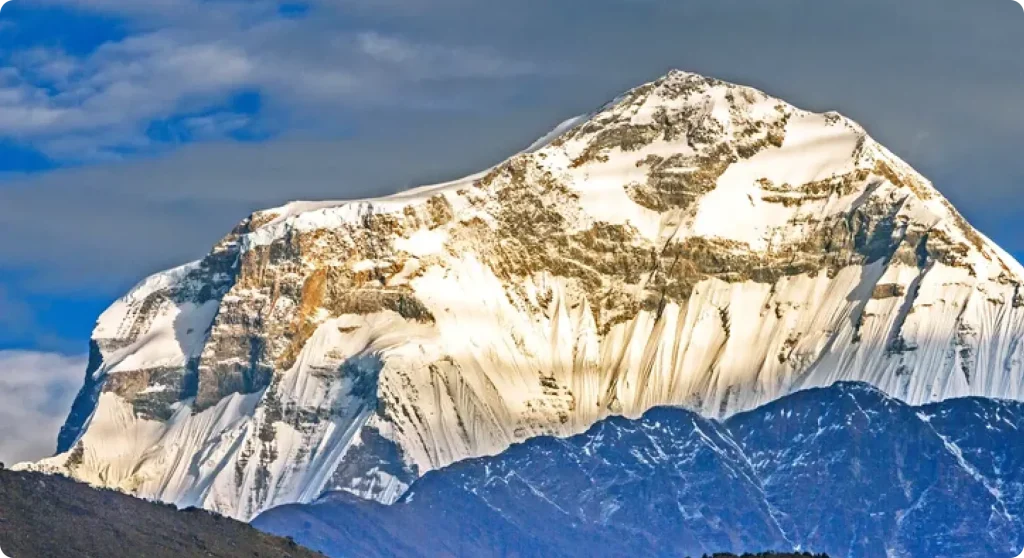
Locally called Dhaulagiri, the seventh highest mountain’s name originates from Sanskrit. The name of this 8,167 metre high peak means White Mountain with Dhaula/Dhawala meaning white and giri meaning peak. It was the last on the list of eight thousanders to be summited and climbed successfully by a joint team of Swiss, Nepali and Austrian in the 1960s. The summit of Dhaulagiri lies in the North – Central zones of Nepal.
| Feature | Details |
| Height | 8,167 meters (26,795 feet) |
| Country | Nepal |
| Location | Dhaulagiri Himal sub-range |
| Global ranking | 7th highest mountain |
| Also known as | White Mountain |
| First Ascent | May 13, 1960 AD (Kurt Diemberger, Peter Diener, Ernst Forrer, Albin Schelbert, Nyima Dorje, and Nawang Dorje) |
8. Manaslu – The Spirit Mountain
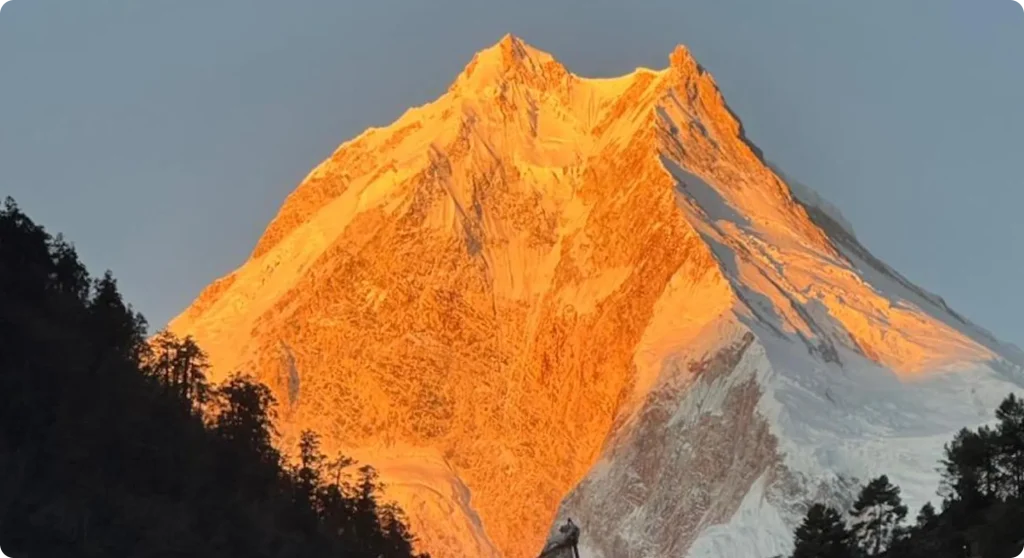
Manaslu kisses the sky with its 8,163 meters high peak in the West – Central Zone of Nepal. The mountain is situated in Mansiri Range of GHT. Japanese and Nepalese expedition climbers were the first to ascend the mountain in 1956. One of the highest mountains in Nepal, Manaslu has become popular for commercial expeditions owing to easier technical mountaineering climb. Manaslu is a Sanskrit name originating from roots Manasa, which means intellect. However, its English colloquial translation, Spirit Mountain, comes from the Tibetan Language root, ‘Kutang’.
| Feature | Details |
| Height | 8,163 meters (26,781 feet) |
| Country | Nepal |
| Location | Mansiri Himal sub-range |
| Global ranking | 8th highest mountain |
| Also known as | Mountain of the Spirit |
| First Ascent | May 9, 1956 AD (Toshio Imanishi and Gyalzen Norbu) |
9. Nanga Parbat – The Killer Mountain
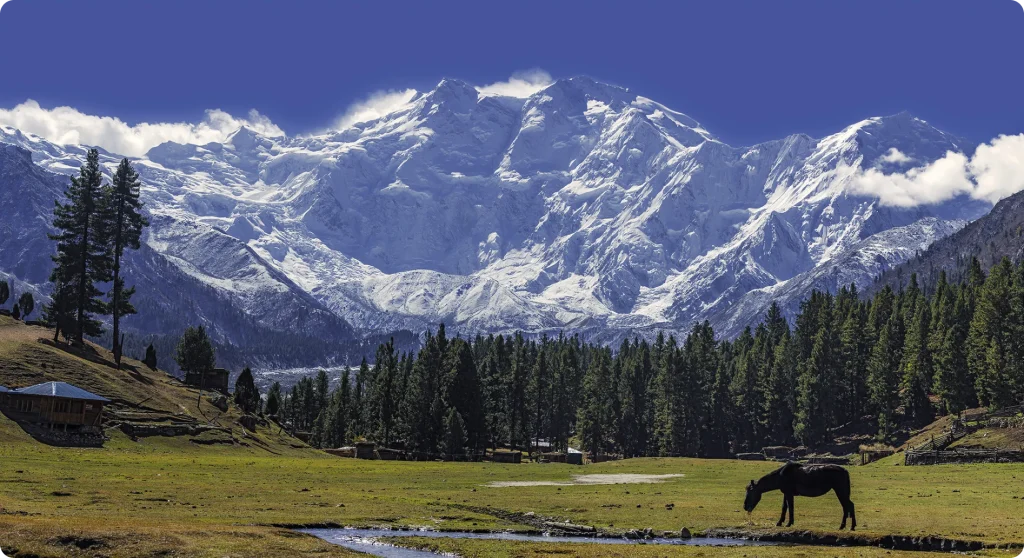
Nanga Parbat is Pakistan’s second tallest mountain after K2 standing at a massive height of 8,126 meters. Nanga Parbat is the western most of eight thousanders and a tri-junction between Karkoram Range, GHT range and Hindu Kush zone. It’s nicknamed “Killer Mountain” in climbing and Himalayan from 31 deaths before the first successful ascent. Hermann Buhl made the historic first solo ascent in 1953 in a remarkable 41-hour push. It still holds the crown of Killer Mountain as 21 percent of all expeditions resulting in loss of life.
| Feature | Details |
| Height | 8,126 meters (26,660 feet) |
| Country | Pakistan |
| Location | Gilgit-Baltistan region, Western Himalayas |
| Global ranking | 9th highest mountain |
| Also known as | The Killer Mountain, Diamer Mountain |
| First Ascent | 3 July 1953 (Hermann Buhl) |
10. Annapurna I – Goddess of Harvests
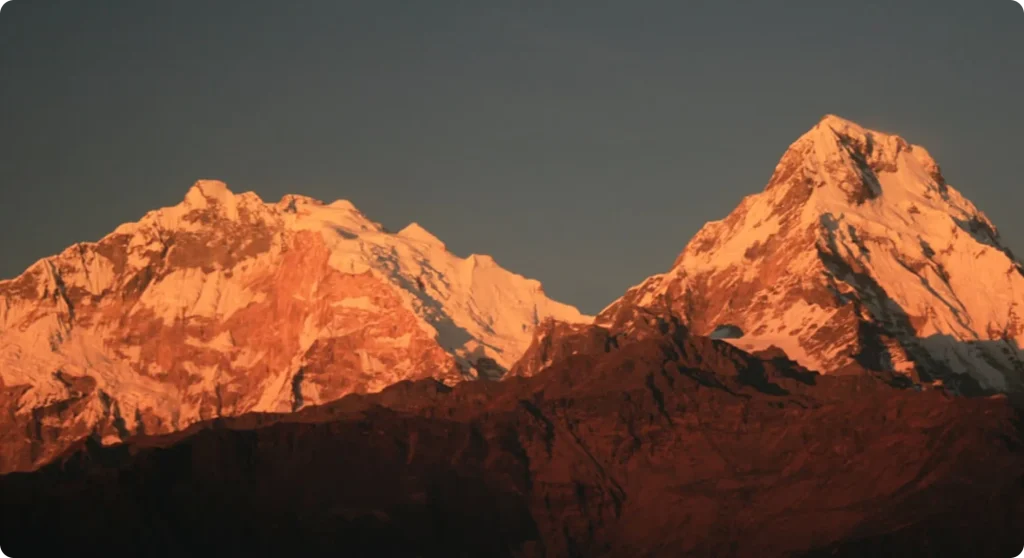
It’s the third mountain on the top 10 list to be named after a goddess. Mt. Everest, Cho Oyu and Annapurna are the only mountains in 8000 height to be named after goddesses. Annapurna means harvest full when transliterated from Sanskrit to English and Goddess of Harvests when translated into English. It is nestled in the North – Central zone of Nepal and possesses a height of 8,091 metre.
| Feature | Details |
| Height | 8,091 meters (26,545 feet) |
| Country | Nepal |
| Location | Annapurna Himal sub-range |
| Global ranking | 10th highest mountain |
| Also known as | Goddess of the Harvest |
| First Ascent | June 3, 1950 AD (Maurice Herzog and Louis Lachenal) |
11. Gasherbrum I – The Hidden Peak
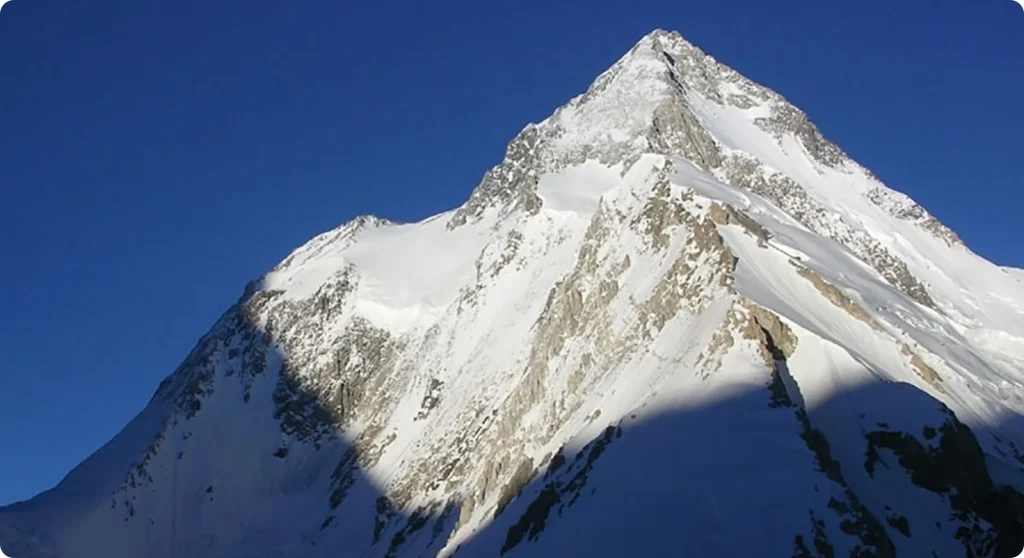
Gasherbrum I standing at 8,080 meters is the second 8,000 meter high peak resting on the Pakistan – China border. It’s nicknamed the “Hidden Peak” because of its extravagantly remote location. It is the only peak invisible from any closest human peak. The mountain was first summited by American mountaineers in 1958. Its name is thought to have two possible meanings: “beautiful mountain” or “shining wall” derived from the Balti language of Pakistan.
| Feature | Details |
| Height | 8,080 meters (26,509 feet) |
| Country | Pakistan-China |
| Location | Baltoro Karakoram Range, Gilgit-Baltistan |
| Global ranking | 11th highest mountain |
| Also known as | Hidden Peak, K5 |
| First Ascent | 5 July 1958 (Pete Schoening and Andy Kauffman) |
12. Broad Peak – The Mountain with a Broad Shoulder
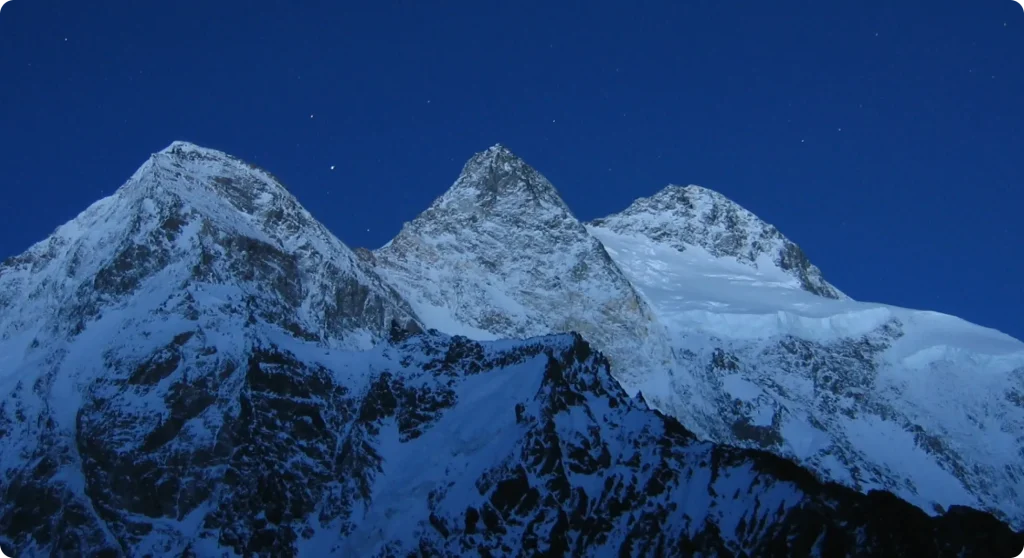
Broad Peak, the 12th highest peak 8,051 meters tall, is the third mountain in the Pakistan – China border. It’s named after its unusually 1.5-kilometer long summit ridge not seen in any other mountain in the world. The mountain saw its first ascent by Austrian climbers in 1956 with alpine style without oxygen climb. Mountaineers often use this mountain for a practice run to conquer K2.
| Feature | Details |
| Height | 8,051 meters (26,414 feet) |
| Country | Pakistan-China |
| Location | Karakoram Range, Near Baltoro Glacier |
| Global ranking | 12th highest mountain |
| Also known as | Falchan Kangri |
| First Ascent | 9 June 1957 (Fritz Wintersteller, Marcus Schmuck, Kurt Diemberger and Hermann Buhl) |
13. Gasherbrum II – The Shining Wall
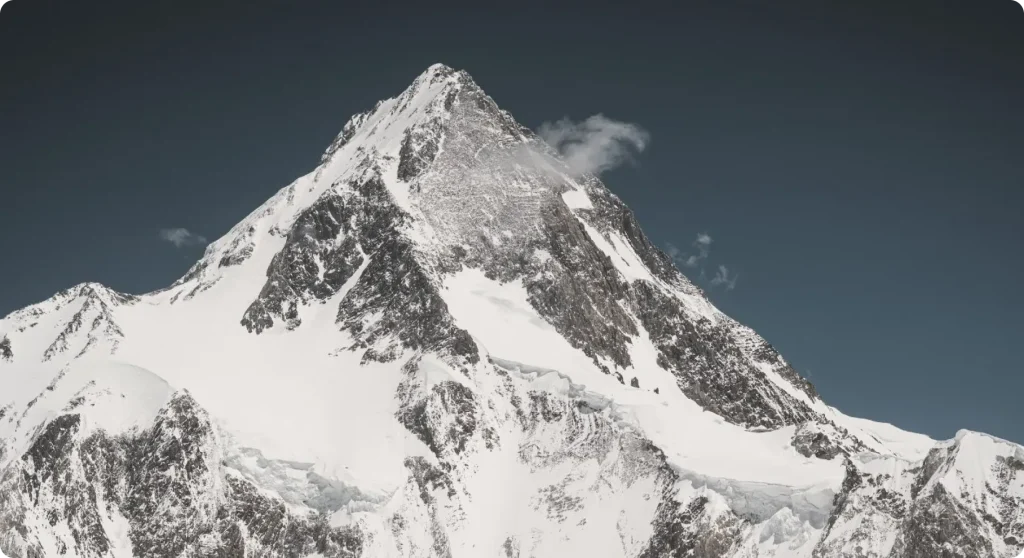
Fourth 8 thousander peak in the Karkoram range of Pakistan – China Border, it holds an elevation of 8,035 metres. The thirteenth highest mountain in the world was climbed by an Austrian team on 7th July of 1956. It’s one of the easiest 8000 meter mountains in the world, requiring minimum technical skills. Hence, mountaineers ascend the peak to take on tougher challenges like Mount Everest and K2.
| Feature | Details |
| Height | 8,035 meters (26,362 feet) |
| Country | Pakistan-China |
| Location | Karakoram Range, Baltoro Glacier region |
| Global ranking | 13th highest mountain |
| Also known as | K4, Gasherbrum II |
| First Ascent | 7 July 1956 (Fritz Moravec, Josef Larch and Hans Willenpart) |
14. Shishapangama – The Final Eight Thousander
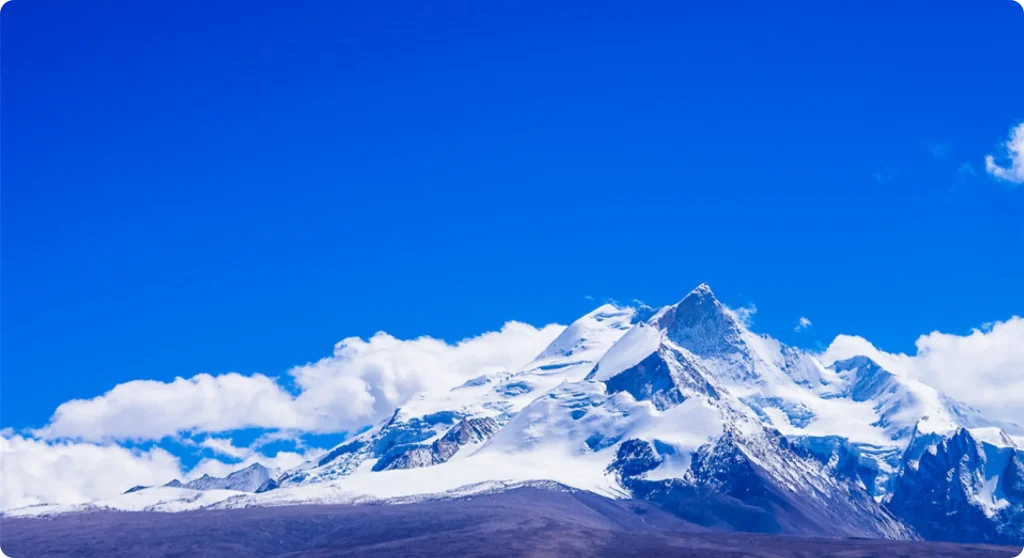
Barely crossing the 8k meter mark by 27 meter, Shishapangama has a height of 8,027 meter. It is the only eight thousand meter peak fully inside Tibet of China. It was first climbed by China’s own team in 1964 May 2nd. The name Shishapangama comes from the local Tibetan language which is translated as ‘Mountain that rises over the plain’ or ‘Crest Above the Grassy Plains’ in English.
| Feature | Details |
| Height | 8,027 meters (26,335 feet) |
| Country | China |
| Location | Langtang Himal range |
| Global ranking | 14th highest mountain |
| Also known as | Gosainthan |
| First Ascent | May 2, 1964 AD (Chinese expedition led by Xu Jing) |
15. Gyachung Kang – Mountain Barely Missing the Mark
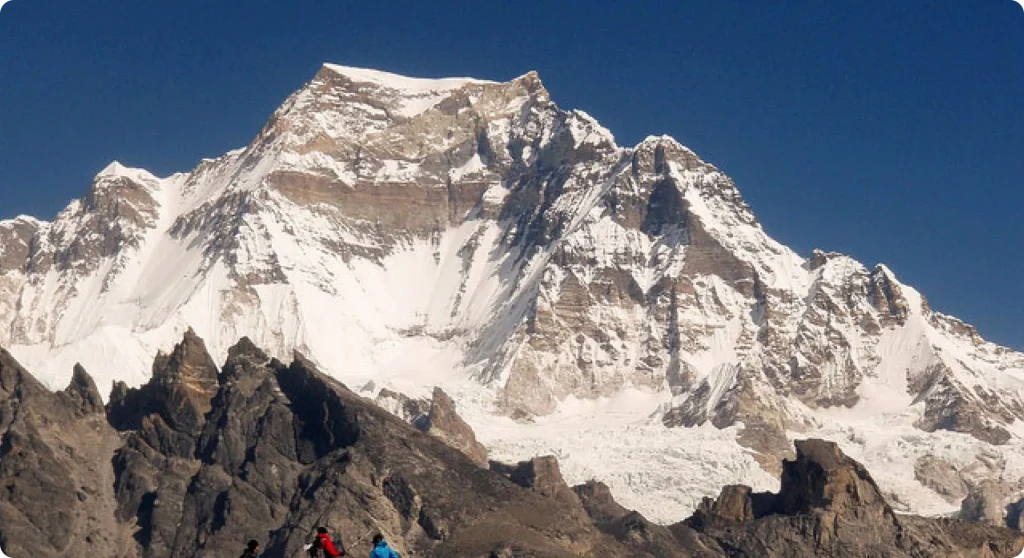
Gyachung Kang as mentioned at the start barely misses the mark of 8000 by 43 meters. It’s a rarely climbed mountain not due to its height but frequent avalanches and difficult technical sections. The mountain lies in Nepal’s Khumbu region between Cho Oyu and Mt. Everest. The Mountain was first climbed by Japanese Mountaineering team in 1964 April 10th and summited without oxygen by French – Nepali team in 1968.
| Feature | Details |
| Height | 7,952 meters (26,089 feet) |
| Country | Nepal-China |
| Location | Mahalangur Himal Range |
| Global ranking | 15th highest mountain |
| Also known as | Gyachung Kang Ri |
| First Ascent | April 10, 1964 AD (Japanese expedition led by Y. Kato and K. Sakaizawa) |
Follow Trekkers Nepal for more additional mountain facts and trekking packages to Nepal.
Feels like sharing this blog to your circles?


Comments 0